By a Caring Mom at Infant Tales
Potty training is one of those parenting chapters that feels both exciting and intimidating. Every parent eventually wonders: How long does it take to potty train a toddler? Some little ones seem to grasp the idea overnight, while others need weeks or even months, sometimes with unexpected setbacks like toddler potty training regression or sudden refusal. All of this is part of a completely normal developmental journey.
Potty training isn’t something to rush. The timing depends on your child’s emotional readiness, physical development, and personality. Throughout this guide, we’ll walk through the signs your child is not ready for potty training, how long training usually takes, and practical tips for potty training a toddler boy or girl with confidence and patience.
Let’s get started, and take the pressure off both you and your little one.
How Long Does It Take to Potty Train a Toddler?
Most toddlers need around 3 to 6 months to become reliably potty trained during the day. Some learn within a week, while others take longer, especially if they experience stress or changes at home.
According to child health experts such as the American Academy of Pediatrics, bladder and bowel control develop at different rates for every child. That’s why the question of what age to start potty training a girl or boy doesn’t have a universal answer.
A few things that often influence the timeline include your toddler’s readiness, the consistency of your routine, and how comfortable they feel using a potty training seat. Children who are sensitive, cautious, or strong-willed may also take a little longer, and that’s perfectly okay.
Understanding Readiness: Is Your Toddler Prepared?
Before thinking about how to take a toddler to potty training, the most important step is checking whether they’re truly ready. Potty training challenges almost always happen when a child is pushed ahead of their developmental moment.
Toddlers tend to show curiosity about the bathroom, start staying dry for longer stretches, or become uncomfortable with wet diapers. These small but meaningful behaviors tell you that their body and brain are beginning to coordinate.
On the other hand, if your child cries when you bring up the potty, runs away the moment you suggest sitting down, or begins holding pee during potty training, these are signs your child is not ready for potty training yet. Starting early may actually slow progress and create unnecessary stress. For an evidence-based overview of readiness cues, see Johns Hopkins Medicine’s potty training guide.
Signs of Readiness:
- Staying dry for longer periods
- Showing interest in toilet habits
- Expressing discomfort with dirty diapers
How Long Potty Training Takes by Age
Each age group brings its own mix of readiness signs and challenges. Toddlers don’t follow a rigid timeline, development happens at its own natural rhythm.
Potty Training a 2-Year-Old
Two-year-olds often love trying new independent activities, which makes this a common age to start training. If you’re figuring out how to take toddler to potty training at 2 years old, remember to keep things light. Many toddlers benefit from toddler potty training underwear at this age because the sensation helps them connect wetness to the bathroom routine. For guidance on child-friendly techniques, visit NHS potty training advice.
Potty Training a 3-Year-Old
Three-year-olds understand instructions better but may insist on doing things their way. Potty training a 3-year-old who refuses usually means they feel pressured or overwhelmed. A short break, playful encouragement, and a relaxed tone often help them embrace the process again.
Potty Training a 4-Year-Old
Many parents worry if their child reaches age four without being fully trained but late potty training is more common than you think. Some children simply weren’t emotionally ready earlier. The Seattle Children’s Hospital explains that physical readiness for bowel control can occur later than bladder control. Gently rebuilding trust and addressing constipation or fear helps children progress smoothly.
Common Potty Training Approaches
There are several ways to potty train a toddler, and the best method is the one that fits your child’s personality. What works beautifully for one toddler may feel too fast or stressful for another.
Many parents try the 3-Day Method, a focused approach where you dedicate three full days to underwear-only, frequent potty trips, and lots of praise. It works well for toddlers who show clear readiness and respond to consistent routines.
Others prefer gradual or child-led training, allowing the child to take the lead. The ERIC Children’s Bowel & Bladder Charity encourages parents to stay patient and adapt methods to their child’s temperament rather than rushing.
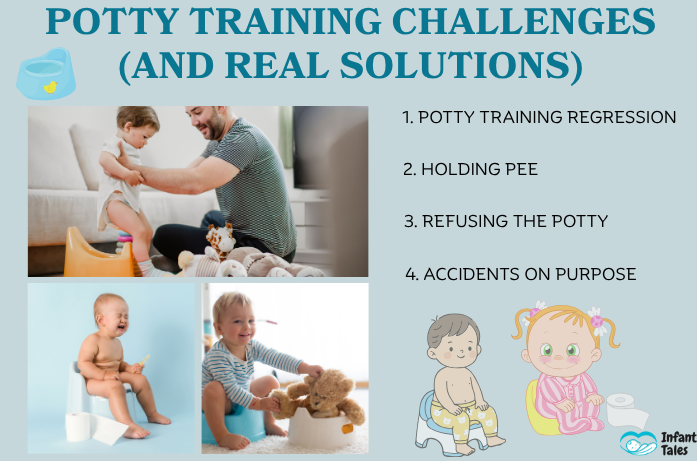
Potty Training Challenges (and Real Solutions)
Every parent hits at least one frustrating bump in the potty training path. What matters most is staying calm, observing your child’s emotions, and supporting them instead of pushing harder.
1. Potty Training Regression
Potty training regression is common and often triggered by stress or routine changes. A simple, consistent routine and extra reassurance usually get things back on track.
2. Holding Pee
Some toddlers hold pee because they’re busy playing, scared of the toilet, or feel pressured. Gentle reminders and a relaxed routine help them feel safe enough to let go.
3. Refusing the Potty
When a child refuses the potty, it’s often a sign they’re not fully ready. Taking a short break and reintroducing the potty later works better than forcing it.
4. Accidents on Purpose
A few toddlers may have accidents on purpose when they’re overwhelmed or seeking attention. Staying neutral rather than emotional helps them reconnect the bathroom with calm, positive moments.
For additional reassurance and troubleshooting ideas, check KidsHealth’s toilet training advice for parents.
Helpful Tips to Make Potty Training Easier
Potty training doesn’t need to feel like a power struggle. With small adjustments and consistency, most toddlers catch on in time.
A child-sized potty or seat reducer helps toddlers feel safe and grounded. Clothing also matters simple pull-down pants encourage independence.
Encourage routine bathroom visits (before naps, bedtime, meals, and leaving home). If you’re wondering how often toddlers should pee, most need to go every 1–2 hours.
If mornings feel rushed, gentle tricks like running water or blowing bubbles help relax muscles and stimulate urination.
The Welsh Government’s “Give It Time” parenting guide also offers practical, positive reinforcement ideas that help make potty learning smoother.
When Potty Training Takes Longer Than Expected
Some toddlers simply need more time, and that’s not a sign of bad parenting. Potty training can take longer when a child is experiencing constipation, anxiety, developmental leaps, or major family changes.
If your child is over four and has never shown readiness signs, checking in with your pediatrician can offer clarity. Reliable organizations such as the American Academy of Pediatrics provide excellent guidance for parents who need reassurance.
Understanding Nighttime Potty Training
Nighttime dryness develops much later than daytime control. Even toddlers who stay dry all day may need years before staying dry consistently at night. This is completely developmentally normal and not related to laziness or stubbornness.
You can make nighttime easier by encouraging a potty visit before bed, using absorbent nighttime underwear, and keeping lights accessible so your child feels comfortable going during the night.
FAQ
1. What age is best to start potty training?
Most toddlers show signs between 18 months to 3 years, but readiness, not age, is most important.
2. What age to start potty training a girl?
Many girls show interest between 20–30 months, though every child varies.
3. How long does potty training take?
Anywhere from a few weeks to several months. Night training takes longer.
4. What if my toddler refuses?
Pause the process and try again later. Pressure causes resistance.
5. How often should a toddler pee?
Most toddlers go every 1–2 hours.
Conclusion: Potty Training Is Not a Race
If your toddler is taking longer, resisting, or going through setbacks, take a deep breath. Potty training is one of the most emotional and unpredictable stages of early childhood, and your child isn’t behind, they’re simply learning in their own time.
You’re doing your best. Your child is trying. And together, you will get there with patience, reassurance, and steady consistency.
Want more toddler care tips? Visit Infant Tales for simple, practical guidance every day.
Disclaimer: This article is for educational purposes only and should not replace professional medical advice. Please consult your pediatrician if you notice long-term delays, constipation, or extreme resistance during potty training.