
By a Caring Mom at Infant Tales
Most people imagine pregnancy as a journey filled with obvious signals missed periods, morning sickness, a growing bump, and unmistakable movement from the baby. But for some women, pregnancy looks completely different. A cryptic pregnancy is a type of pregnancy that remains hidden for months because the signs are mild, inconsistent, or mistaken for something else. Though rare, this experience is very real, and understanding it can help parents and caregivers become more aware of the subtle messages their bodies send.
This article explains why cryptic pregnancy happens, how to identify early clues, and what it feels like, especially when symptoms mimic regular periods or hormonal fluctuations. If you’ve ever wondered about cryptic pregnancy symptoms, how someone can be pregnant yet still bleed, or why the stomach doesn’t grow noticeably, this guide answers all those questions in a clear, supportive way.
Many medical resources such as the Cleveland Clinic and American Pregnancy Association explain that cryptic pregnancies can occur for hormonal, physical, or emotional reasons.
What Is a Cryptic Pregnancy?
A cryptic pregnancy sometimes called a stealth pregnancy occurs when a woman does not realize she is pregnant until very late in the pregnancy or sometimes even until labor starts. It is not due to denial or lack of awareness. Instead, the body simply behaves differently, showing subtle or confusing signs that don’t fit the typical pregnancy pattern.
Many women experiencing cryptic pregnancy continue having what looks like menstrual bleeding. This is why cryptic pregnancy with period is one of the most misunderstood aspects of this condition. What appears to be a normal cycle is often light spotting or hormonal bleeding.
Because pregnancy is usually associated with obvious physical changes, it can be shocking to learn that a person can carry a cryptic pregnancy baby without typical symptoms. Yet countless stories and medical studies confirm that bodies can respond to pregnancy in unique ways. According to Osmosis and Narayana Health, symptoms can vary widely, often mimicking PMS or hormone fluctuations.
Why Do Cryptic Pregnancy Symptoms Go Unnoticed?
Understanding cryptic pregnancy symptoms is important because they rarely look like textbook pregnancy signs.
1. Period-Like Bleeding
One of the main reasons a cryptic pregnancy goes undetected is continued bleeding. While this is not a true menstrual cycle, it closely resembles one. These bleeding patterns cause symptoms of cryptic pregnancy with period, leading women to assume nothing unusual is happening.
2. Mild or No Morning Sickness
Some women experience no nausea at all, or extremely mild queasiness that feels like acid reflux or stress.
3. PMS-Like Symptoms
Mood swings, cramping, bloating, and breast tenderness often feel identical to premenstrual symptoms.
4. Small or Hidden Belly Growth
Instead of a traditional baby bump, some women have a cryptic pregnancy belly that stays small, soft, or hidden behind natural body shape.
5. Mistaking Movement for Digestion
Early fetal movement can feel like gas bubbles or muscle twitches, making it easy to dismiss.
When these mild signs appear alongside continued bleeding, it’s easy to understand why detection gets delayed.
How Common Is Cryptic Pregnancy?
Cryptic pregnancies are rare but not unheard of. Studies estimate around 1 in every 450 pregnancies may be cryptic until the 20-week mark. Only about 1 in 2,500 remains completely unnoticed until labor begins.
The rarity contributes to misunderstanding, but for those who experience it, the journey is often emotionally complex and unexpected.
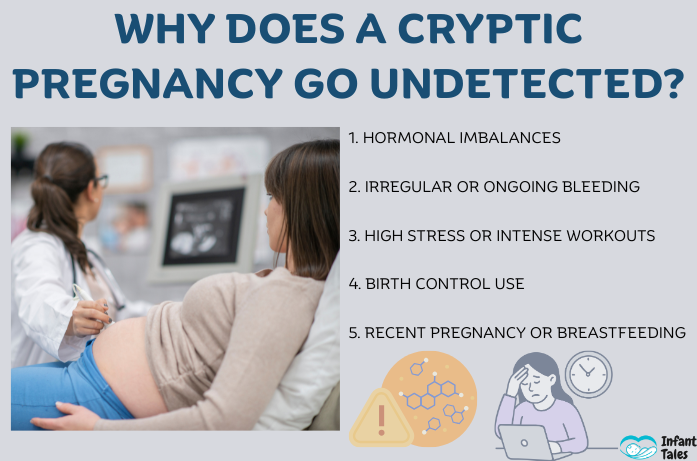
Why Does a Cryptic Pregnancy Go Undetected?
A variety of physical, hormonal, and lifestyle factors can mask pregnancy symptoms, making them difficult to identify.
1. Hormonal Imbalances
Conditions like PCOS, thyroid disorders, or naturally low hCG levels can prevent the usual pregnancy signals from appearing strongly. When hormones do not rise in the expected way, pregnancy tests and symptoms may not behave typically.
2. Irregular or Ongoing Bleeding
Some women bleed lightly throughout early pregnancy. Because this resembles a normal period, cryptic pregnancy with period becomes one of the biggest contributors to delayed awareness.
3. High Stress or Intense Workouts
Stress disrupts hormone regulation, while athletic women sometimes have lower body fat, affecting menstrual cycles and pregnancy symptoms.
4. Birth Control Use
Many women believe pregnancy is impossible while using contraception, so they dismiss early signs.
5. Recent Pregnancy or Breastfeeding
After childbirth, the body’s hormones can remain unpredictable, making new pregnancy symptoms seem like leftover postpartum fluctuations.
Together, these factors create a situation where a pregnancy is naturally hidden rather than consciously overlooked.

What Are the Early Signs of Cryptic Pregnancy?
Parents often ask: What are the early signs of cryptic pregnancy?
The truth is that early signs do exist, they’re simply easy to misinterpret.
Common subtle signs include:
- Light nausea or indigestion
- Fatigue that feels like burnout
- Sensitivity to smells
- Mild breast tenderness
- Bloating mistaken for digestive issues
- Spotting around expected period dates
- Appetite changes or cravings
- Occasional mild cramping
These early signs of cryptic pregnancy overlap closely with PMS symptoms, making them difficult to recognize as pregnancy-specific.
Why Symptoms of Cryptic Pregnancy With Period Occur This question is the heart of most cryptic pregnancy stories. Light bleeding or irregular spotting can happen for many reasons:
- Hormonal shifts during early pregnancy
- Implantation bleeding
- Cervical sensitivity
- Breakthrough bleeding on hormonal birth control
- Irregular cycles
Because these resemble periods, many women continue living life normally without suspecting pregnancy. This is why symptoms of cryptic pregnancy with period cause so much confusion.
Why Pregnancy Tests May Be Negative
Pregnancy tests are designed to detect hCG levels, but cryptic pregnancies can produce unusually low or slow-rising levels of this hormone. This may lead to repeated negative results. Other reasons include:
- Taking the test too early
- Drinking excess fluids before testing
- Faulty or expired test kits
- Late implantation
- Irregular ovulation
In cases of uncertainty, blood tests or ultrasounds offer more accurate results.
Cryptic Pregnancy Belly: Why It Doesn’t Look Like a Typical Baby Bump
One of the most surprising features of this condition is the cryptic pregnancy belly, which often doesn’t resemble a typical baby bump.
Reasons include:
- Baby lying deeper toward the spine
- Firm abdominal muscles
- Higher body weight hiding early growth
- Lower-than-average amniotic fluid
- Bloating mistaken for normal weight changes
Even when reviewing cryptic pregnancy belly pictures, many women don’t notice changes in their own bodies because growth can be subtle or inconsistent.
When Symptoms Become More Noticeable
Eventually, some signs become harder to dismiss:
- Stronger fetal movement
- A firm belly, especially at night
- Sudden increase in appetite
- Pelvic pressure
- Fatigue or back discomfort
- Belly growth late in third trimester
These changes are often what finally prompt a doctor’s visit, leading to a surprising discovery of a cryptic pregnancy baby already far along in development.
Risks Associated With Cryptic Pregnancy
While many cryptic pregnancies end with healthy babies, late detection can lead to:
- Missed prenatal supplements like folic acid
- Lack of vitamin checks
- No early ultrasounds to monitor development
- Increased emotional shock or stress
- Higher risk of anemia or iron deficiency
Early prenatal care is important for both mother and baby, so late discovery often requires immediate medical evaluation.
What to Do If You Suspect a Cryptic Pregnancy
If your body feels different and you cannot explain the changes, it’s important to take your intuition seriously.
1. Take Another Pregnancy Test
Use the first urine of the morning for better accuracy.
2. Record Your Symptoms
Tracking changes in energy, mood, bleeding, or appetite can reveal patterns.
3. Seek Medical Guidance
A blood test or ultrasound provides clarity.
4. Trust Your Body
If your periods seem shorter, lighter, or unusual even with negative tests consider pregnancy as a possibility.
Emotional Impact of a Cryptic Pregnancy
Discovering a pregnancy late can bring a wave of emotions, shock, fear, confusion, or even excitement and relief all at once. The sudden news can feel overwhelming as you try to process it.
Partners and family may also feel surprised or anxious. In these moments, gentle support, honest communication, and professional guidance can help everyone adjust more smoothly.
Who Is More Likely to Experience a Cryptic Pregnancy?
Cryptic pregnancy may be more likely in:
- Women with PCOS
- Women with irregular cycles
- Highly athletic women
- Those under extreme stress
- Perimenopausal women
- New mothers who recently gave birth
These groups often have unpredictable symptoms, making pregnancy harder to detect.
Myths and Facts About Cryptic Pregnancy
Myth: Women know their bodies well, this can’t happen.
Fact: Many medical conditions hide pregnancy symptoms.
Myth: You cannot bleed during pregnancy.
Fact: Light bleeding is common and often mistaken for periods.
Myth: A belly must grow during pregnancy.
Fact: A cryptic pregnancy belly may stay small or unnoticed.
Myth: All pregnancy tests are correct.
Fact: Low hCG can cause false negatives.
How Doctors Diagnose a Cryptic Pregnancy
Healthcare professionals rely on multiple tools to diagnose pregnancy accurately:
- Blood tests to measure hCG
- Ultrasounds to confirm fetal development
- Physical examinations
- Fetal heart monitoring
Once confirmed, prenatal care begins based on the stage of pregnancy.
Conclusion
A cryptic pregnancy shows how incredibly unique every woman’s body is. Not all pregnancies follow the same pattern, and not all symptoms are obvious. If you ever experience unusual bleeding, persistent bloating, unexplained fatigue, or changes that don’t seem to fit your normal cycle, it’s okay to ask questions, seek medical advice, and trust your intuition.
Understanding the signs no matter how subtle helps every parent feel more empowered and informed.
FAQs
1. What is a cryptic pregnancy?
A cryptic pregnancy is when a woman doesn’t realize she’s pregnant because symptoms are very mild or misleading.
2. Can you have a period during a cryptic pregnancy?
Yes. Light bleeding or spotting can happen, making it seem like a normal period.
3. What are the early signs of a cryptic pregnancy?
Mild nausea, fatigue, bloating, breast tenderness, and light spotting often mistaken for PMS.
4. Why do pregnancy tests show negative?
Low hCG levels, early testing, or diluted urine can cause false negatives.
5. Will the belly grow in a cryptic pregnancy?
Sometimes belly growth is small or hidden due to body shape, muscle tone, or baby’s position.
6. Is a cryptic pregnancy dangerous?
It can be safe, but late detection may delay prenatal care, so medical evaluation is important.
7. Who is more likely to have a cryptic pregnancy?
Women with irregular cycles, PCOS, high stress, low body fat, or recent childbirth.
8. How is a cryptic pregnancy diagnosed?
Through blood tests, ultrasounds, and medical examinations.
If you are noticing unusual symptoms or simply want to understand your body better, you’re not alone. Explore more gentle, helpful guides on Infant Tales and stay informed with trusted, parent-focused support.
Medical Disclaimer: This article is for educational purposes only and is not medical advice. Always speak with a qualified healthcare professional regarding concerns about symptoms, pregnancy, or health conditions.