Authored by: A Caring Mom at Infant Tales
Welcoming a baby into your life changes how you think about safety, comfort, and preparedness. Small moments that once felt ordinary, like a mild fever, a stuffy nose, or a tiny scratch, can suddenly feel overwhelming. This is where a thoughtfully prepared baby first aid kit becomes one of the most reassuring things you can have at home. It helps you respond with calm instead of panic and care for your baby with confidence.
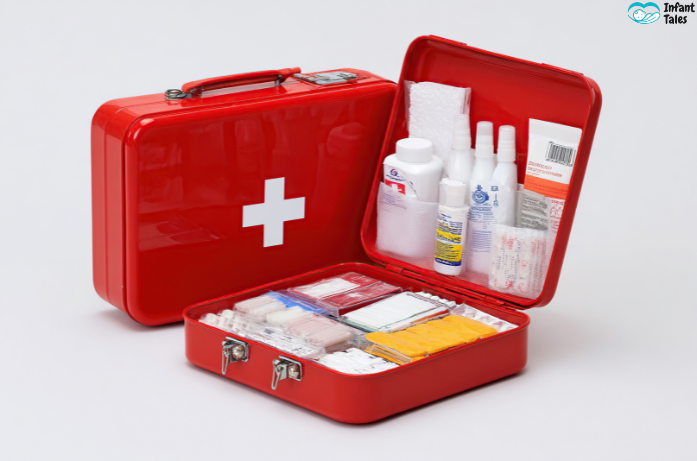
At Infant Tales, our purpose is to support new parents with clear, realistic guidance that fits real life. This article explains every essential item your baby first aid kit should contain, how each item supports baby care, and how preparation quietly strengthens your parenting journey.
Why a Baby First Aid Kit Is Important for New Parents
Babies are sensitive, curious, and constantly adjusting to the world around them. Minor health concerns are common, especially during the first year. When you already have the right supplies nearby, you save time, reduce stress, and can focus fully on comforting your baby.
Trusted pediatric guidance from the Children’s Hospital Colorado highlights that parental readiness and access to basic first aid supplies play a key role in safe early care. A first aid kit is not about expecting problems; it is about being ready for normal moments that every parent experiences.
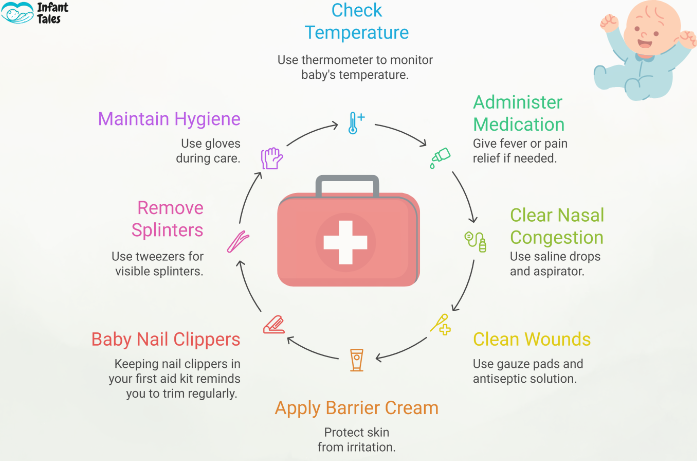
Baby First Aid Kit 12 Essentials Every Parent Should Keep
Each item below is written in simple, short sections to help you understand its place in your baby’s daily care. These are practical, infant-safe essentials meant to support you calmly when small issues arise.
1. Digital Thermometer
A digital thermometer is one of the most important tools for parents. Babies cannot explain discomfort, and temperature changes are often the first visible sign that something is off. Having a thermometer nearby allows you to check quickly and decide what to do next without guessing. Choose one designed for infants and keep it only for baby use.
2. Infant Fever and Pain Relief Medication
Infant-safe fever or pain medication can be helpful during illness or teething when recommended by a healthcare provider. Keeping it in your first aid kit ensures you are not searching late at night. Always store it with the proper dosing tool and follow instructions carefully. Adult medicines should never be used for babies.
3. Saline Nasal Drops or Spray
Nasal congestion is very common in babies, even without illness. Saline drops gently loosen mucus and make breathing more comfortable, especially during feeding and sleep. This simple solution contains no medication and is widely recommended for infant nasal care. Guidance from the World Health Organization supports saline use as a safe option for babies.
4. Nasal Aspirator
A nasal aspirator works alongside saline drops to remove loosened mucus. This can provide quick relief when your baby sounds congested or struggles to breathe comfortably through the nose. Cleaning and drying the aspirator after each use keeps it hygienic and ready for next time.
5. Sterile Gauze Pads
Sterile gauze pads are gentle and versatile. They can be used to clean small cuts, apply solutions, or wipe sensitive skin areas. Their soft texture makes them safer for babies than tissues or cloths, especially when caring for delicate skin.
6. Cotton Balls or Pads
Cotton pads are useful for light cleaning tasks, such as gently wiping around the eyes or applying mild solutions. Using a fresh pad for each area helps maintain hygiene and reduces the chance of spreading germs.
7. Baby-Friendly Adhesive Bandages
As babies grow and begin to move more, small scratches are normal. Baby-friendly bandages are designed to be gentle on sensitive skin. They should be used carefully and placed only where your baby cannot easily remove or mouth them.
8. Baby Nail Clippers or Rounded Scissors
Baby nails grow quickly and can cause accidental scratches on the face or body. Keeping nail clippers in your first aid kit reminds you to trim regularly. Many parents find it easiest to do this while the baby is sleeping or after a bath when nails are softer.
9. Baby-Safe Antiseptic Solution
A mild antiseptic solution helps clean minor cuts and scrapes. It supports skin hygiene without causing unnecessary irritation. Products meant for babies should always be gentle and alcohol-free unless otherwise directed by a healthcare professional.
10. Gentle Barrier Cream or Moisturizer
Dry skin, drool rash, and diaper irritation are common in infancy. A gentle cream or moisturizer protects the skin and helps maintain comfort. Healthy skin acts as a natural barrier and supports overall baby well-being.
11. Rounded-Tip Tweezers
Tweezers can be helpful for removing visible splinters or debris from the skin. They should only be used when the object is easy to see and remove. If there is any doubt, professional medical help is always the safer choice.
12. Disposable Gloves
Disposable gloves are useful during wound care or when handling bodily fluids. They support hygiene and reduce the spread of germs, protecting both you and your baby during care.
First Aid Knowledge Beyond the Supplies
Having supplies is only one part of preparedness. Understanding how to respond in common situations builds confidence and reduces fear.
Learning the basics of baby choking first aid is especially valuable during the first year, when babies explore with their mouths. Knowing what to do and what not to do can make a critical difference while help is on the way. Emergency preparedness guidance from the Centers for Disease Control and Prevention (CDC) also highlights the importance of having essential supplies and knowing how to respond quickly during infant feeding or breathing emergencies.
Many parents also choose to attend a baby first aid class to practice skills in a calm, structured environment. Even one session can greatly increase confidence and clarity during unexpected moments.
Different Types of First Aid Kits Parents Consider
Some parents prefer assembling their own supplies, while others explore ready-made baby first aid kits for convenience. Pre-packed kits can be helpful, especially for first-time parents, as long as all items are infant-safe and clearly labeled.
A newborn first aid kit often focuses more on temperature monitoring, nasal care, and skin protection, while older infants may need additional items as mobility increases. Over time, your supplies naturally evolve into a more complete set of infant first aid essentials.
Many families also keep a small baby emergency kit in the diaper bag for outings, while storing a full kit at home. This consistency makes it easier to respond calmly wherever you are.
Developing a mindset around baby safety first aid, through supervision, baby-proofing, and awareness, often prevents issues before first aid is even needed.
You may also come across branded options like the frida baby first aid kit. While brand names can be convenient, what truly matters is that the contents are suitable for your baby and easy for you to use confidently.
When First Aid Is Not Enough
A first aid kit is meant for minor concerns, not serious emergencies. Immediate medical attention is needed if your baby has difficulty breathing, becomes unusually unresponsive, develops a high or persistent fever, swallows something unsafe, or experiences a serious injury or burn.
Your instincts matter. If something feels wrong, seeking help is always the right choice.
Medical Disclaimer: This article is intended for educational purposes only and does not replace professional medical advice. Always consult your pediatrician or a qualified healthcare provider for concerns about your baby’s health, symptoms, or treatment decisions.
Frequently Asked Questions
1. Do parents really need a baby first aid kit at home?
Yes. Even common issues feel easier to handle when you already have the right tools nearby and know where everything is.
2. How is baby first aid different from adult first aid?
Babies require gentler tools, different medication dosages, and age-appropriate care techniques designed for sensitive skin and developing bodies.
3. When is the best time to prepare first aid supplies?
Preparing before your baby arrives allows you to focus fully on recovery and bonding during the early weeks.
4. Should caregivers and grandparents have a kit too?
Anyone who regularly cares for your baby should have access to basic first aid supplies and know how to use them.
5. Does learning first aid actually reduce panic?
Yes. Knowledge brings clarity, and clarity helps parents act calmly and confidently during stressful moments.
Final Thoughts from Infant Tales
Parenthood is full of moments you can’t predict, especially in the early months when everything feels new and fragile. Preparing a baby first aid setup is not about expecting problems, it is about creating a safe foundation for everyday care. When supplies are organized and familiar, you are able to respond thoughtfully to minor concerns like fever, congestion, or small injuries without added stress. This sense of readiness helps transform uncertainty into calm, steady action.
At Infant Tales, we believe knowledge and preparation go hand in hand. Understanding what your baby may need, keeping essentials within reach, and learning basic first aid skills allow you to focus on what matters most, your baby’s comfort and well-being. Confidence grows not from knowing everything, but from feeling prepared enough to care with clarity, patience, and love as your parenting journey unfolds.
For more trusted, parent-friendly guidance on baby care, safety, and early parenting confidence, continue exploring helpful resources at Infant Tales and grow your journey with calm and clarity.