Authored by: A Caring Mom at Infant Tales
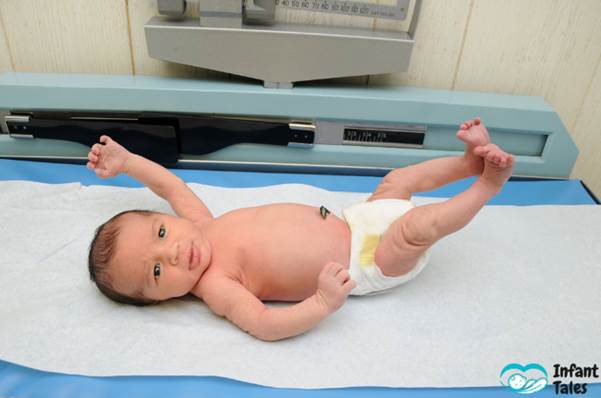
Newborns often stretch more than parents expect. You may see your baby straighten their legs, lift their arms, spread their fingers, arch slightly, or wiggle after waking, feeding, or being held in one position for a while.
In most cases, infant stretching is a normal part of early development. Babies are adjusting to having more space outside the womb, responding to newborn reflexes, and gradually learning how to control their muscles and movements.
Most stretches are brief and followed by relaxation. However, if your baby seems constantly stiff, moves one side less than the other, or has repeated unusual movements, it is worth discussing with your pediatrician. Knowing the difference between normal stretching and movements that need attention can make those early weeks feel much less confusing.
Table of Contents
- Infant Stretching: Is It Normal?
- What Does Normal Newborn Stretching Look Like?
- Why Do Newborns Stretch So Much?
- Safe Ways to Encourage Healthy Movement
- What If My Baby Seems Very Stiff?
- Normal Newborn Stretches vs. Infantile Spasms
- When Should Parents Call the Pediatrician?
- Frequently Asked Questions About Infant Stretching
- Final Thoughts
- Medical Disclaimer
Infant Stretching: Is It Normal?
Yes, in most cases infant stretching is completely normal.
Your baby may stretch both arms, straighten their legs, open their fingers, curl their toes, arch slightly, or make little grunting noises.
These movements often last only a few seconds.
If your baby relaxes afterward, feeds normally, moves both sides of the body, and seems comfortable, an occasional big stretch is usually nothing to worry about.
The American Academy of Pediatrics’ explains that many newborn movements are automatic reflexes rather than movements babies intentionally control.
What Does Normal Newborn Stretching Look Like?
Normal newborn stretching may include:
- arms reaching above the head
- legs suddenly straightening
- toes curling
- fingers opening wide
- brief arching
- kicking and wiggling
- stretching after sleep
- stretching after feeding
Newborn movements can look jerky because the nervous system is still developing.
As your baby grows, those random-looking movements gradually become smoother and more purposeful.
Why Do Newborns Stretch So Much?
Newborn stretching can happen for several completely normal reasons. Here are some of the most common ones:
1. Adjusting After Life in the Womb
For months, your baby stayed curled up in a snug position with very little room to fully stretch their arms and legs.
After birth, they suddenly have much more space to move. Those long newborn stretches may simply be your baby’s way of enjoying that extra freedom and getting used to moving outside the womb.
2. Natural Reflexes Can Look Like Stretching
Some movements that look like stretching are actually normal newborn reflexes.
The Moro, or startle reflex, is a common example. A sudden sound, touch, or change in position may cause your baby to quickly extend their arms and legs before relaxing again.
This reflex is normal during early infancy and gradually becomes less noticeable as your baby’s nervous system develops.
3. Stretching Often Happens After Sleep
Just like adults, babies often stretch as they wake up.
You may notice little facial expressions, wiggling, leg kicks, arm movements, or soft noises before your baby’s eyes fully open.
Since newborns spend a lot of time sleeping and moving between different sleep stages, these wake-up stretches can happen many times throughout the day.
4. Your Baby Is Learning How to Move
Every kick, wiggle, head turn, and stretch gives your baby another chance to learn how their body works.
The CDC’s infant resources encourage parents to watch how their baby’s movement and development
al skills change over time.
As your baby grows, many random-looking infant stretches gradually become more controlled movements, such as reaching, grabbing, rolling, and bringing their hands toward objects.
What Does Normal Newborn Stretching Look Like?
It is very common for newborns to stretch, grunt, squeak, and wiggle, especially while sleeping or waking up. Their bodies are still adjusting to life outside the womb, and many of these little noises and movements are part of normal newborn behavior.
Grunting can also happen when your baby is trying to pass stool. Newborns are still learning how to coordinate their abdominal and pelvic muscles, so they may strain, turn red, or stretch even when their stool is soft.
If your baby settles afterward, feeds well, and seems comfortable, occasional grunting is usually nothing to worry about. However, grunting that happens with breathing difficulty, poor feeding, unusual sleepiness, or blue or gray skin should be checked by a healthcare professional promptly.
Do Healthy Newborns Need Stretching Exercises?
Most healthy newborns do not need a daily stretching routine. The stretches your baby naturally makes on their own are different from exercises performed by a parent or therapist.
Everyday activities such as tummy time, supervised floor play, cuddling, diaper changes, and simply allowing your baby to move freely already give them plenty of opportunities to use their muscles.
Specific stretching or range-of-motion exercises are sometimes recommended when a baby has a muscle, joint, nerve, or movement condition. For example, Nationwide Children’s Hospital provides certain exercises for infants with brachial plexus conditions.
These exercises are designed for individual medical needs, so parents should avoid copying therapeutic stretches unless they have been recommended by their baby’s pediatrician or physical therapist.
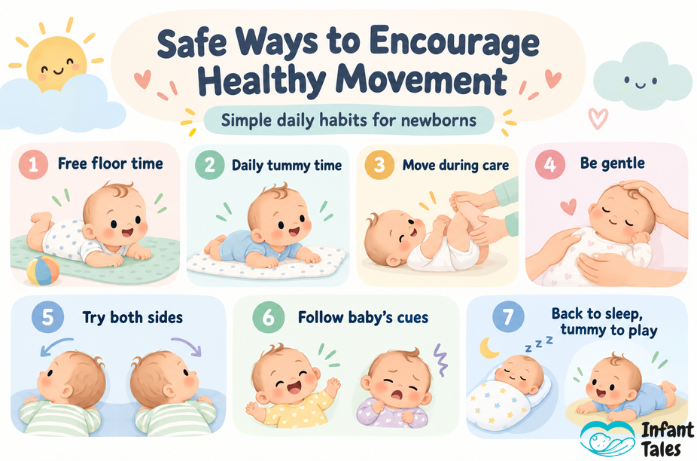
Safe Ways to Encourage Healthy Movement
You do not need special equipment or complicated exercises to support your newborn’s movement. Simple daily activities can give your baby plenty of chances to stretch, kick, and build strength naturally.
1. Give Your Baby Space to Move
Place your awake baby on a safe, firm surface and let their arms and legs move freely. Kicking, stretching, wiggling, and turning are all healthy parts of early movement.
Try to balance time in swings, bouncers, and car seats with supervised floor time. This gives your baby more freedom to move their whole body.
2. Include Supervised Tummy Time
Tummy time helps strengthen your baby’s neck, shoulders, arms, and upper body. These muscles are important for later skills such as head control and rolling.
Begin with short sessions while your baby is awake and supervised. If floor tummy time is difficult, placing your baby tummy-down on your chest can be a gentler way to start.
3. Encourage Movement During Daily Care
Diaper changes and dressing time are simple opportunities to let your baby kick and stretch. Give them a few moments to move freely before putting clothes back on.
You can also talk, smile, or sing while your baby moves. This makes movement enjoyable and adds a little bonding time too.
4. Keep Assisted Movement Gentle
Some parents gently bicycle their baby’s legs or slowly move the arms during play. These movements should always stay slow and within your baby’s comfortable range.
Never pull, force, or push a joint. If your baby cries, stiffens, strongly resists, or looks uncomfortable, stop and let them relax.
5. Encourage Movement From Both Sides
During play, try placing your face or a toy on different sides so your baby has chances to turn their head both ways.
This also helps you notice whether your baby strongly prefers one side. If they regularly struggle to turn in one direction, mention it to your pediatrician.
6. Follow Your Baby’s Cues
Newborns do not need long exercise sessions. A few short periods of movement during the day are usually enough.
If your baby yawns, turns away, cries, or becomes fussy, they may need a break. Movement should feel comfortable and relaxed, not tiring.
7. Remember: Back to Sleep, Tummy to Play
Tummy time should only happen while your baby is awake and closely supervised. It is meant for play and strengthening, not sleep.
For sleep, always place your baby on their back on a firm, flat sleep surface. This keeps tummy time and safe sleep clearly separate.
What If My Baby Seems Very Stiff?
Babies can briefly stiffen when they are startled, upset, or stretching, and this can be completely normal.
It is more important to notice whether the stiffness happens often. Speak with your pediatrician if your baby regularly feels very rigid, is hard to bend, keeps one arm or leg in an unusual position, or seems to move one side less than the other.
Avoid trying to fix ongoing stiffness with repeated stretching at home. If there is an underlying muscle or movement issue, your baby may need an individual assessment and specific guidance.
Could a Head Tilt Be Torticollis?
Some babies seem to prefer looking in one direction or keep their head tilted toward the same shoulder. When this happens often, it can sometimes be related to torticollis, a condition that causes tightness in the neck muscles.
Cleveland Clinic explains that treatment may include positioning changes, tummy time, gentle stretches, or physical therapy depending on the baby’s needs.
If your baby has difficulty turning their head both ways or always rests in the same position, mention it to your pediatrician. Any neck stretches should be gentle and never forced.
Normal Newborn Stretches vs. Infantile Spasms
Normal newborn stretching is usually brief and changes from one movement to another. Your baby may stretch their arms, kick, wiggle, yawn, and then quickly relax.
Infantile spasms are different. They are a type of seizure and need prompt medical attention. The movements may look like sudden stiffening, repeated head drops, quick body crunches, or sudden movements of the arms and legs.
One important sign is repetition. Infantile spasms often happen in clusters, with similar movements repeating every few seconds rather than happening once and stopping.
If you notice repeated unusual movements, especially in clusters, try to record a short video if it is safe to do so and contact your pediatrician promptly.
When Should Parents Call the Pediatrician?
Most infant stretching is harmless, but talk with your baby’s doctor if you notice:
- repeated stiffening or jerking
- movements happening in clusters
- one side moving much less than the other
- persistent head tilting
- ongoing unusual stiffness or floppiness
- crying whenever an arm or leg is moved
- frequent arching with feeding problems
- loss of a developmental skill
- changes in alertness or interaction
Seek urgent medical care if your baby has trouble breathing, turns blue or gray, becomes unresponsive, or appears to have seizure-like activity.
A short video of unusual movements can also be helpful for your pediatrician.
A Simple Rule: Watch the Whole Baby
It is easy to focus on one strange movement and become worried.
Instead, look at your baby’s overall behavior.
Are they relaxed afterward? Are they feeding normally? Do both sides of the body move? Does the movement happen once, or repeat again and again?
That bigger picture often tells you much more than one stretch by itself.
Frequently Asked Questions About Infant Stretching
Final Thoughts
Most infant stretching is a normal part of newborn development. Your baby is adjusting to life outside the womb, responding to natural reflexes, and slowly learning how to control their movements.
Give your baby plenty of safe space to wiggle, stretch, and enjoy supervised tummy time. There is usually no need to force stretches or follow a special routine unless your pediatrician recommends one.
If you notice repeated unusual movements, ongoing stiffness, pain, or anything that feels different from your baby’s normal behavior, speak with your pediatrician. Otherwise, enjoy those tiny stretches, kicks, and sleepy wiggles as your baby grows and discovers how their body works.
Want more simple, trusted baby-care guidance? Explore more newborn development, sleep, feeding, and parenting tips on Infant Tales to feel more confident through every little stage.
Medical Disclaimer
This article is for general educational purposes only and is not a substitute for professional medical advice, diagnosis, or treatment. Contact your pediatrician if you have concerns about your baby’s movement, feeding, breathing, development, or overall health.
About the Author
Geeta Yogi is a parenting writer who shares practical guidance about newborn development, infant movement, tummy time, baby reflexes, and everyday baby care. Her writing focuses on helping parents understand common newborn behaviors and recognize when a movement is part of normal development or worth discussing with a healthcare professional.