Written by a caring mom at Infant Tales
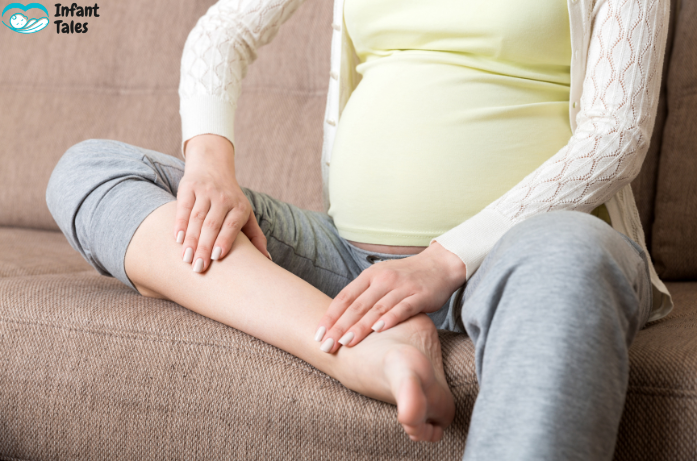
Pregnancy brings so many beautiful changes, but some of them are not especially comfortable. If your shoes suddenly feel tight or your ankles seem to disappear by evening, you may be experiencing swollen feet during pregnancy. I remember looking down at my own puffy feet and wondering whether they would ever feel normal again.
The reassuring news is that gradual swelling in both feet and ankles is common, especially later in pregnancy. Your body is holding extra fluid, and your growing uterus can slow the flow of blood returning from your legs. Although pregnancy swelling can feel heavy and frustrating, simple daily habits may help you feel much more comfortable.
Why Do Feet Swell During Pregnancy?
Swelling caused by fluid collecting in the body’s tissues is called edema. During pregnancy, your body naturally retains more fluid to support you and your growing baby.
At the same time, your expanding uterus places pressure on the veins in your pelvis. This can make it harder for blood to travel back up from your legs toward your heart. As a result, some fluid settles around your feet and ankles. Hormonal changes can also contribute to the puffiness.
You may notice that your feet look more swollen:
- Toward the end of the day
- During warm weather
- After sitting or standing for several hours
- During the third trimester
- After eating a particularly salty meal
- When you have not moved around very much
For many moms, the swelling is mild in the morning and becomes more noticeable by evening. It may also be worse on busy days when resting with your feet up feels almost impossible.
Is Swelling in Pregnancy Usually Normal?
Gradual swelling that affects both feet and ankles is usually a normal part of pregnancy. Although swollen ankles during pregnancy can be uncomfortable, mild swelling generally does not harm you or your baby. It commonly improves after delivery, although it may take a little time for the extra fluid to leave your body.
Still, it is always worth mentioning new or increasing swelling at your prenatal appointments. Your doctor or midwife can check your blood pressure and make sure there are no other symptoms that need attention.
Please trust your instincts too. You know your body best. If the swelling feels sudden, painful, unusually severe, or simply different from what you have been experiencing, contact your maternity care provider rather than waiting for your next routine visit.
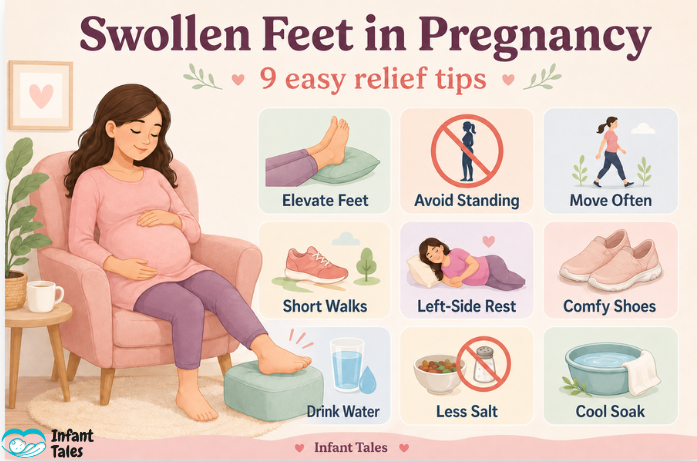
How to Reduce Swollen Feet During Pregnancy
There is no instant cure that makes pregnancy swelling disappear completely. However, small changes throughout your day can support circulation and prevent fluid from collecting around your ankles.
Here are gentle, practical ways to begin relieving swollen feet during pregnancy.
1. Raise Your Feet Whenever You Can
One of the simplest ways to ease swelling is to place your feet on a stool, cushion, or pile of pillows. Mayo Clinic recommends elevating your feet to help reduce fluid buildup and make swollen ankles feel more comfortable.
You do not have to lie down for hours. Even 15 or 20 minutes while reading, answering messages, or watching television may provide some comfort. When lying down, try supporting your lower legs so that your ankles are slightly higher than your hips.
If you work at a desk, keep a small footrest underneath it. This tiny adjustment can feel surprisingly helpful by the end of the day. Leg elevation is commonly recommended for managing mild pregnancy swelling.
2. Avoid Standing in One Place Too Long
Long periods of standing allow fluid to collect in your lower legs. If your work or daily routine requires you to be on your feet, take regular sitting breaks whenever possible.
When you cannot sit, gently shift your weight between your feet, rise onto your toes, or march slowly in place. These small movements encourage your calf muscles to help pump blood upward.
Standing still is often harder on swollen feet than gentle movement. Comfortable shoes with good support can also make long days easier. Avoid tight straps, narrow shoes, or socks that leave deep marks around your ankles.
3. Keep Moving During Long Periods of Sitting
Sitting for hours can contribute to swollen feet and ankles during pregnancy, especially if your feet hang down or your legs remain in the same position.
Try getting up at least once every hour to walk around the room. While seated, circle your ankles slowly, point your toes forward, and then flex them back toward you.
You can also bend and straighten your feet several times. These gentle movements support circulation and may also help with leg muscle cramps during pregnancy. Avoid crossing your legs for long periods because this may make blood flow less comfortable.
4. Is Walking Good for Swollen Feet During Pregnancy?
Yes, gentle walking can be helpful for many pregnant women. Your calf muscles act like small pumps while you walk, helping move blood and fluid out of the lower legs.
A relaxed 10- or 15-minute walk may feel better than one long, tiring session. Choose a pace at which you can speak comfortably, wear supportive shoes, carry water, and stop if you feel pain, dizziness, contractions, breathlessness, or unusual discomfort.
Walking is not suitable for every pregnancy, so follow any activity restrictions given by your doctor. You should also stop exercising and contact your maternity provider if you develop calf pain or swelling, particularly when it affects only one leg.
If fatigue in pregnancy makes longer walks difficult, try a few short and gentle walks throughout the day instead.
5. Rest on Your Left Side
When resting or sleeping, lying on your left side may reduce pressure on the large vein that carries blood from the lower part of your body back to your heart.
You can place a pillow between your knees and another underneath your lower legs for extra support. A pregnancy pillow can also make side sleeping feel less awkward as your belly grows.
Do not worry if you wake up in another position. Simply roll back onto your side and get comfortable again. The goal is not perfect sleep posture; it is finding a position that helps your body rest.
6. Wear Comfortable Shoes or Compression Socks
Pregnancy is not the time to force your feet into shoes that pinch. Choose wide, supportive footwear with enough room for your toes and any end-of-day puffiness.
Some women also find maternity support tights or compression socks helpful. Compression stockings apply gentle pressure to the lower legs, which may reduce fluid buildup and support blood flow.
Ask your doctor or midwife what type and level of compression would be appropriate for you, especially if you have circulation problems, significant swelling, varicose veins, diabetes, or a history of blood clots. Compression wear is often easiest to put on in the morning, before swelling becomes more noticeable.
7. Drink Enough Water
It may seem logical to drink less water when your body is retaining fluid, but reducing your fluid intake is not the answer. Staying hydrated supports the normal changes happening throughout your pregnancy.
Keep a bottle nearby and sip regularly instead of trying to drink a large amount all at once. Water, milk, and other pregnancy-safe drinks can contribute to your daily fluid intake.
Your personal needs may change depending on the weather, activity level, health conditions, and advice from your maternity provider. Mayo Clinic notes that ankle swelling does not mean you should cut back on fluids.
8. Be Mindful of Very Salty Foods
You do not need to remove all salt from your diet. Your body still needs sodium, and strict dietary changes should not be made during pregnancy without professional guidance.
However, regularly eating large amounts of highly salted foods may make fluid retention feel worse. Packaged snacks, instant noodles, processed meats, fast food, canned soups, sauces, and ready-made meals can contain more sodium than expected.
Choose fresh, balanced meals when possible, including a variety of healthy and safe foods during pregnancy, and season your food according to your doctor’s recommendations. Think of this as gentle moderation rather than restriction. Pregnancy should never feel like a punishment or a list of foods you are afraid to eat.
9. Try Gentle Water-Based Relief
Standing or walking slowly in a swimming pool may provide relief because the water places light pressure on the tissues in your legs. Swimming can also help you feel supported and weightless for a little while.
Only use a pool that is clean, safely maintained, and comfortable for you to enter and exit. Follow your doctor’s exercise advice and avoid water activities if you have been told to restrict physical activity.
Even sitting near the edge and moving your ankles gently in the water can feel refreshing after a long day.
Hot or Cold Water for Swollen Feet During Pregnancy?
Cool or lukewarm water is usually better for swollen feet during pregnancy. Soaking your feet for 10 to 15 minutes may help reduce discomfort and make tired feet feel more relaxed.
Avoid very hot water because it can make you feel dizzy or overheated. The water should feel comfortably cool, not icy cold.
After the soak, dry your feet well and rest with them raised on a pillow. You can also move your ankles gently to support blood flow.
Do not add essential oils or herbal products unless your doctor says they are safe during pregnancy.
Home Remedies for Swollen Feet During Pregnancy
The most useful home remedies for swollen feet during pregnancy are usually simple habits rather than complicated treatments.
Try creating a calming evening routine. Change into loose clothing, drink a glass of water, place your feet on two pillows, and perform a few gentle ankle circles. Ask your partner to help with dinner or household tasks while you rest.
A light foot massage may also feel comforting. Use gentle strokes from the feet upward toward the calves, but avoid deep pressure. Do not massage a leg that is suddenly swollen, red, warm, tender, or painful because these symptoms require medical assessment.
You may see herbal teas, detox drinks, supplements, or “water pills” promoted as natural remedies for swollen feet during pregnancy. Please do not take them without speaking to your healthcare provider. Some herbal products and medicines are unsafe during pregnancy, and diuretics should only be used when prescribed for a specific medical reason.
A Simple Daily Routine for Relieving Swollen Feet
If you are wondering how to relieve swollen feet during pregnancy without completely changing your schedule, try adding small moments of care throughout your day.
In the morning, put on comfortable shoes or recommended compression socks before swelling develops. During the day, alternate between sitting, standing, and walking rather than staying in one position.
At lunchtime, spend a few minutes with your feet raised. In the evening, take a gentle walk if your doctor has approved exercise, enjoy a cool or lukewarm foot soak, and rest on your left side.
You do not have to do everything perfectly. Even one or two of these habits may help your legs feel lighter and make the final months of pregnancy more comfortable.
When Swollen Feet Need Medical Attention
Most gradual swelling is harmless, but certain changes should never be dismissed as “just pregnancy.”
Contact your doctor, midwife, or maternity unit promptly if you experience:
- A sudden or severe increase in swelling
- Swelling of your face or hands
- A headache that does not go away
- Blurred vision, flashing lights, or spots
- Pain underneath your ribs or in your upper abdomen
- Feeling unusually unwell
- Swelling that does not improve after resting overnight
These can be warning signs of preeclampsia, a serious pregnancy condition involving high blood pressure and possible organ problems. Preeclampsia most commonly develops after 20 weeks of pregnancy and requires prompt assessment.
Sudden swelling in only one leg, especially with calf pain, warmth, redness, or tenderness, may be a sign of deep vein thrombosis, also called DVT. Contact a healthcare professional urgently. If leg swelling occurs with chest pain, faintness, or difficulty breathing, seek emergency medical help.
Final Thoughts
Dealing with swollen feet during pregnancy can make an already tiring season feel even heavier. Please remember that your changing feet are not a sign that you are doing anything wrong. Your body is working hard every day to protect, nourish, and grow your baby.
Rest when you can, accept help without guilt, and use gentle habits such as elevation, supportive shoes, hydration, short walks, and ankle movements. Most importantly, speak with your maternity provider whenever swelling appears suddenly or is accompanied by other concerning symptoms.
Your feet may feel puffy today, but this stage will not last forever. Be patient with your body and give yourself the same tenderness you are already preparing to give your little one.
FAQs About Swollen Feet During Pregnancy
1. Are swollen feet normal during pregnancy?
Yes, mild swelling in both feet and ankles is common, especially in the third trimester.
2. How can I reduce swollen feet during pregnancy?
Raise your feet, drink enough water, wear comfortable shoes, and avoid standing or sitting for too long.
3. Is walking good for swollen feet during pregnancy?
Gentle walking may improve blood circulation and reduce mild swelling. Stop if you feel pain or discomfort.
4. Should I use hot or cold water for swollen feet?
Cool or lukewarm water is usually more soothing. Avoid very hot or icy water.
5. When should I call my doctor about swelling?
Contact your doctor if swelling is sudden, severe, affects one leg, or comes with headache, vision changes, chest pain, or breathing difficulty.
For more gentle guidance and practical advice, explore our latest pregnancy tips and health articles at Infant Tales.
Medical disclaimer: This article is for general educational purposes and is not a substitute for individual medical advice, diagnosis, or treatment. Always contact your doctor, midwife, or maternity unit if you are concerned about swelling or any other pregnancy symptom.