Written with love by a caring mom at Infant Tales
Some days, motherhood feels exhausting in ways nobody really talks about. Your lower back hurts from carrying your baby, your hips feel tight after sitting for hours, and your body quietly asks for a moment to rest. That’s exactly why I started loving the happy baby pose a simple stretch that feels calming, gentle, and surprisingly comforting after a long day.
What makes this pose so special is that it doesn’t feel like hard exercise. There’s no pressure to be flexible or experienced with yoga. You simply lie down, breathe deeply, and allow your body to soften little by little.
Even just one minute in this pose can feel like giving yourself a small moment of peace. If you’ve been searching for an easy stretch to relax your body, improve flexibility, and release tension naturally, this guide is for you.
What Is the Happy Baby Yoga Pose?
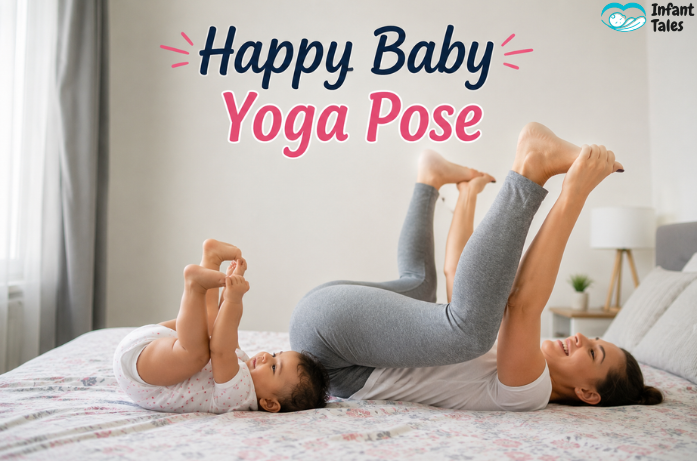
The Happy Baby Yoga Pose also known as Ananda Balasana, is a stretch in yoga that even beginners can perform with ease. In this pose, you lie on your back, grasp your feet, and gently draw your knees open toward your chest.
This pose looks exactly like how young children naturally hold their feet while lying down, completely relaxed, playful, and carefree. Perhaps that is why this stretch feels so emotionally soothing as well.
In yoga practice, this pose is often performed at the end of a session, as it helps to relax the body and relieve tension.
And truth be told, moms, too, sometimes need exactly this kind of solace.
Why Moms Love the Happy Baby Stretch
Motherhood puts constant pressure on the body.
We spend hours carrying babies, feeding little ones, picking toys off the floor, rocking children to sleep, and standing all day.
- Carrying babies
- Feeding little ones
- Picking toys off the floor
- Rocking children to sleep
- Standing and multitasking all day
You can find more helpful newborn baby care tips to make everyday parenting a little easier. Over time, that tension settles into the hips, shoulders, and lower back.
The Happy Baby Stretch gently releases some of the body’s stiffness, without causing any sensation of sharpness or heaviness. It is one of those stretches that feels less like a workout and more like a deep breath for your body.
Benefits of Happy Baby Yoga Pose
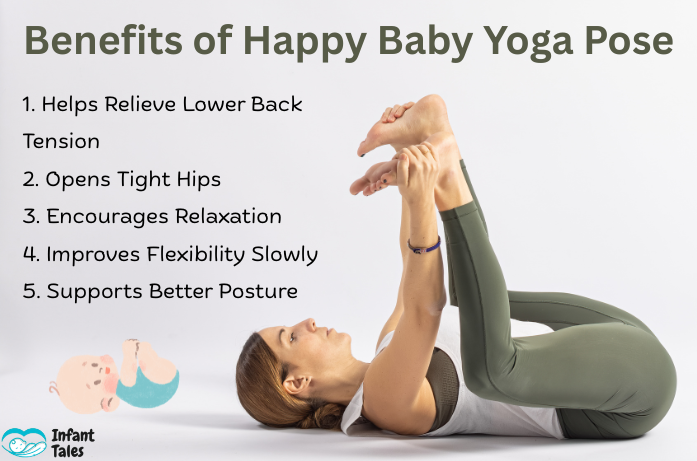
1. Helps Relieve Lower Back Tension
The greatest benefit of ‘Happy Baby Yoga’ is that it provides relief to the lower back.
This pose gently stretches the spine and hips, helping to alleviate the pressure that accumulates from lifting heavy objects, bending over, and sitting for prolonged periods.
Many mothers find that their backs begin to feel significantly lighter after holding this pose for just 30 seconds.
2. Opens Tight Hips
Pregnancy, postpartum recovery, and the daily activities of motherhood can cause the hips to feel stiff and uncomfortable. Gentle stretching may also help relieve leg muscle cramps during pregnancy.
This pose gently opens the hips and inner thighs, gradually increasing flexibility over time.
This pose is gentle, making it ideal for beginners.
3. Encourages Relaxation
The happy baby pose yoga stretch naturally encourages slow breathing and relaxation.
And sometimes moms simply need a moment where nobody needs anything from them.
No dishes, No laundry, No multitasking.
Just breathing quietly for a minute can feel healing.
4. Improves Flexibility Slowly
Unlike intense stretching, this pose helps naturally improve the body’s flexibility through regular practice.
You do not need to force your knees wider or pull your legs forcefully.
When the body feels safe and free from tension, it gradually opens up.
5. Supports Better Posture
Many moms develop tight shoulders and poor posture from feeding, carrying babies, and bending constantly.
The happy baby stretch helps release lower body stiffness and balance some of that physical tension.
How to Do the Happy Baby Yoga Pose
The best part about this pose is how simple it is.
You don’t need yoga experience or expensive equipment.
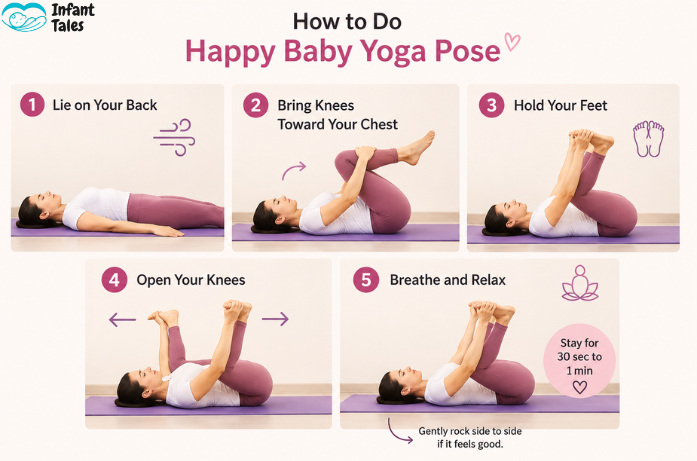
Step 1: Lie on Your Back
Find a comfortable spot on the floor or yoga mat.
Relax your shoulders and take a slow deep breath.
Step 2: Bring Knees Toward Your Chest
Bend both knees gently toward your chest.
Move slowly and comfortably.
Step 3: Hold Your Feet
Reach for the outer edges of your feet.
If reaching your feet feels difficult, hold your ankles or calves instead.
Step 4: Open Your Knees
Gently guide your knees outward toward your armpits.
Keep the stretch soft and comfortable.
Step 5: Breathe and Relax
Stay in the pose for 30 seconds to 1 minute while breathing slowly.
You can gently rock side to side if it feels good on your lower back.
Common Mistakes to Avoid
Even gentle yoga stretches can feel uncomfortable if done incorrectly.
Pulling Too Hard: This pose should never feel painful.
Gentle stretching works better than forcing the body deeper.
Tensing the Neck: Keep your shoulders and head relaxed on the floor.
Avoid straining your neck while reaching for your feet.
Holding Your Breath: Many people accidentally stop breathing during stretches.
Slow breathing helps muscles relax naturally.
Comparing Yourself to Others: Please don’t compare your flexibility to yoga photos online.
Every body is different. Every mom’s body has been through different experiences. Your yoga journey does not need to look perfect.
Easy Modifications for Beginners
If the full pose feels too intense, try these easier options.
Use a Towel or Strap: Wrap a towel around your feet if reaching them feels difficult. This keeps the stretch gentle and supported.
Hold Behind Your Legs: Instead of grabbing your feet, hold behind your thighs or knees. You’ll still get many of the same benefits.
Practice One Leg at a Time: A single-leg version feels much gentler for some beginners and postpartum moms.
When Should You Avoid This Pose?
Although the happy baby yoga pose is beginner-friendly, some situations require extra caution.
Avoid or modify this pose if you have:
- Severe knee pain
- Hip injuries
- Neck injuries
- Recent surgery
- Pregnancy discomfort in later months
If anything feels painful, stop immediately.
Yoga should support your body, not strain it.
Best Time to Practice Happy Baby Yoga
One reason moms love this stretch is because it easily fits into everyday life.
Before Bed: This pose feels incredibly calming before sleep and helps release stress from the day.
During Nap Time: Even one quiet minute while the baby naps can feel refreshing.
After Carrying Your Child All Day: Your hips and lower back will definitely appreciate the stretch.
Final Thoughts From a Caring Mom at Infant Tales
The happy baby yoga pose may look simple, but sometimes the softest stretches bring the deepest comfort. In the middle of busy motherhood days, this gentle pose gives your body a chance to relax, breathe, and release built-up tension little by little.
You don’t need perfect flexibility or long yoga sessions to feel better. Even a few quiet moments spent stretching and breathing slowly can help your body feel lighter and calmer.
So whenever the day feels overwhelming, take a small pause for yourself. Lie down, breathe deeply, and let your body rest. Because moms deserve care, comfort, and gentleness too.
Take a deep breath, stretch gently, and give yourself a little moment of peace with Infant Tales motherhood meets comfort, care, and real-life support.
FAQs About Happy Baby Yoga Pose
1. Is the happy baby yoga pose beginner-friendly?
Yes, the happy baby yoga pose is one of the best beginner yoga stretches because it is gentle, relaxing, and easy to modify.
2. How long should I hold the happy baby pose?
Most people hold the pose for 30 seconds to 1 minute while breathing slowly and comfortably.
3. Does the happy baby stretch help lower back pain?
Yes, the happy baby stretch can help release lower back tension by gently opening the hips and relaxing the spine.
4. Can I practice happy baby yoga every day?
Absolutely. Daily practice can improve flexibility, reduce stiffness, and help the body relax over time.
5. Is happy baby yoga safe during pregnancy?
Some women may practice modified versions during early pregnancy, but it’s always best to check with a healthcare provider first.