
Written with love by a caring mom at Infant Tales
Feeling your baby move for the first time is an important stage in pregnancy, and many moms wonder when can you feel baby move. In most cases, these early movements begin between 16 and 22 weeks, but the timing can vary depending on your body and your baby’s development.
If it’s your first pregnancy, you may notice these movements a little later because they are very gentle and easy to miss at first. Factors like your baby’s position and your daily activity level can also affect when you start feeling those first small flutters.
When Can You Feel Baby Move During Pregnancy?
This is one of the most asked questions, especially for first-time moms who are experiencing everything for the first time.
Most women begin to feel their baby move somewhere between 16 to 22 weeks of pregnancy, which is often around 5 months pregnant. But this is not a strict timeline, it’s more like a gentle window.
For some moms, it may happen a little earlier. For others, it may take a bit longer, and both are completely normal. According to experts at American Pregnancy Association, these first movements, often called quickening, are an important milestone in pregnancy development.
Why First-Time Moms Often Feel It Later
If this is your first pregnancy, your body is experiencing these changes for the very first time, and sometimes symptoms like lower back pain can also make early pregnancy more noticeable. These initial flutters are often so gentle that they don’t clearly feel like movement, which makes them harder to recognize. It takes a little time for your mind and body to connect these new sensations with your baby’s activity.
In later pregnancies, many moms tend to notice movements earlier because they already understand how those early sensations feel. Their awareness is sharper, so even the smallest movements are easier to identify. It’s not that the baby starts moving sooner, but that the mother becomes more confident in recognizing those early signs.
What Do Baby’s First Movements Really Feel Like?
This is where things get interesting, because no two moms describe it exactly the same way.
Early baby movements are often called quickening, and they can feel like:
- Tiny bubbles gently rising
- A light flutter, like butterfly wings
- Soft tapping from inside
- A rolling or swishing feeling
It’s not a strong kick at first. It’s more like a gentle nudge that makes you pause and wonder.
Medical experts at Cleveland Clinic also describe these early movements as subtle sensations that can easily be confused with normal body activity.
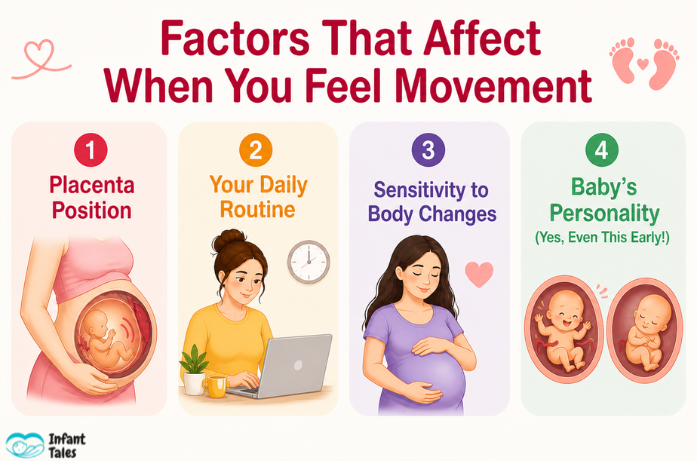
Factors That Affect When You Feel Movement
There are a few real reasons why movement timing can differ from one mom to another.
1. Placenta Position
If you have an anterior placenta (positioned at the front), it can act like a cushion between your baby and your belly.
This can make early movements harder to feel, even though your baby is moving normally.
2. Your Daily Routine
If you’re constantly busy, walking, working, or multitasking, you might miss those small movements.
Many moms notice their baby more when they finally sit down or lie quietly at night, especially when dealing with discomfort like leg cramps.
3. Sensitivity to Body Changes
Some moms are naturally more aware of subtle changes in their body, while others may take a bit longer to notice.
Both experiences are completely okay.
4. Baby’s Personality (Yes, Even This Early!)
Some babies are naturally more active, while others are calmer. Even in the womb, they have their own rhythm.
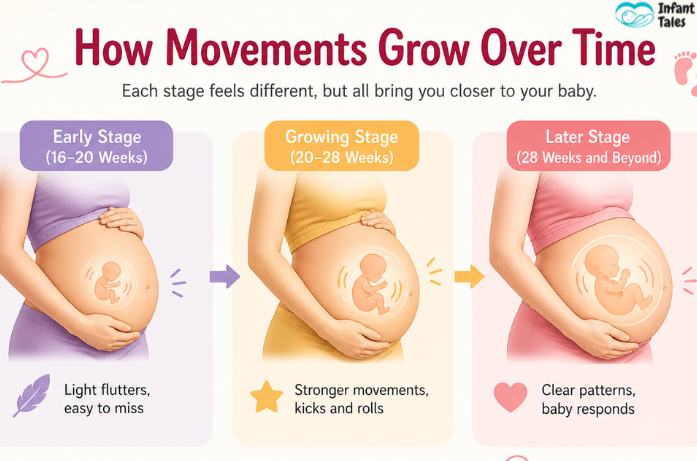
How Movements Grow Over Time
One of the most exciting parts of pregnancy is how these movements evolve.
Early Stage (16–20 Weeks)
- Light, irregular flutters
- Easy to miss
- No pattern yet
Growing Stage (20–28 Weeks)
- Stronger, more noticeable movements
- Kicks, rolls, and stretches
- You start recognizing baby’s activity times
Later Stage (28 Weeks and Beyond)
- Clear patterns develop
- Baby responds to your voice, touch, or even light
- Movements feel stronger but may change as space becomes limited
Health guidance from Pregnancy Birth & Baby also explains that as pregnancy progresses, movements become more regular and easier to track.
Each stage feels different, but all of them bring you closer to your baby.
Simple Ways to Notice Baby Movements Sooner
If you’re eagerly waiting for that first flutter, here are some gentle ways to help you tune in.
1. Slow Down Your Day
Your baby’s movements are easier to notice when your body is still. Try to create small quiet moments for yourself.
2. Lie on Your Side
Lying down, especially on your left side, can improve circulation and make movements easier to feel.
3. Connect With Your Baby
Even if you can’t feel movement yet, place your hand on your belly and talk softly. This creates emotional awareness and helps you focus on your body.
4. Notice Patterns, Not Just Moments
Instead of waiting for a big kick, try to notice small, repeated sensations. Sometimes movement is not strong, but it’s consistent.
What If You Still Don’t Feel Anything?
This is where many moms start to worry.
If you haven’t felt movement yet, especially before 20–22 weeks, it’s usually not a cause for concern.
Your baby is still small, and movements may not be strong enough to feel clearly.
Also remember:
- Movements can be very subtle at first
- You might feel them but not recognize them yet
- Your body may simply take a little longer
If you ever feel uneasy, don’t hesitate to speak to your doctor. Even a small reassurance can bring peace of mind.
When Should You Be Concerned?
Once you begin to feel regular movements, it’s important to stay aware of changes.
Reach out to your doctor if:
- You suddenly stop feeling movement after regular activity begins
- Movements become much weaker
- You notice a clear drop in your baby’s usual pattern
Your instincts matter. If something feels off, it’s always okay to check.
The Emotional Bond That Begins With Movement
This is something truly special.
The first movement is not just physical, it’s emotional. It’s the first real interaction between you and your baby.
You might find yourself:
- Smiling unexpectedly
- Talking to your baby
- Feeling comforted by each little kick
These small moments build a deep bond that continues even after birth.
A Few Honest Tips From One Mom to Another
- Don’t compare your timeline with others
- Trust your body’s pace
- Stay calm, even when you feel unsure
- Focus on connection, not just movement
- Celebrate small milestones, they matter
Pregnancy is not about perfection. It’s about experiencing each moment as it comes.
Final Thoughts: Your First Flutter Will Be Worth the Wait
If you’re still wondering when can you feel baby move, try to trust that your moment will come at the right time for you. And when it does, it won’t just be a physical feeling, it will be something deeply emotional and unforgettable.
That first gentle flutter may be small, but it carries a beautiful meaning. It’s your baby’s quiet way of letting you know they’re there, growing and reaching out to you in their own little way.
Give yourself patience during this phase. Stay calm, avoid overthinking, and trust your body’s natural rhythm. This journey is not about rushing moments, it’s about experiencing them as they come.
Because motherhood doesn’t start at birth, it begins right here, in these soft, waiting days. And you’re already moving through it with so much care and love.
FAQs
1. When can you feel baby move for the first time?
Most moms feel their baby move between 16 and 22 weeks of pregnancy, but it can vary from person to person.
2. Is it normal not to feel baby move at 18 weeks?
Yes, it’s completely normal. Early movements can be very subtle and easy to miss, especially in a first pregnancy.
3. What do early baby movements feel like?
They often feel like light flutters, bubbles, or gentle tapping rather than strong kicks.
4. When can you start feeling baby move regularly?
Regular movements are usually noticed after 24–28 weeks, when your baby becomes more active and patterns begin to form.
5. Does baby movement mean everything is okay?
Movement is a reassuring sign, but patterns matter more. If you notice sudden changes later in pregnancy, it’s best to check with your doctor.
If this article helped you feel more calm and informed, share it with another mom who might need a little reassurance today. And don’t forget to explore more helpful, mom-written guides on Infant Tales to support you through every stage of your journey.
Disclaimer: This article is for informational purposes only and is not a substitute for medical advice. Every pregnancy is unique, so always consult your doctor or healthcare provider if you have any concerns about your baby’s movements or your health.