
Written with care and real-life understanding by a mom at Infant Tales
Parenting a toddler is a phase filled with love, learning, and many ups and downs. One moment your little one is smiling and holding you close, and the next moment they may be upset, refusing to listen, or having a tantrum. In such moments, it is natural for parents to wonder about the best way to discipline a toddler without being too harsh or hurting their child emotionally.
If you have ever felt overwhelmed, unsure, or even guilty after reacting in frustration, you are not alone. These feelings are a normal part of parenting. The truth is, toddler discipline is not about controlling behaviour, but about guiding your child with patience, care, and understanding.
When you approach discipline in a gentle and consistent way, it helps your child feel secure, strengthens your bond, and slowly teaches them how to manage their emotions and actions in a healthy way.
Understanding the Best Way to Discipline a Toddler
The best way to discipline a toddler starts with understanding how toddlers think and feel. At this age, children are not being “difficult” on purpose. They are still learning how to handle emotions, communicate their needs, and understand limits.
A toddler’s brain is still developing, especially the part that controls emotions and decision-making. This means they:
- Act on impulse
- Struggle with patience
- Get overwhelmed easily
- Do not fully understand right and wrong
This is why child behavior often feels unpredictable. Your toddler is not trying to challenge you, they are trying to understand the world around them.
When you begin to see behaviour as communication, your response naturally becomes calmer. This shift is the heart of gentle discipline and positive parenting.
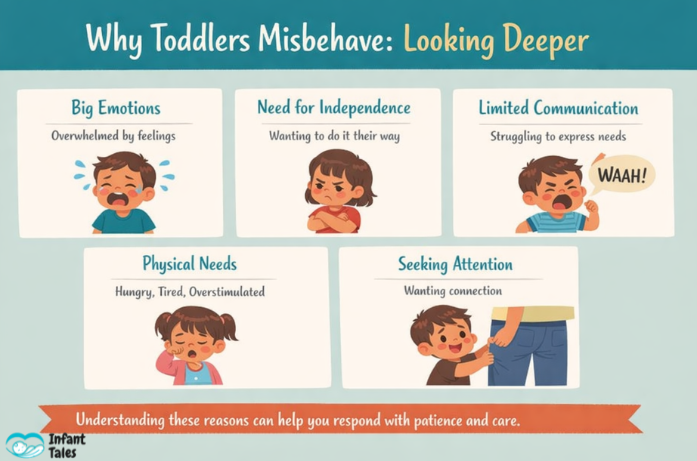
Why Toddlers Misbehave: Looking Deeper
Understanding these triggers helps you practice calm parenting instead of reacting emotionally. If you want to understand tantrums more deeply, you can read this helpful guide on toddler behavior from Kids Health.
1. Big emotions without control
Toddlers experience strong feelings like frustration, anger, and disappointment, but they don’t know how to manage them. If your child is also toddler hitting, gentle guidance can help them express emotions in healthier ways.
2. Need for independence
At this stage, toddlers want to do things on their own. Saying “no” is often their way of expressing independence, not disobedience.
3. Limited communication skills
Your child may cry or throw a tantrum simply because they cannot express what they need. This is common in early child behavior development.
4. Physical needs
Sometimes behavior has nothing to do with discipline. Hunger, tiredness, or overstimulation can quickly lead to meltdowns, especially if your baby fussy throughout the day.
5. Need for attention
Children naturally seek connection. If they feel ignored, they may act out just to get your attention.
Understanding these triggers helps you practice calm parenting instead of reacting emotionally.
Gentle Parenting Discipline: A Balanced and Effective Approach
Gentle parenting discipline is not about being soft or permissive. It is about being firm, but kind. It focuses on teaching rather than punishing. This approach is also supported by global parenting experts. You can explore more about healthy discipline methods on UNICEF Parenting.
1. Connect before correcting
Before you correct your child, connect with them emotionally. A simple acknowledgment like, “I see you’re upset,” can make a big difference.
Connection reduces resistance and helps your child feel understood.
2. Stay calm and present
Your child learns emotional control by watching you. When you stay calm, you are teaching them how to manage their own emotions.
This is a key part of calm parenting.
3. Set clear and simple boundaries
Toddlers need limits to feel safe. Use short and clear instructions like:
- “We don’t hit.”
- “Toys stay on the floor.”
Consistency is very important in toddler discipline.
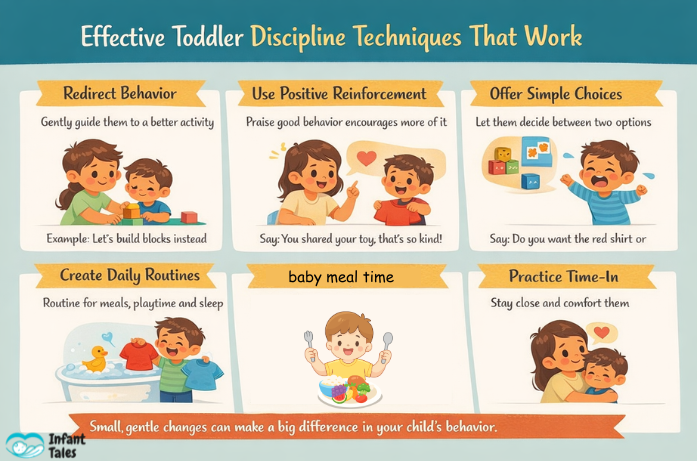
Effective Toddler Discipline Techniques That Work
Let’s talk about some simple and practical toddler discipline techniques that you can use in your daily routine. These are not complicated methods, just small and gentle changes that can slowly improve your child’s behavior.
1. Redirect instead of punish
Toddlers get distracted very easily, and this can actually help you. Instead of stopping a behavior again and again, gently guide your child toward something better.
For example, if your toddler is throwing toys, you can calmly suggest building blocks together or rolling a ball instead.
This kind of redirection feels positive and keeps things peaceful. It is a simple way to follow positive parenting without creating stress.
2. Use positive reinforcement
Toddlers respond beautifully to encouragement. When you notice your child doing something good, even something small, take a moment to appreciate it.
You can tell them they shared their toy nicely or that they listened well. These small words build your child’s confidence and encourage them to repeat that good behaviour again.
3. Offer simple choices
Toddlers like to feel independent. Giving them small choices can help avoid unnecessary struggles.
Instead of forcing them to do something, you can offer two simple options, like choosing between two outfits.
This helps your child feel involved and reduces resistance. It is a very helpful habit in everyday toddler discipline.
4. Create daily routines
Toddlers feel more secure when they know what is coming next, and adding simple learning activities throughout the day can encourage positive behaviour. Having a simple routine for meals, playtime, and sleep can make a big difference.
When your child feels safe and settled, their child behaviour naturally improves. It also reduces confusion and tantrums.
5. Practice time-in instead of time-out
When your toddler is upset, instead of sending them away, try staying close.
Sit with them, comfort them, and give them time to calm down. Let them feel that you are there for them.
This builds emotional security and helps your child learn how to manage their feelings in a healthy way.
How to Discipline a Toddler Without Yelling
Many parents struggle with staying calm, especially during repeated tantrums. Learning how to discipline a toddler without yelling takes practice, but it is possible.
Pause before reacting: Take a deep breath before responding. This small pause can prevent harsh reactions.
Lower your voice: Speaking softly often works better than shouting. It helps your child focus and feel safe.
Use eye contact: Get down to your child’s level and make eye contact. This improves communication and connection.
Be consistent: You may need to repeat yourself many times, and that is normal. Consistency teaches your child what to expect.
Toddler Behavior Management: Teaching Life Skills Early
Good toddler behavior management is about building skills that your child will carry for life, including early reading skills and independent learning.
Teach emotional words
Help your child understand their feelings by naming them.
“You are feeling angry.”
“You are sad because it broke.”
This reduces frustration and improves communication over time.
Model behavior
Children copy what they see. If you stay calm, patient, and respectful, your child will slowly learn the same.
Keep expectations realistic
Toddlers are still learning. Expecting perfect behavior can lead to frustration for both you and your child.
Discipline vs Punishment: A Healthy Perspective
Understanding the difference between discipline and punishment is very important in toddler discipline and positive parenting.
| Punishment | Discipline |
| Focuses on fear | Focuses on teaching |
| Often involves anger | Builds understanding |
| Stops behavior temporarily | Encourages long-term growth |
Instead of telling your child that they are bad, gently guide them by saying that the behavior is not okay. This approach helps protect your child’s self-esteem while still setting clear and healthy boundaries. For more expert-backed advice, you can visit the American Academy of Pediatrics.
Common Discipline Mistakes Parents Make
Even the most loving parents make mistakes. Here are a few things to avoid:
Expecting too much too soon
Toddlers are still learning basic skills.
Being inconsistent
Changing rules can confuse your child.
Reacting emotionally
Try to respond calmly instead of reacting in frustration.
Using too many “no” commands
Instead of constant “no,” guide your child toward positive actions.
When Discipline Feels Overwhelming
There will be days when nothing seems to work. Your toddler may cry, resist, or test limits again and again.
This does not mean you are doing something wrong.
Parenting is a process of learning, for both you and your child. Some days will be easier, and some will be harder.
Take breaks when needed. Ask for help if you can. Most importantly, be kind to yourself.
Final Thoughts: You Are Shaping a Beautiful Future
If you are searching for the best way to discipline a toddler, gently remind yourself that there is no perfect method. What truly matters is the love, patience, consistency, and connection you bring into your everyday parenting. These small, repeated efforts are what shape your child’s behavior and emotional world over time.
Every time you choose to stay calm, every time you guide instead of punish, you are teaching your child something meaningful. You are helping them grow into a kind, confident, and emotionally strong person who feels safe and understood.
You are not just managing behavior in the moment. You are building trust, teaching feelings, and helping your child understand the world around them. And even on the hardest days, when things feel overwhelming, remember that your effort, your presence, and your love matter far more than being perfect.
If you found this helpful, explore more gentle parenting tips on Infant Tales and support your journey with love, patience, and confidence.’
FAQs
1. What is the best way to discipline a toddler?
The best way is to guide with patience, set clear boundaries, and use gentle discipline instead of punishment.
2. How do I discipline my toddler without yelling?
Stay calm, speak softly, and repeat instructions consistently. Your calm tone helps your child feel safe and listen better.
3. Why does my toddler not listen to me?
Toddlers are still learning and often get distracted or overwhelmed. It is a normal part of child behavior development.
4. Is it okay to ignore toddler tantrums?
Instead of ignoring, stay close and support your child. Help them calm down and understand their emotions.
5. What are simple toddler discipline techniques?
Redirect behavior, offer choices, use positive reinforcement, and follow a consistent routine for better toddler discipline.
Disclaimer: This article is for informational purposes only and is based on general parenting experiences. Every child is different, so always trust your instincts and seek professional guidance if needed.