By A Caring Mom at Infant Pamper
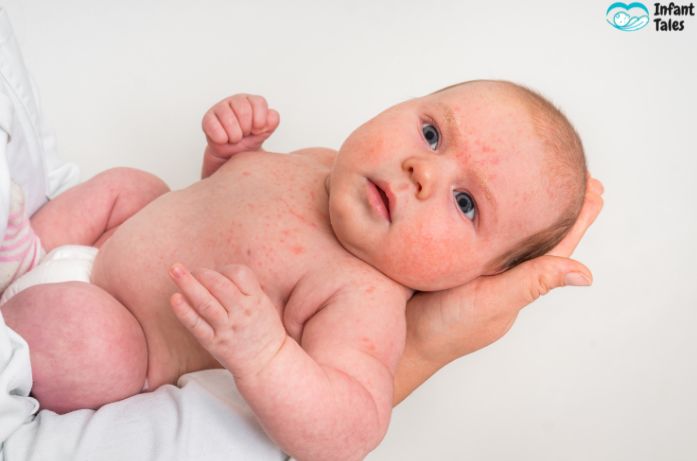
Baby Heat Rash is something that can happen to your baby when they get too hot. This is because babies have skin that is still learning how to deal with temperature changes. As a mom I know how scary it can be to see your babys skin get all red and bumpy. But do not worry Baby Heat Rash is very common. It is usually not serious.
When the sweat ducts get blocked, moisture builds up under the skin. That is when you start to see those small red or pink bumps. Sometimes you might see clear blisters instead. It can look pretty bad. Most of the time Baby Heat Rash gets better quickly once the babys skin cools down and dries out.
What Causes Baby Heat Rash?
So why does Baby Heat Rash happen? Well babies are still learning how to control their body temperature and their skin is very sensitive. Heat rash in babies usually appears during warm weather or in humid environments.
There are some things that can trigger Baby Heat Rash, such as hot weather, overdressing, tight clothes and long periods in car seats or baby carriers. Even thick creams or oils can block the pores and make Baby Heat Rash worse.
As a mom it is easy to worry about your baby getting too cold. During warm weather it is actually more common for babies to get too hot. Sometimes all it takes is to remove a layer of clothing to make your baby more comfortable. Comfort does not always mean adding layers, sometimes it means taking some away.
Medical experts at Cleveland Clinic explain that heat rash, also called prickly heat or miliaria, occurs when sweat gets trapped under the skin instead of evaporating properly. You can read their detailed medical overview here:
Types of Baby Heat Rash
There are types of Baby Heat Rash but most of the time it is either Miliaria Crystallina or Miliaria Rubra. Knowing the difference can help you feel more at ease.
Miliaria Crystallina is the mildest form. It looks like clear or white blisters and it usually does not cause any discomfort. These tiny blisters may look alarming, but they often disappear within a day or two.
Miliaria Rubra is the most common type of newborn heat rash. It looks like red bumps and can feel itchy or prickly. This is the kind that may make your baby a little fussy, especially in warm rooms.
Most infant heat rash falls into one of these two categories and improves with simple cooling and care.
Where Baby Heat Rash Usually Appears
Baby Heat Rash usually appears in areas where sweat collects. Common places include the neck folds, armpits, chest, back and diaper area. It can also show up behind the knees or in elbow creases.
I remember lifting my babys chin and finding those bumps hidden in the neck rolls. It looked scary at first. Once I cooled the area down and kept it dry, it went away quickly.
These warm, covered areas make it easier for sweat to get trapped, especially during summer months when baby skin rash in summer becomes more common.
Symptoms to Watch For
If you think your baby has Baby Heat Rash, look for red or pink bumps, slight swelling and warm skin in the affected area. You may also notice tiny clear blisters in mild cases.
Your baby might be a bit fussy in warm environments. Some babies try to rub the area if it feels prickly.
But do not worry. Baby Heat Rash is not usually serious. It does not come with fever, fatigue or changes in feeding patterns. If your baby is otherwise happy and feeding well, it is likely just a baby rash from heat.
According to guidance shared by American Academy of Pediatrics, heat rash typically improves quickly once the skin is cooled and kept dry.
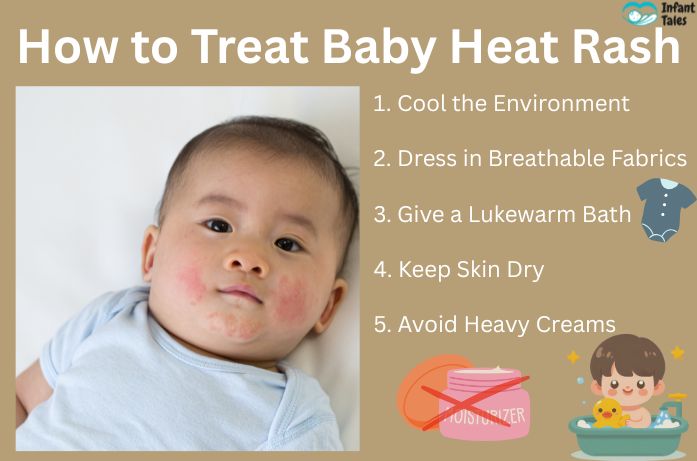
How to Treat Baby Heat Rash
So how do you treat Baby Heat Rash? The good news is that it is usually simple and gentle. Most of the time you do not need to use any medication.
1. Cool the Environment
Move to an air conditioned room if possible. Use a fan to circulate the air, but do not point it directly at your baby. Let your babys skin breathe.
Often cooling the room is enough to start healing heat rash in babies.
2. Dress in Breathable Fabrics
Choose lightweight, loose fitting cotton clothes. Avoid synthetic fabrics that trap heat and sweat.
If you feel warm in your own clothes, your baby probably does too.
3. Give a Lukewarm Bath
A short bath in lukewarm water can soothe irritated skin. Skip the bubble baths and harsh soaps. Plain water is usually enough.
After bath time gently pat the skin dry instead of rubbing. Baby skin is delicate and rubbing can cause more irritation.
4. Keep Skin Dry
Moisture makes Baby Heat Rash worse. Check the skin folds after baths, naps or outdoor time. Gently dab them dry with a soft cloth.
Keeping the skin cool and dry is one of the most effective treatments for newborn heat rash.
5. Avoid Heavy Creams
Thick ointments and oils can clog the sweat glands further. It is usually best to keep the area clean, cool and dry without applying too many products.
If you are unsure about using any cream, consult your pediatrician first.
If the rash appears in the diaper area, you can also try giving your baby some diaper free time in a cool room. Fresh air can work wonders for infant heat rash.
When to Call the Doctor
Most cases of Baby Heat Rash improve within a few days. But there are times when it is important to seek medical advice.
If you notice pus or yellow crusting, fever, spreading redness, swelling or if your baby seems unusually uncomfortable, it is best to consult with your pediatrician and learn how to recognize signs of baby flu.
Heat rash itself is mild. However scratching can sometimes lead to infection. Always trust your instincts as a parent.
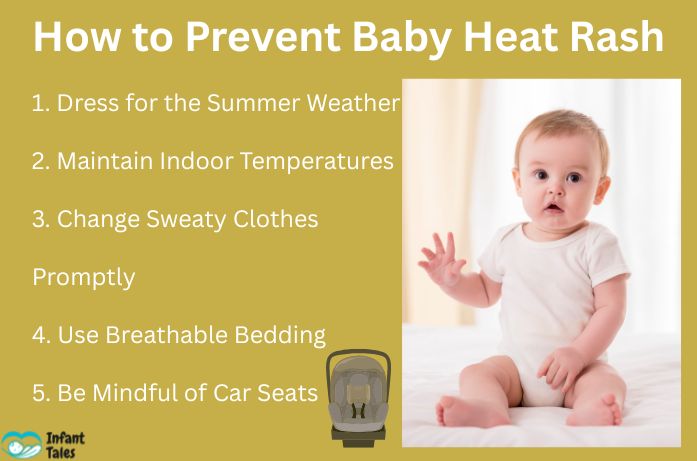
How to Prevent Baby Heat Rash
Preventing Baby Heat Rash is not about worrying all the time. It is about being aware of your babys comfort. Small adjustments can make a big difference.
1. Dress for the Weather
Choose lightweight, breathable fabrics and avoid overdressing during naps and bedtime. Loose clothing allows air to circulate and reduces trapped sweat.
2. Maintain Indoor Temperatures
Keep your home slightly cool during hot months. Good air circulation helps prevent heat rash in babies before it even starts.
3. Change Sweaty Clothes Promptly
After playtime or car rides, check if your babys clothes feel damp. Change them if necessary. Even slightly sweaty clothes can trigger a baby rash from heat.
4. Use Breathable Bedding
Skip heavy blankets during warm weather. Opt for lightweight sleep sacks instead. Overheating during sleep is a common cause of baby skin rash in summer.
5. Be Mindful of Car Seats
Car seats can trap heat around the back and neck. Check for moisture buildup after rides and allow your babys skin to cool down once you arrive.
Baby Heat Rash vs Other Rashes
| Rash Type | Where It Appears | What It Looks Like | Common Trigger | What Helps |
| Baby Heat Rash | Sweaty areas (neck, chest, back, skin folds) | Tiny red or pink bumps | Hot, humid weather, overdressing | Improves quickly when baby is cooled down |
| Eczema | Cheeks, elbows, knees, joints | Dry, scaly, rough patches | Sensitive skin, genetics, irritants | Moisturizing and gentle skincare |
| Allergic Rash | Can spread widely across body | Red, blotchy, sometimes raised | New food, soap, lotion, detergent | Removing the trigger; may need medical advice |
| Diaper Rash | Diaper area | Redness, irritation, sometimes raw skin | Wet diapers, friction | Frequent diaper changes and barrier creams |
Natural Comfort Measures
Sometimes Baby Heat Rash can be itchy, especially the prickly heat type. You might notice your baby rubbing against surfaces or acting baby fussy, especially when the rash feels prickly. Keeping the nails trimmed and the skin cool can help prevent scratching.
You can also try using a damp washcloth compress or an oatmeal bath for mild irritation. Calm cuddle time in a cool room can soothe both you and your baby.
Sometimes comfort is not just about the skin but about reassurance and closeness.
Frequently Asked Questions
Q.1 How long does Baby Heat Rash last?
Most cases resolve within 48 to 72 hours once the skin is kept cool and dry.
Q.2 Is newborn heat rash dangerous?
No, it is usually harmless and temporary.
Q.3 Can heat rash spread?
It may appear in sweaty areas but it does not spread like an infection.
Q.4 Does baby heat rash leave scars?
No, it heals without scarring when properly cared for.
A Final Word of Reassurance
As a mom it is normal to worry about your baby skin during warm weather. Remember, babys skin is incredibly responsive and resilient. Watch for signs like flushed cheeks or damp hair and adjust the clothing and environment quickly. Often that is all it takes.
To all the moms reading this, you are doing better than you think. Baby Heat Rash is common and it is temporary. It does not mean you have done anything wrong.
Parenting is filled with moments of uncertainty. Every time you check your babys neck folds or worry about a tiny red bump, that is love in action.
Stay cool, trust your instincts and keep nurturing your baby one gentle step at a time.
And if you want more honest motherhood + practical baby wisdom (without the fluff), subscribe to Infant Tales and stay with us.