Authored by: A Caring Mom at Infant Tales
Introducing solid foods to your baby is an exciting milestone that opens up a whole new world of flavors and textures. It’s a time when your baby begins to explore new tastes and learn essential skills for eating. As a parent, you want to introduce foods that are not only nutritious but also easy for your baby to digest.
Sweet Potato Puree for Baby is one of the best first foods you can offer. It’s naturally sweet, making it a hit with little ones, and it’s packed with essential nutrients like Vitamin A, Vitamin C, and fiber. In this article, we’ll guide you through how to prepare this nutritious and delicious puree, along with creative ways to serve it and the many benefits it offers to your baby’s health and development.
Why Sweet Potato Puree for Baby is a Perfect First Food
Sweet potato is a fantastic first food for babies due to its smooth texture, mild flavor, and rich nutritional content. It is packed with beta-carotene (which converts to Vitamin A in the body), Vitamin C, and potassium, all of which contribute to your baby’s healthy growth. Let’s look at the specific benefits that sweet potatoes offer for your baby:
Beta-Carotene/Vitamin A: Essential for eye health, strong immunity, and healthy skin.
Vitamin C: Aids in boosting the immune system, improving iron absorption, and protecting cells from damage.
Potassium: Supports proper muscle and nerve function, as well as maintaining fluid balance in the body.
Fiber: Helps in regulating digestion and can alleviate constipation, which is common in babies starting solids.
Additionally, sweet potatoes are easy to digest, which makes them ideal for babies just starting on solid foods. They are less likely to cause any digestive distress and are gentle on your baby’s stomach.
How to Prepare Sweet Potato Puree for Baby
Ingredients: 1 medium-sized sweet potato, Water, breast milk, or formula (for consistency)
Step-by-Step Instructions:
1. Wash and Peel: Wash the sweet potato thoroughly and peel the skin. Cut it into small cubes for even cooking.
2. Cook:
Boiling: Boil the cubes for 10-15 minutes until tender.
Steaming: Steam the cubes for 10-15 minutes until soft.
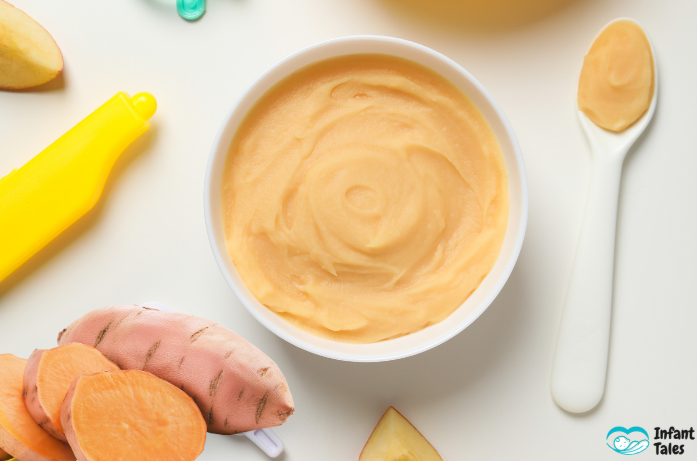
3. Mash or Puree: Blend or mash the cooked sweet potatoes. Add water, breast milk, or formula for desired consistency. For chunkier texture, leave it less smooth.
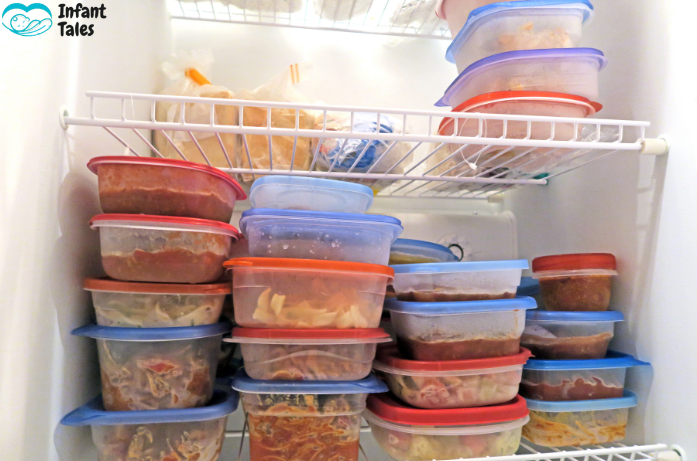
4. Serve or Store: Serve immediately or store in an airtight container for up to 3 days. For longer storage, freeze in ice cube trays for up to 3 months.
For additional tips and insights on sweet potato preparation, you can refer to this article on PMC.
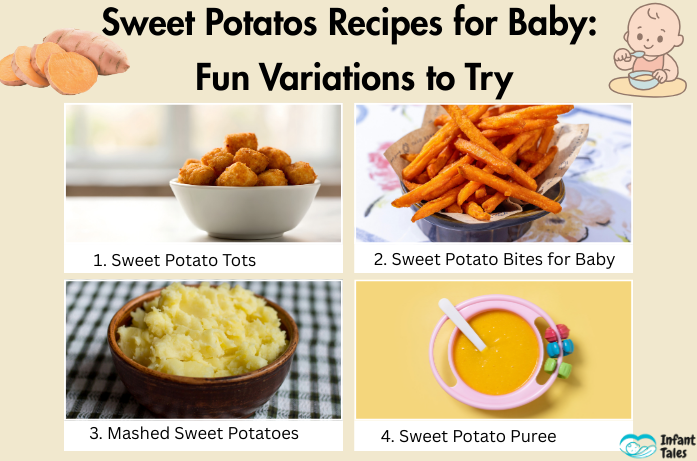
Sweet Potatos Recipes for Baby: Fun Variations to Try
Sweet potatoes are not just versatile for purees; you can also create fun and creative recipes as your baby grows and starts to explore new textures and tastes. Here are some great variations to try:
1. Sweet Potato Tots for Baby
Sweet potato tots are a wonderful finger food for older babies who are ready to handle more textured foods. To make sweet potato tots, mix mashed sweet potatoes with breadcrumbs and an egg. Shape the mixture into small tots, then bake them at 350°F (175°C) for about 15 minutes until golden and crispy. These tots are perfect for babies to practice self-feeding while enjoying the natural sweetness of sweet potatoes.
2. Sweet Potato Bites for Baby
For babies who are ready for more texture and solid food options, sweet potato bites are a great choice. After mashing the sweet potatoes, mix them with whole wheat flour and an egg to form a dough. Shape the mixture into small bites and bake for about 20 minutes at 375°F (190°C). These bites are soft, savory, and easy for babies to hold and chew.
3. Mashed Sweet Potatoes for Baby
If you’re looking for a simple, no-fuss meal, mashed sweet potatoes are always a great option. Simply mash the cooked sweet potatoes with a fork or potato masher. You can add a little breast milk or formula to create a smoother, creamier consistency. If your baby is ready for more texture, leave the mash chunkier.
4. Sweet Potato Puree for Baby with Applesauce
For a naturally sweet twist, mix sweet potato puree with applesauce, or try a simple banana puree for another nutritious first food. The flavors of the sweet potato and apple complement each other perfectly, making this a delicious and nutritious meal. You can use homemade or store-bought applesauce, but be sure to choose one with no added sugar.
You can read more about the benefits of sweet potato in baby purees, such as Sweet Potato and Spinach Puree, in this helpful Healthy Children resource.
How to Cook Sweet Potatoes for Baby in More Creative Ways
As your baby begins to explore new textures and flavors, you can get more creative with sweet potatoes by combining them with other vegetables and fruits. These combinations not only enhance the flavor but also boost the nutritional content of your baby’s meals.
For example, mashed sweet potatoes pair beautifully with peas, which are rich in protein and fiber, making for a balanced, nutrient-dense option. You can also mix sweet potatoes with carrots for a sweet, vitamin-rich meal full of beta-carotene, which supports your baby’s vision and immune system.
Another great combination is sweet potato and squash. This pairing offers a rich source of fiber, Vitamin A, and potassium, which are essential for your baby’s development. Sweet potato with spinach can be another fantastic option. Spinach is packed with iron and folate, which are crucial for your baby’s growth, especially as they transition to solids.
For fruit combinations, try blending sweet potato with apple for a naturally sweet and smooth puree that babies will love. Apples add vitamin C and fiber to the meal, complementing the benefits of sweet potatoes. You can also combine sweet potato and pear for a sweet, smooth combination high in vitamins and easy for babies to digest.
As your baby grows and their chewing skills develop, you can start introducing sweet potatoes in casseroles, soups, and stews. Adding sweet potatoes to these dishes provides a hearty, comforting meal while keeping the texture soft and easy to chew. This is a great way to introduce more complex flavors and textures as your baby begins to explore different foods.
By mixing sweet potatoes with a variety of vegetables and fruits, you can introduce your baby to a wide range of nutrients while keeping mealtime exciting and nutritious.
Common Questions About Sweet Potato for Baby
Q.1 How do I prepare sweet potatoes for my baby if they are not yet ready for solid foods?
For babies under 6 months, puree the sweet potato very finely and keep it smooth. Start offering small spoonfuls once your baby shows signs of readiness for solids.
Q.2 Can I add spices or flavors to sweet potato puree for my baby?
Avoid spices, salt, or sugar for babies under 6 months. After 6 months, you can add mild spices like cinnamon or nutmeg.
Q.3 Can I freeze sweet potato puree for my baby?
Yes! Sweet potato puree freezes well. Store it in ice cube trays or small containers for up to 3 months.
Q.4 How long can I store sweet potato puree for my baby?
Fresh sweet potato puree can be stored in the refrigerator for up to 3 days. For longer storage, freeze it for up to 3 months.
Conclusion: A Nutritious and Easy Food for Your Baby
Sweet potato puree for baby is a great choice due to its nutritional profile, ease of preparation, and versatile flavor. Whether you serve it pureed, mashed, or in fun finger foods like sweet potato tots or bites, your baby will enjoy this naturally sweet and nutritious vegetable. Sweet potatoes are gentle on your baby’s tummy and packed with essential vitamins and minerals that support their overall health and development.
Remember, always consult with your pediatrician before introducing any new foods, especially if your baby has a history of allergies or other health concerns. Breastfeeding mothers may also want to learn about breastfeeding foods. Enjoy exploring the world of solid foods with your little one, and have fun experimenting with different sweet potato recipes for baby! For more helpful tips, recipes, and advice, be sure to visit Infant Tales.
Disclaimer: This article is for informational purposes only. Always consult your pediatrician or healthcare provider before introducing new foods to your baby.