Authored by: Infant Tales Team
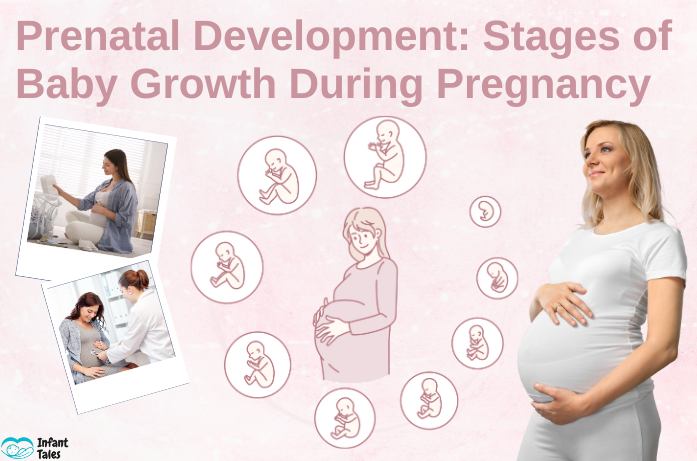
Pregnancy is one of the most fascinating and complex experiences a woman will go through. From the moment of conception to the birth of a baby, there is an incredible process of growth and development that takes place inside the womb. This process, known as the 3 prenatal development stages, refers to the physical and biological changes that a baby undergoes during pregnancy. It is a process that occurs in distinct stages, each one building upon the previous one to prepare the baby for life outside the womb.
As a new parent or caregiver, understanding the order of prenatal development stages can provide important insights into what to expect as your pregnancy progresses. In this article, we will break down the stages of prenatal development, offering a closer look at the changes your baby goes through, and explain why this journey is so vital for their health and future.
What is 3 prenatal development stages?
Prenatal development refers to the development of the baby from fertilization to birth. It’s divided into three main trimesters, each with distinct milestones that contribute to the baby’s growth. During these stages, the baby develops organs, muscles, tissues, and other essential systems that allow it to survive and thrive outside the womb. The order of prenatal development follows a specific progression, where each step is crucial for preparing the baby for life outside the womb. For more detailed information on this process, you can explore resources on Wikipedia, which provides a general overview of prenatal development.
This guide will explore the order of prenatal development stages, helping you understand how your baby grows and what happens at each point in the pregnancy. This understanding can help parents feel more connected to the process and more informed about the changes occurring during this exciting journey.
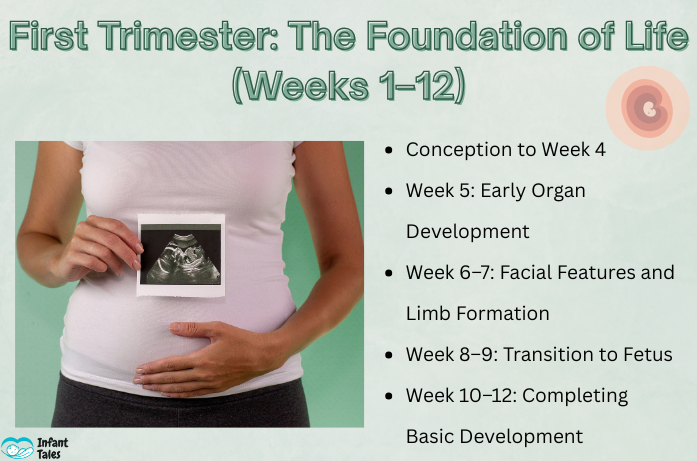
First Trimester: The Foundation of Life (Weeks 1–12)
The first trimester is one of the most important periods in prenatal development. During this time, the embryo undergoes rapid changes that lay the groundwork for future growth. By the end of the first trimester, your baby will have developed all the major organs and structures, though they will continue to mature throughout the pregnancy. According to MedlinePlus, this stage is crucial for the development of key organs like the heart, brain, and lungs.
Conception to Week 4
Prenatal development starts at the moment of conception when a sperm fertilizes an egg. The fertilized egg, now called a zygote, begins to divide and form a cluster of cells. These cells are rapidly multiplying and starting to differentiate into different types of cells that will form the baby’s organs. By the end of the first week, the zygote will implant itself in the lining of the uterus, where it will continue to grow and develop.
Week 5: Early Organ Development
Around the fifth week of pregnancy, the embryo’s basic body systems begin to form. The heart starts to beat and blood begins to flow. At this point, the baby’s circulatory system is beginning to take shape. The nervous system also starts developing, laying the foundation for the brain and spinal cord. The baby’s body is still very small, but major internal changes are happening. Research published in PMC highlights how early organ development is crucial for the embryo’s survival and future growth.
Week 6–7: Facial Features and Limb Formation
By the sixth week, the embryo has grown significantly, and facial features such as the eyes, nostrils, and mouth begin to take shape. The limbs are developing but are still in a paddle-like form, and the first signs of finger and toe development start to appear. At this stage, the baby’s brain and spinal cord are continuing to grow, and the beginnings of internal organs like the lungs and kidneys are forming.
Week 8–9: Transition to Fetus
By the end of the eighth week, the embryo is officially called a fetus. During this time, the baby’s limbs become more defined, and the organ systems are now in place, though they still need to mature. The baby’s face starts to take on a more human-like appearance as the ears, eyes, and nose continue to develop. The baby’s internal organs, including the heart, lungs, and kidneys, are functioning and starting to work together to support the baby’s growth.
Week 10–12: Completing Basic Development
By the end of the first trimester, the fetus has grown to about 3 inches long and weighs about half an ounce. Most of the baby’s basic body structures are in place, and the organs are beginning to mature. Though you may not feel any movement yet, your baby is now capable of moving their arms and legs inside the womb. The second trimester is just around the corner, and the baby will begin to grow more rapidly in the coming weeks.
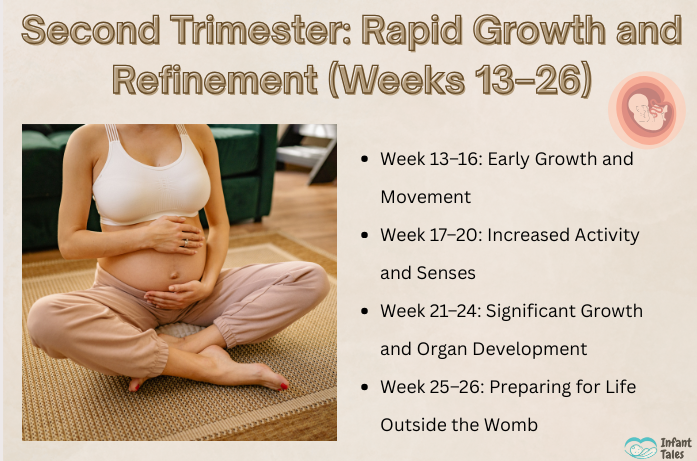
Second Trimester: Rapid Growth and Refinement (Weeks 13–26)
The second trimester is often called the “golden period” of pregnancy. Many women begin to feel better during this phase, with less morning sickness and more energy, although some may still experience leg cramps during pregnancy and other common discomforts. For the baby, this period is marked by significant growth, and the organs and systems that were established in the first trimester continue to mature and refine.
Week 13–16: Early Growth and Movement
The baby is now about the size of a lemon and is starting to grow rapidly. The baby’s body continues to develop at a fast pace, and the limbs are fully formed, with distinct fingers and toes. By the 16th week, the baby may start moving, but these early movements are still too small to be felt by the mother. The baby’s skin remains thin, and the development of hair, eyebrows, and nails begins.
Week 17–20: Increased Activity and Senses
By week 17–20, many parents begin noticing changes in their 5 month pregnant belly as their baby grows rapidly and movements become more noticeable.
At the halfway point of pregnancy, the baby’s growth rate increases even further. By week 20, the baby is about 6 inches long and weighs about 8.5 ounces. Many mothers begin to feel the baby move at this point, often described as “quickening.” The baby’s senses are developing, and they can now hear sounds from the outside world. The baby’s skin is becoming more translucent, and they are covered in fine, soft hair called lanugo.
Week 21–24: Significant Growth and Organ Development
The baby is now about 12 inches long and weighs about 1 pound. The baby’s lungs and digestive system are developing, but they are still immature. The baby’s body is covered in a coating called vernix, which protects the skin from the amniotic fluid. The baby’s bones are becoming more solid, and the baby can move more freely, with stronger kicks and movements.
Week 25–26: Preparing for Life Outside the Womb
At 25 weeks, the baby’s brain is growing rapidly, and they are beginning to develop sleep and wake cycles. The baby is practicing breathing movements, though their lungs are not fully mature yet. By 26 weeks, the baby can open and close their eyes and responds to light changes. The baby is also gaining fat beneath the skin, which helps with temperature regulation.
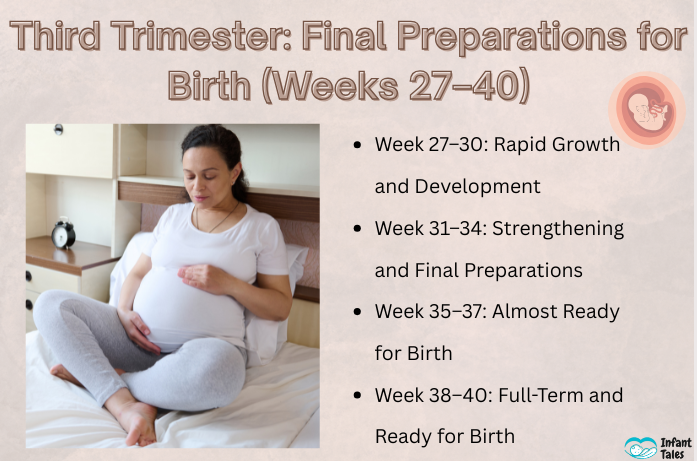
Third Trimester: Final Preparations for Birth (Weeks 27–40)
The third trimester is the final stage of prenatal development, where the baby’s body matures and prepares for birth. The baby gains weight rapidly during this period and refines all of the systems needed for survival outside the womb. Johns Hopkins explains that the final trimester is vital for the baby’s brain development and organ maturation.
Week 27–30: Rapid Growth and Development
By 27 weeks, the baby weighs about 2.5 pounds and is around 14 inches long. The baby’s brain is developing rapidly, and the lungs are continuing to mature. The baby is now able to regulate their body temperature with the help of the fat stored under the skin. The baby’s movements are more pronounced, and you can feel stronger kicks and rolls.
Week 31–34: Strengthening and Final Preparations
The baby continues to gain weight, reaching about 5.5 pounds by week 34. The bones are fully formed but still soft enough for delivery. The baby’s lungs are nearly fully developed, and they are practicing breathing movements. The baby is also moving into the correct position for birth, usually head-down, although some babies may still be in breech position.
Week 35–37: Almost Ready for Birth
At 35 weeks, the baby is around 6 pounds and is growing quickly. The baby’s skin is no longer translucent, and they are gaining a layer of fat to help regulate their temperature after birth. The baby’s brain is developing at an accelerated rate, and the baby is practicing everything they will need to do after birth, including sucking, swallowing, and breathing.
Week 38–40: Full-Term and Ready for Birth
By week 38, the baby is considered full-term and is ready to be born. The baby is now around 7 pounds on average and is 19-21 inches long. Their brain and lungs are fully developed, and they are gaining the last bits of fat for birth. The baby is now fully prepared for life outside the womb, and labor could begin at any time.
Final Thoughts
Prenatal development is an incredible and intricate process that prepares the baby for life outside the womb. Each stage of the order of prenatal development builds upon the previous one, ensuring the baby’s organs, systems, and structures are developed and ready for birth. Understanding these stages helps you better appreciate the journey of pregnancy and the milestones your baby reaches along the way.
As you navigate your pregnancy, remember that every baby grows at their own pace, and the timeline may vary. Regular check-ups with your healthcare provider can help ensure that everything is progressing as expected.
At Infant Tales, we are here to provide you with the information and support you need throughout this exciting journey.
Frequently Asked Questions (FAQs)
1. What is the order of prenatal development stages?
Prenatal development starts with fertilization and organ formation in the first trimester, followed by rapid growth in the second trimester, and finishing with weight gain and organ maturation in the third trimester.
2. When do the baby’s organs begin to develop?
The baby’s organs begin to develop in the first trimester, with the heart starting to beat by week 5.
3. Why is prenatal development important?
Prenatal development is essential for forming the organs and systems the baby needs to survive outside the womb.
4. What happens during the third trimester?
In the third trimester, the baby gains weight, develops fat for temperature regulation, and finalizes the development of key organs like the lungs and brain.
5. What are the key milestones in prenatal development?
Key milestones include organ formation in the first trimester, rapid growth and movement in the second trimester, and weight gain and final organ development in the third trimester.
Disclaimer: This article is for informational purposes only and should not replace professional medical advice. Always consult with your healthcare provider for any concerns regarding your pregnancy.