Authored by: A Caring Mom at Infant Tales
The first few months with your baby are filled with exciting changes, and by the time your little one reaches 11 weeks, you’ll start to notice important 11 week old baby milestones taking shape. At this stage, your baby becomes more aware of their surroundings and begins interacting more with the world around them. This is a period of rapid growth, as they start developing key physical, social, and cognitive skills that form the foundation for future development. It’s a deeply rewarding moment for parents, as you witness early signs of curiosity, engagement, and personality emerging day by day.
At 11 weeks, your baby’s physical development is progressing rapidly. You may notice them becoming more coordinated with their movements, such as reaching for toys or holding their head up for longer periods during tummy time. They are also beginning to communicate more through sounds and facial expressions, showing signs of social and emotional growth. The CDC’s milestone tracker also outlines key early developmental markers like tracking objects and responding to sound.
In addition to physical and social development, sleep and feeding patterns are becoming more regular. Many babies at this age start sleeping for longer stretches at night and develop more consistent feeding habits. This article will explore these milestones in detail and provide helpful tips to support your baby’s development during this exciting stage.
11 Week Old Baby Development Milestones
At 11 weeks old, your baby is beginning to exhibit more control over their body and interactions. This is an exciting time for parents as their little one starts to show more personality and engage with their surroundings. Let’s dive deeper into the specific milestones you can expect to see during this stage.
Physical Development and Motor Skills
At 11 weeks, your baby’s coordination and motor skills are improving. You’ll notice that their reflexes, which were previously quite dominant, are now being replaced by more intentional movements. Their arm and leg movements are becoming smoother, and they may begin reaching for toys or objects. They are also likely to be able to hold their head up for longer periods during tummy time, which is crucial for strengthening neck muscles.
Tip: Continue providing tummy time opportunities to help build your baby’s core strength. It’s one of the most important activities for their development at this stage.
Cognitive Development
Your baby’s cognitive skills are also improving, and they may begin to track objects with their eyes. They’ll be able to follow moving objects within a short range (8-12 inches away) and will react to sounds by turning their head or looking toward the source. This is also when babies start showing an increased interest in their hands, and they may start bringing them to their mouth. Resources from UNICEF also emphasize that this milestone is crucial for early brain development.
Social and Emotional Development
At 11 weeks, your baby is becoming more aware of their environment and starting to interact more with others. You may see them respond to familiar voices and people by smiling or cooing. These are key signs that they are developing social skills and beginning to recognize and form bonds with their caregivers. Cleveland Clinic also highlights that these early social responses help set the foundation for communication and emotional development in the following months.
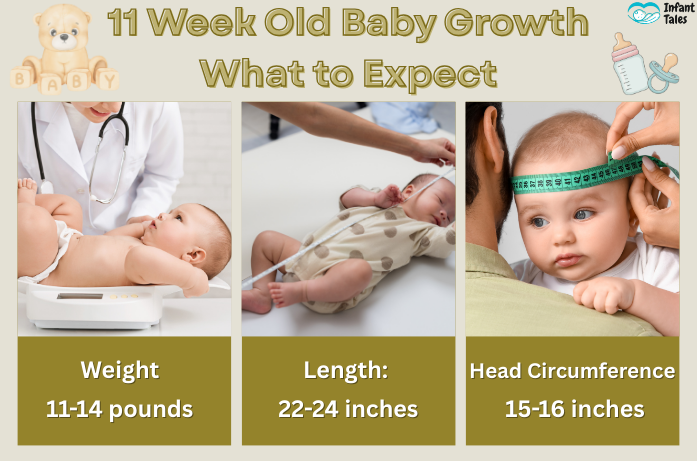
11 Week Old Baby Growth: What to Expect
Your baby’s physical growth continues to progress rapidly at 11 weeks. While each baby grows at their own pace, here’s an overview of what you can typically expect.
- Weight: By 11 weeks, your baby is likely to weigh between 11-14 pounds, depending on birth weight and other factors.
- Length: The average length for an 11-week-old baby is about 22-24 inches long.
- Head Circumference: Your baby’s head is growing quickly as their brain develops. At this stage, the head circumference can range between 15-16 inches.
Growth can vary from baby to baby, so keep track of your baby’s progress and share any concerns with your pediatrician during routine checkups. Healthy Children provides great advice on monitoring these early growth milestones.
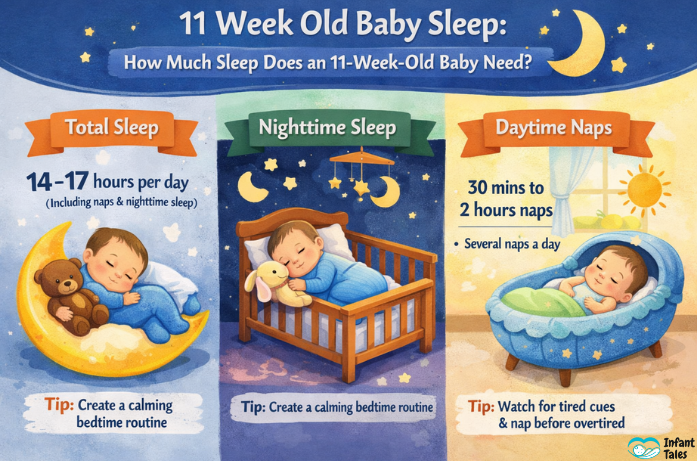
11 Week Old Baby Sleep: How Much Sleep Does an 11-Week-Old Baby Need?
At 11 weeks, sleep is still a significant part of your baby’s daily routine, but their sleep patterns are starting to stabilize. While every baby’s sleep needs vary, most babies at this age will sleep for 14-17 hours a day, including naps and nighttime sleep.
Nighttime Sleep
Many babies at 11 weeks will start sleeping for longer stretches at night, often up to 5-7 hours. However, some may still wake up every 2-3 hours for feeding, especially if they are breastfed. This longer stretch of sleep during the night is a positive sign that your baby is adjusting to a more consistent sleep routine.
Establish a soothing bedtime routine with dim lighting, soft music, or gentle rocking to help your baby settle into a night of restful sleep.
Daytime Naps
During the day, your baby will still need several naps, which can last anywhere from 30 minutes to 2 hours. Ensuring that your baby doesn’t become overtired is essential, as a well-rested baby will be more content and alert when they are awake, helping reduce the chances of having a fussy baby.
11 Week Old Baby Feeding: How Much Should an 11 Week Old Baby Eat?
At 11 weeks, your baby is becoming more aware of the world around them, and engaging them in age-appropriate activities can be both fun and developmental, laying the foundation for future preschool learning activities.
Breastfeeding or Formula Feeding
At this stage, most babies will still be primarily fed breast milk or formula. Babies are typically feeding around 6-8 times per day, with each feeding lasting about 15-30 minutes if breastfed or consuming around 4-6 ounces if formula-fed. As babies grow, they will gradually increase the amount of milk they consume at each feeding.
Allow your baby to nurse or take a bottle at their own pace, and ensure they are feeding long enough to fill up. If you are breastfeeding and worried about supply, consider pumping after feedings to build a milk stash.
Introducing Solids
While most babies at 11 weeks are still exclusively breastfeeding or formula feeding, parents often wonder when to start introducing solids. According to experts, it is recommended to wait until around 6 months before introducing solid foods. At 11 weeks, your baby’s digestive system isn’t yet ready for solids, and it’s important to follow the guidance of your pediatrician.
Keep an eye on your baby’s developmental milestones. When they start showing signs of readiness for solids, such as being able to sit up with support or showing interest in your food, you can discuss introducing solids with your pediatrician.
11 Week Old Baby Activities: How to Engage Your Baby
At 11 weeks, your baby is becoming more aware of the world around them, and engaging them in age-appropriate activities can be both fun and developmental. Here are some activities that can help stimulate your baby’s growth.
Tummy Time
Tummy time is crucial at this age as it helps strengthen your baby’s neck, back, and arm muscles. Try to give your baby at least 15 minutes of tummy time a few times per day. You can increase the duration as your baby gets stronger. Wikipedia provides a detailed overview of baby milestones, including the importance of tummy time for neck and motor skills.
Tracking Games
At 11 weeks, your baby is likely starting to follow objects with their eyes. You can encourage this by gently moving a toy in front of their face and watching their eyes track the motion. Use high-contrast toys or bright-colored objects to grab your baby’s attention and help them focus.
Conclusion
The 11-week-old stage is a time of remarkable growth and development for your baby. As they become more aware of their surroundings and show more coordination in their movements, you’ll begin to see new milestones emerge. Whether it’s feeding, sleeping, or engaging in fun activities, this is a time to celebrate your baby’s achievements while continuing to provide a nurturing and supportive environment.
Remember, every baby develops at their own pace, and it’s essential to stay patient and flexible as you navigate these early months. Enjoy the journey, and be sure to seek support from your pediatrician if you have any concerns about your baby’s development.
FAQs on 11 Week Old Baby Milestones
1. What should an 11-week-old baby be doing?
At 11 weeks, your baby is likely becoming more interactive. They should be able to hold their head up during tummy time, track objects with their eyes, and respond to sounds with head turns. They may also begin smiling socially and cooing.
2. How much should an 11-week-old baby weigh?
Most 11-week-old babies weigh between 11-14 pounds, though this can vary depending on their birth weight and other factors.
3. How many hours should an 11-week-old baby sleep?
Your baby will need 14-17 hours of sleep each day, including naps and nighttime sleep. Some babies may sleep for 5-7 hours at a stretch during the night by this point.
4. What activities are good for a 11-week-old baby?
Activities such as tummy time, tracking games, and providing toys that encourage reaching or batting can help with your baby’s development. Engage them with colors, sounds, and textures.
5. When can I introduce solid foods to my baby?
It is best to wait until around 6 months before introducing solid foods. At 11 weeks, your baby’s digestive system is not yet ready for solids.
Your baby’s milestones are precious moments, and we’re here to help you every step of the way. Whether you’re looking for expert parenting advice, growth tips, or just a place to share your journey, Infant Tales has everything you need to feel supported.
Stay updated with our latest articles, tips, and advice on baby care by subscribing to our newsletter. Let’s navigate the exciting world of parenting together!
Subscribe Now and be part of a supportive, informed community of parents at every stage of the journey!