Authored by: A Caring Mom at Infant Tales
Bringing your newborn home is a magical experience, and a little overwhelming, in a way that no one can fully prepare you for. The house feels quiet at night, your heart is full of joy, and suddenly you start noticing things you never thought about before. One such moment often comes when you lean over the crib and notice your baby’s tiny chest rising and falling faster than you expected. In that quiet, it’s easy to feel anxious, and many parents find themselves searching for answers about their newborn breathing fast during sleep, especially in the first few weeks.
If this sounds like you, you are not alone. Almost every new parent stands by the crib counting breaths, wondering if what they are seeing is normal or a sign of something wrong. The reassuring news is that rapid breathing in newborns is very common and often just a part of their adjustment to the world outside the womb. Understanding why this happens, and knowing when to be concerned, can give you peace of mind. This article is here to support you with clear, gentle guidance so you can feel informed, calm, and more confident as you care for your baby.
Understanding How Newborn Breathing Works
Newborn breathing works very differently from adult breathing. Babies are adjusting to life outside the womb, where oxygen came effortlessly through the placenta. Now, their lungs, breathing muscles, and brain must coordinate on their own, and that learning process takes time.
Many parents notice breathing fast newborn patterns and immediately associate them with distress, especially when caring for a fussy baby. In reality, newborns naturally breathe faster because their bodies have higher oxygen demands. Their lungs are smaller, their airways are narrower, and their nervous systems are still developing. All of this affects how fast and how regularly they breathe.
Breathing patterns can also change throughout the day. A baby may breathe one way while awake and alert, another way while feeding, and yet another while sleeping. This constant variation is often unsettling for new parents, but it is usually a normal and healthy part of early growth.
Do Newborns Breathe Faster Than Adults?
Yes, without a doubt. If you’re asking yourself do newborns breathe faster than adults or even older children, the answer is yes, and often by a significant margin. Adults breathe slowly and steadily because their lungs and nervous systems are fully mature. Newborns, however, are still learning how to regulate these basic life functions.
It’s normal for a newborn’s breathing to look rapid, shallow, or irregular. Some babies even have brief pauses in breathing, followed by a few quicker breaths. This pattern, often called periodic breathing, is is described by Cleveland Clinic as a common and usually harmless pattern in young infants.
How Fast Should a Newborn Breathe?
One of the most searched and reassuring questions parents ask is how fast should a newborn breathe. Knowing what’s considered normal can help you stop guessing and start feeling more at ease.
A healthy newborn typically breathes between 30 and 60 breaths per minute when resting or sleeping. It’s not unusual for breathing to briefly approach the higher end of this range, especially during active sleep. What matters most isn’t just the number, but how your baby looks overall. This normal range is also outlined by MedlinePlus, a trusted medical resource used by healthcare professionals.
A baby who appears comfortable, maintains a normal pink skin tone, feeds well, and settles naturally is usually breathing within a healthy range, even if it looks fast to you.
Why Do Newborns Breathe So Fast?
Understanding why do newborns breathe so fast can take much of the fear out of the situation. Fast breathing alone does not mean something is wrong. In fact, it is often linked to normal biological and developmental factors.
Newborns breathe quickly because their lungs are still adapting to air breathing, their nervous systems haven’t yet mastered steady rhythms, and their bodies have higher metabolic needs to support rapid growth. All of these factors work together to make fast breathing a normal feature of early infancy.
As your baby grows and their systems mature, breathing patterns usually become slower and more regular over time.
Newborn Breathing Fast During Sleep: What Parents Should Know
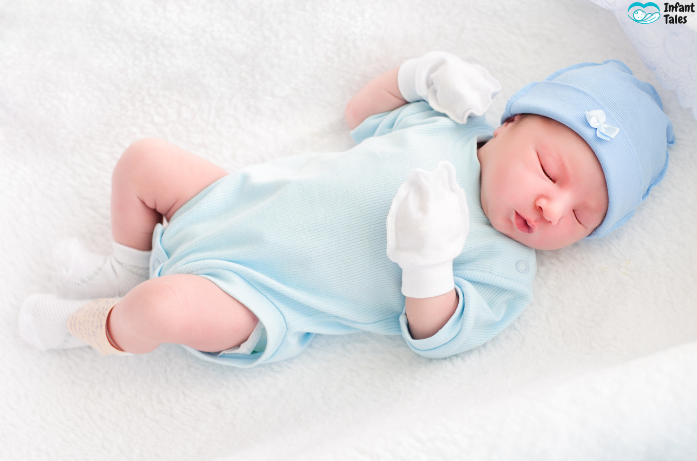
This is the scenario that worries parents the most. Your baby looks peaceful one moment, then suddenly their breathing speeds up. Newborn breathing fast during sleep is extremely common and is usually connected to normal sleep cycles.
Newborns spend a large portion of their sleep in active sleep, similar to REM sleep in adults. During this stage, breathing may speed up, slow down, or become irregular.
As long as breathing slows on its own and your baby’s skin remains pink, not bluish or gray, this pattern is generally considered normal and not a cause for alarm.
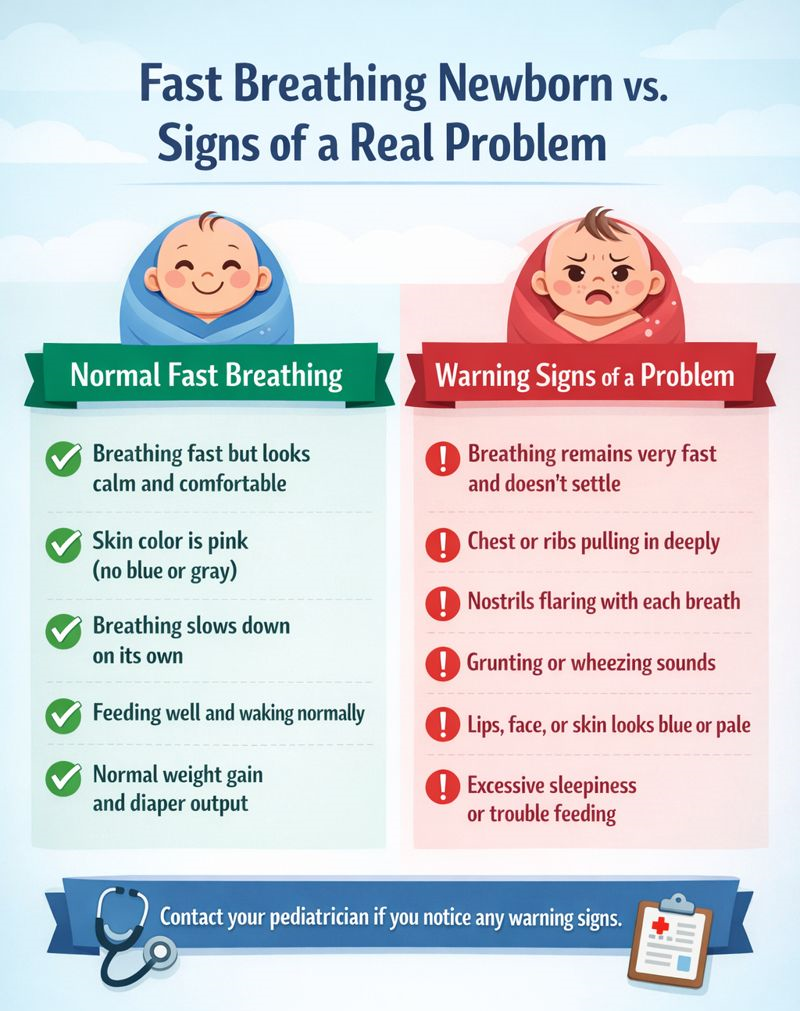
Fast Breathing Newborn vs. Signs of a Real Problem
Fast breathing is usually normal when:
- Your baby breathes fast but looks calm and comfortable
- Skin color remains pink (no blue or gray tones)
- Breathing slows down on its own after sleep or activity
- Your baby feeds well and wakes normally
- Weight gain and diaper output are normal
Fast breathing may be a problem if you notice:
- Breathing stays very fast and does not settle
- Chest or ribs pull in deeply with each breath
- Nostrils flare while breathing
- Grunting or wheezing sounds are present
- Lips, face, or skin appear bluish or gray
- Your baby seems unusually sleepy or struggles to feed
If fast breathing is paired with any of these warning signs, it’s important to contact a pediatrician promptly for further evaluation.
Why Does My Newborn Breathe Fast at Certain Times?
Many parents ask, why does my newborn breathe fast when everything else seems normal. Breathing speed can change frequently throughout the day and night, and these changes often have simple explanations.
Fast breathing may occur after crying, during digestion, when your baby is warm, or while transitioning between sleep stages. These episodes are usually brief and resolve on their own. Because newborns cannot yet regulate breathing as smoothly as older children, these short periods of faster breathing are typically normal.
Feeding and Breathing: What’s Normal and What’s Not
Feeding is hard work for a newborn, and it can affect breathing patterns.
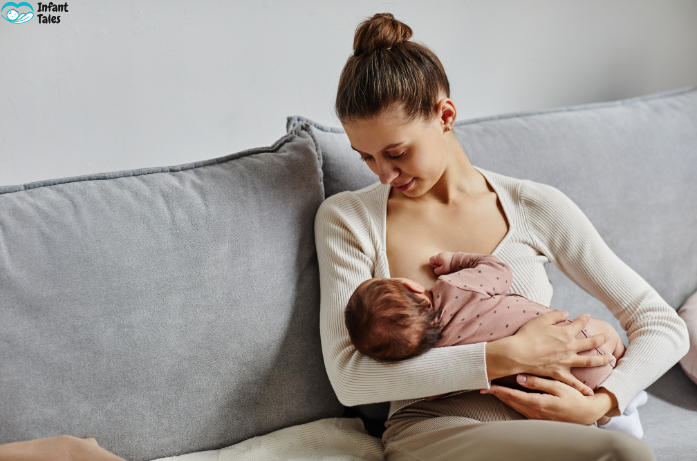
Some parents notice newborn breathing fast while feeding, especially during the early weeks. Feeding requires careful coordination between sucking, swallowing, and breathing. It’s normal for breathing to sound quicker or slightly heavier during feeds, and babies may pause briefly to catch their breath.
You may also notice newborn breathing fast while breastfeeding. Breastfeeding involves close contact and sustained effort, which can temporarily increase breathing rate. As long as your baby stays comfortably latched, maintains normal skin color, and feeds effectively, this is usually not a concern.
If feeding sessions consistently seem stressful or your baby appears exhausted, a pediatrician can help assess whether additional support is needed.
When Fast Breathing Could Be a Concern
Although fast breathing is usually harmless, there are times when it may signal a medical issue. Parents should also watch for illness-related flu symptoms that may affect breathing. Conditions such as respiratory infections, reflux, or temporary fluid in the lungs after birth can increase breathing rate. In rare cases, heart or lung conditions may also play a role.
The most important factors to watch are persistence and accompanying symptoms. Fast breathing that does not settle or is paired with poor feeding, unusual sleepiness, or color changes should always be checked by a healthcare professional.
How to Check Your Baby’s Breathing at Home
If you ever feel unsure, you can gently check your baby’s breathing rate at home. Wait until your baby is calm or asleep, watch the chest rise and fall, count breaths for 30 seconds, and multiply by two. If the number remains under 60 and your baby appears comfortable, breathing is usually within a normal range.
Safe Sleep Habits That Support Healthy Breathing
Creating a safe sleep environment supports healthy breathing. Always place your baby on their back to sleep, use a firm mattress, and keep the sleep space free from loose items. Avoid overheating, as warmth can temporarily increase breathing rate. These habits support breathing health and reduce sleep-related risks.
Final Thoughts
It can be alarming to observe your newborn’s breathing rate, especially in the quiet of the night when your attention is focused on every rise and fall of their chest. When their breathing seems rapid, it’s easy to assume something is wrong. In reality, this is usually a normal part of early life. While sleeping, a newborn’s breathing often fluctuates as their lungs mature, their nervous system learns to regulate the rhythm, and their body adjusts to new sleep patterns. In most cases, this type of rapid breathing indicates healthy development rather than a medical concern.
As your baby grows, their breathing patterns will gradually become more stable and predictable. Knowing what’s normal and recognizing the few signs that might require medical attention, can help you respond with confidence rather than fear.
At Infant Tales, our goal is to empower parents with clear, reassuring, and evidence-based information so you can focus on bonding with your baby instead of worrying about every breath. You’re adjusting, your baby is developing, and with time, understanding will replace anxiety.
Frequently Asked Questions
Medical Disclaimer
This article is for informational purposes only and does not replace professional medical advice. Always consult a pediatrician or qualified healthcare provider if you have concerns about your newborn’s breathing or overall health.