By a Caring Mom at Infant Tales
Watching your baby grow is one of the most emotional and rewarding parts of parenthood. Every small change, chubbier cheeks, stronger legs, brighter eyes, feels like a personal victory. Yet for many parents, weight gain can quietly become a source of stress. You may find yourself searching online late at night, asking elders for advice, or comparing growth charts, all while wondering if you’re doing enough.
If you’re here looking for reliable guidance on baby weight gain foods, pause for a moment and breathe. Healthy weight gain is not about feeding more or rushing milestones. It’s about feeding right, with patience, age-appropriate nutrition, and trust in your baby’s natural growth rhythm. With the right foods and a calm approach, most babies reach their healthy growth milestones in their own time.
This article from Infant Tales is written to guide new parents and caregivers with clear, gentle, and practical information. It focuses on natural foods, realistic expectations, and supportive feeding habits, without pressure, panic, or unnecessary products.
What Healthy Weight Gain Really Means for Babies
Healthy weight gain does not look the same for every baby. Some babies gain weight quickly in the early months and then slow down. Others grow steadily without dramatic changes. This is normal. Growth happens in spurts, pauses, and sudden jumps, especially during the first year.
What truly matters is not just the number on the scale, but the overall picture, your baby’s energy, alertness, feeding patterns, and developmental progress. A baby who is active, responsive, feeding well, and meeting milestones is usually growing just fine, even if they are on the leaner side.
Healthcare providers assess growth using patterns over time, not one-off measurements. Resources like the UK’s National Health Service (NHS) explain that healthy weight gain is about gradual progress, not forcing extra calories or comparing children with others of the same age. This long-term view helps reduce unnecessary worry for parents.

The First 6 Months: Building the Foundation
For the first six months of life, babies do not need solid foods. Their digestive systems are still maturing, and breast milk or infant formula provides complete nutrition during this stage.
Breast milk naturally adapts to your baby’s needs and contains the ideal balance of fats, proteins, and carbohydrates to support steady growth. Parents who are breastfeeding may also benefit from learning about breastfeeding foods that can affect feeding and digestion. Formula-fed babies also receive balanced nutrition when formula is prepared and offered correctly. At this stage, there is no need for external foods, calorie boosters, or supplements unless specifically recommended by a pediatrician.
According to infant feeding guidance from the Centers for Disease Control and Prevention (CDC), introducing solids too early does not improve weight gain and may actually interfere with digestion and milk intake. A strong nutritional foundation during these months supports healthier eating patterns later on.
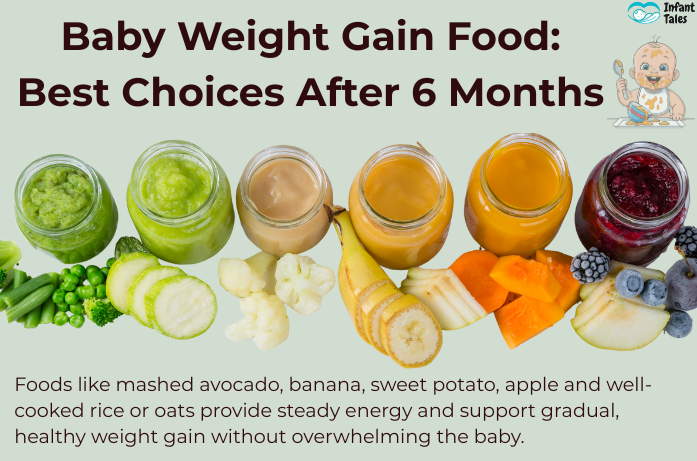
Baby Weight Gain Foods: Best Choices After 6 Months
Around six months of age, most babies are ready to begin solids alongside milk feeds. This is when baby weight gain food becomes relevant, but the focus should always be on nutrient density rather than quantity.
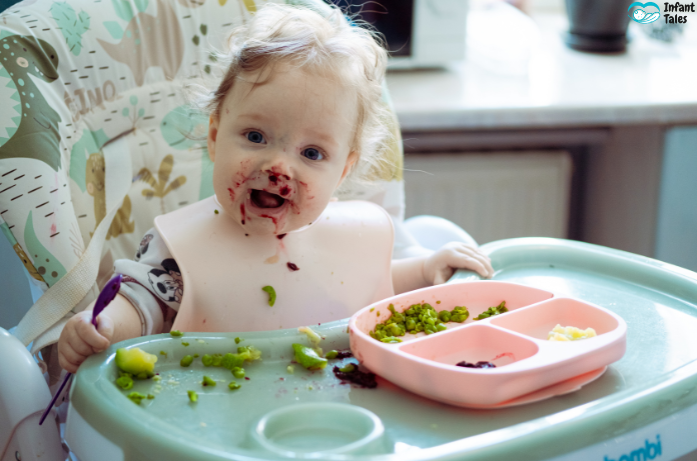
At this stage, foods should be soft, well-cooked, and easy to digest. Foods like mashed avocado, sweet potato, and banana puree provide steady energy and support gradual, healthy weight gain. The goal is to gently support growth while respecting your baby’s developing digestive system.
Key qualities of good early foods include:
- Natural sources of energy and healthy fats
- Simple textures that are easy to swallow
- Minimal ingredients to reduce digestive stress
Foods like mashed avocado, banana, sweet potato, and well-cooked rice or oats provide steady energy and support gradual, healthy weight gain without overwhelming the baby.
Nutrient-Dense Foods That Support Steady Growth
As your baby becomes more comfortable with solids, you can slowly expand their meals with foods that nourish both body and brain. Lentils and dals, when properly soaked and cooked, provide plant-based protein and iron. Full-fat plain yogurt, once dairy is introduced, supports gut health and adds healthy fats that aid growth.
Australian pediatric nutrition guides emphasize that combining foods, rather than focusing on a single high-calorie item, supports healthier weight gain and better digestion in infants aged 6–12 months.
Creating a Balanced Baby Weight Gain Diet
A successful baby weight gain diet is built on balance, not a single “super food.” Each meal should gently combine energy, fats, and proteins while staying easy to digest.
A balanced baby meal usually includes:
- An energy source like grains or starchy vegetables: well-cooked rice, oats porridge, mashed potato, sweet potato
- A healthy fat to support calorie intake: mashed avocado, a few drops of ghee, olive oil (in small amounts)
- A protein source to aid growth and repair: cooked and mashed lentils (dal), full-fat plain yogurt, soft paneer
- A texture suited to your baby’s chewing ability:smooth purees for beginners, thick mash, or soft lumps as baby grows
Meals should be small, frequent, and relaxed. Babies eat better when they feel safe, unhurried, and respected during feeding.
Using High Calorie Foods for Babies Safely
Parents often hear about high calorie foods for babies, but it’s important to remember that more calories do not always mean better nutrition. Quality matters far more than quantity.
Healthy calorie boosters include naturally fatty foods like avocado, small amounts of ghee or healthy oils mixed into meals, and full-fat dairy after proper introduction. These should always be used sparingly. Overloading meals with fats can affect digestion and appetite balance.
Using natural calorie boosters, such as healthy fats and full-fat dairy, sparingly and thoughtfully. Overloading meals with fats can affect digestion and appetite balance.
Feeding Habits That Encourage Healthy Weight Gain
Choosing the right foods for baby weight gain is important, but how you feed matters just as much. Babies are naturally good at regulating their hunger when allowed to do so.
Avoid force-feeding, distractions like screens, or pressuring your baby to finish meals. These habits can interfere with hunger cues and long-term eating behavior. A calm feeding environment encourages better intake and digestion.
Baby Weight Gain Tips for Everyday Life
Supporting growth does not require complicated routines. Simple, consistent habits make the biggest difference.
Gentle baby weight gain tips include:
- Following hunger and fullness cues
- Keeping regular feeding routines
- Offering meals when your baby is rested and calm
- Continuing breast milk or formula alongside solids
- Focusing on overall development, not just weight
A relaxed parent often raises a relaxed eater, and that emotional ease supports healthy growth naturally.
Growth Monitoring and When to Seek Help
Growth charts are tools, not judgments. Pediatricians look at patterns over time to understand whether a baby is growing well.
If your baby consistently drops percentiles, refuses most feeds, shows low energy, or experiences frequent vomiting or diarrhea, it’s important to seek medical guidance. Organizations like the World Health Organization and the Centers for Disease Control and Prevention provide global growth standards that doctors use to assess healthy development.
Emotional Health Plays a Bigger Role Than You Think
Weight gain is not only about food. Emotional security, bonding, and a stress-free feeding environment strongly influence how babies eat and digest. Babies who feel safe and connected often feed better and show healthier growth patterns.
Simple actions like making eye contact, speaking gently, and avoiding rushed meals turn feeding into a moment of connection rather than pressure.
Final Thoughts
Healthy growth comes from patience, balance, and the right baby weight gain food, not pressure or comparison. Every baby grows at their own pace, and small, consistent efforts matter more than perfection. Trust your baby’s cues, offer nourishing foods, and remember that love and calm feeding routines play just as important a role as nutrition.
Frequently Asked Questions
1. How often should I offer baby weight gain food after starting solids?
Start with one to two small meals a day and gradually increase as your baby shows interest and readiness.
2. Can baby weight gain food cause digestive issues?
If foods are introduced slowly, well-cooked, and age-appropriate, most babies digest them well.
3. Are homemade foods better than packaged foods for weight gain?
Homemade foods allow better control over ingredients and are usually fresher and easier to customize.
4. Should I worry if my baby eats very small portions?
Small portions are normal. Babies have small stomachs and often prefer frequent, light meals.
5. When should I consult a doctor about weight gain?
If your baby shows poor growth trends, low energy, or feeding difficulties, consult a pediatrician.
A Gentle Note from Infant Tales
Every baby grows at their own pace. Some gain weight quickly, others slowly, and most fall somewhere in between. Healthy growth is not a competition, it’s a journey shaped by nourishment, patience, and love.
At Infant Tales, our goal is to support parents with information that feels reassuring, not overwhelming. Trust your instincts, observe your baby, and remember that consistency matters far more than perfection.
Medical Disclaimer: This article is for educational purposes only and does not replace professional medical advice. Always consult a qualified pediatrician or healthcare provider before making changes to your baby’s diet or if you have concerns about growth or weight gain.