Feeding your newborn should feel calm and comforting, but many parents get stuck on one surprisingly tricky question: what water to use for baby formula. It might seem like any clean water is fine, but babies are much more sensitive than we are. The water you choose can affect their tiny kidneys, their immune system, and even how well the formula works in their body.
Most parents don’t realize that common options like unboiled tap water, certain bottled waters, or untreated well water can sometimes be unsafe or too heavy in minerals for a baby’s system. That’s why knowing which water is safest, how to prepare it properly, and when you should boil it can make a big difference in your baby’s health.
This guide explains everything, With the right information, formula feeding becomes easy, safe, and stress-free giving you more confidence and giving your baby the gentle start they deserve.
What Water to Use for Baby Formula, Understanding Why It Matters
A baby’s digestive system and organs are still growing. Water that contains too numerous minerals, bacteria, or pollutants can load their bitsy feathers or change the nutrient balance in formula. Powdered formula itself is n’t sterile, which is why the right water selection, and safe medication, are essential for protecting your little bone.
Because each home’s water quality is different, learning the safest options helps you prepare every bottle with confidence.
Types of Water You Can Safely Use for Baby Formula
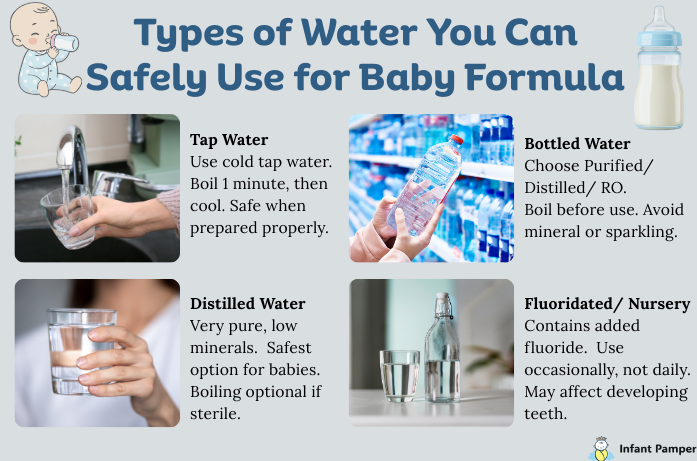
Tap Water (Most Common Choice in Many Homes)
Tap water is often considered safe when your household water supply meets health standards. Many families use it daily, especially in cities with well-maintained water systems. The CDC also provides clear guidelines on preparing tap water for formula safely and preventing bacterial risks:
Always use cold tap water, never hot water, as hot water can absorb more impurities from the pipes. Let the cold water run for a few seconds before boiling it.
How to Use Tap Water Safely
- Let cold tap water run for 15–20 seconds.
- Fill the kettle or pot and boil the water for 1 minute.
- Allow the water to cool to about 70°C (158°F) before mixing with formula.
Boiling reduces bacteria and makes tap water suitable even for newborns under 3 months.
Bottled Water
Parents often wonder if bottled water for baby formula is safe. The answer is: sometimes. Not all bottled waters are created equal. Some contain high levels of sodium or minerals, while others may not be sterile.
Look for bottles labeled:
- Purified
- Distilled
- Deionized
- Reverse Osmosis (RO)
These varieties have predictable mineral levels and are usually safe for babies when boiled.
Avoid sparkling water, mineral water, or flavored waters, as babies’ bodies cannot process added minerals or carbonation. High-mineral waters can strain a baby’s kidneys.
Distilled Water
Distilled water undergoes a cleaning process that removes minerals, chemicals, and impurities. Because of its purity, many pediatricians consider it one of the easiest and safest options for formula.
Parents who want absolute peace of mind often choose purified water for baby formula, especially for babies under 3 months, premature infants, or homes with questionable tap water quality.
Distilled water may be used without boiling if the bottle states it is sterile, but many families still boil it for newborns as an extra layer of safety.
Fluoridated Water / Nursery Water
Some bottled waters include added fluoride. While fluoride helps prevent future tooth decay, too much can lead to mild enamel discoloration, known as fluorosis.
Using fluoridated water occasionally is fine. Daily use is not recommended unless your pediatrician suggests otherwise no.
Well Water
Well water requires the most caution. It may contain:
- Nitrates
- Bacteria
- Parasites
- Heavy metals
Boiling does not remove nitrates.
Do You Need to Boil Water for Formula?
Most babies under 3 months benefit from using boiled water, even when the water is already clean or filtered. Boiling helps kill harmful microorganisms and ensures the formula dissolves safely.
When Should You Always Boil Water?
- For newborns
- If using tap water
- When traveling
- If your home has older plumbing
When Might Boiling Not Be Necessary?
If you use sterile distilled water and your pediatrician confirms it’s safe, boiling may be optional for older babies.
Understanding Mineral Levels and Fluoride Safety
As your baby grows, many parents begin wondering what water is safe for babies to drink, especially once they reach 6 months. Before this age, babies get all the hydration they need from breast milk or formula, so plain water isn’t recommended, and parents may also benefit from understanding breastfeeding foods that support healthy feeding.
After 6 months, you can start offering small sips of water a few ounces a day along with their regular feeds. Low-mineral water, such as cooled boiled tap water or purified bottled water, is the safest choice because their kidneys are still developing.
Water with high levels of sodium, sulfates, or other minerals can upset a baby’s stomach or put unnecessary strain on their kidneys. Fluoride is also a concern. While it helps strengthen the teeth of older children, excessive fluoride during infancy can cause faint white spots on developing enamel. Using soft, low-mineral water keeps your baby’s system safe and supports healthy growth.
As your child gets older, their body becomes better able to handle regular drinking water. Even so, it’s important to choose clean, safe water from a reliable source. Whether it’s tap water that meets safety standards or purified bottled water, the goal remains the same – gentle hydration that supports your child’s growing body.
How to Prepare Formula Safely Every Time
Follow these essential steps for preparing formula milk:
- Wash your hands thoroughly.
- Sterilize bottles for babies under 3 months.
- Boil water when needed and cool it to 70°C (158°F).
- Add formula powder after heating, not before.
- Shake gently to mix.
- Cool the bottle to feeding temperature by running it under cold water.
Proper preparation ensures your formula remains safe, nutrient-balanced, and gentle on your baby’s stomach, whether you’re preparing a feed or helping your child learn to use a baby bottle independently.
Important Safety Tips for Mixing Formula
- Never use water straight from the hot tap.
- Avoid mineral water with high sodium.
- Always follow the formula manufacturer’s mixing instructions.
- Discard leftover formula after 2 hours at room temperature.
Simple steps help protect your baby’s growth and digestive comfort, pediatric experts, including the AAP, emphasize the importance of proper water for formula milk preparation for safety and correct nutrient balance:
When to Talk to Your Pediatrician
Contact a doctor if:
- Your baby has ongoing feeding issues.
- You notice unusual fussiness after bottles.
- You live in an area with water contamination concerns.
Your pediatrician can help you choose the safest water option for your home, especially if feeding concerns leave you wondering why your baby so fussy after bottles.
Final Thoughts from a Caring Mom
Choosing the right water for your baby’s formula doesn’t need to feel stressful. Whether you use boiled tap water, distilled water, or purified bottled water, each option can keep your baby safe and healthy when used correctly. By taking a moment to prepare the water properly and follow safe-feeding steps, you’re protecting your baby’s tiny kidneys, digestion, and overall growth.
And truly you’re doing a great job. Every small decision you make, even something as simple as checking the water, shows your love and care. Your baby may not understand the effort behind it, but they feel the comfort and safety you bring to every feed. Trust yourself, keep learning, and know that your baby is thriving because of you.
Quick Comparison Table for Parents
| Water Type | Safe for Formula? | Boiling Needed? | Notes |
| Tap Water | Yes | Yes | Check fluoride levels; avoid hot tap water |
| Distilled Water | Yes | Optional | Very low minerals; great for newborns |
| Purified/RO Water | Yes | Optional | Clean and predictable mineral levels |
| Fluoridated Water | Sometimes | Yes | Occasional use only |
| Bottled Spring Water | Maybe | Yes | High minerals may not be suitable |
| Well Water | Not recommended | Not safe even if boiled | Must be lab tested |
FAQ
1. What kind of water to use for baby formula?
You can safely use boiled tap water, distilled water, or purified bottled water. Avoid mineral water or untested well water.
2. What type of water to use for baby formula if traveling?
Choose distilled or purified bottled water. Always boil when unsure about the water source.
3. What kind of water to use with baby formula at night?
Prepare boiled water in advance, cool it, and store it in a clean container for up to 24 hours. Warm before use.
4. Is spring water safe for formula?
Not always. Many spring waters contain high minerals. Check labels carefully or choose distilled.
5. Can babies drink regular water?
Under 6 months, babies should not drink plain water. Formula or breast milk provides all the hydration they need.
Disclaimer: This article is for educational purposes only and does not replace professional medical advice. Always consult your pediatrician for personalized feeding and water safety recommendations.
Want more simple, trusted advice for feeding, soothing, and caring for your little one? Follow Infant Tales for guides written with love and backed by real parenting experience.