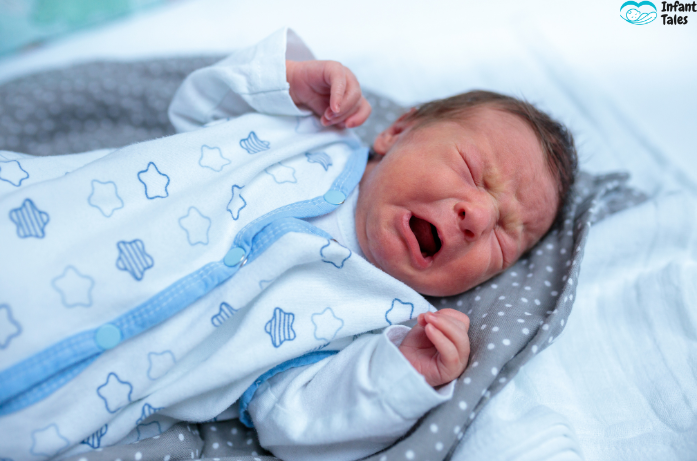
Seeing diarrhea in babies can make any parent anxious, especially when it happens suddenly and without any obvious reason. One moment your baby seems perfectly fine, and the next you’re dealing with watery stools, diaper blowouts, discomfort, and more worries than answers. As a mom who has handled many messy diaper situations (some at the worst possible moments!), I know how stressful this can feel.
The good news is that diarrhea is a very common issue in infant, and most cases improve with simple care at home.
This guide explains everything you need to know, from causes to treatments, signs of dehydration, what foods to offer, and when it’s important to call your pediatrician. The goal is to help you feel prepared, calm, and confident while caring for your little one.
Table of Contents
What Is Diarrhea in Babies?
Diarrhea means stools that are more watery, frequent, and loose than your baby’s usual pattern. Every baby has different stool habits, but diarrhea often shows up as:
- Sudden increase in dirty diapers
- Very watery or runny stool
- Strong or unusual smell
- Parents often notice their baby appearing more gassy or baby so fussy when diarrhea causes stomach discomfort.
Parents often ask why do babies get diarrhea, and the answer varies. According to MedlinePlus, babies’ digestive systems are still immature, which makes them more sensitive to infections, food changes, and medications:
Understanding Diarrhea in Babies
Diarrhea often happens because the intestines move food faster than usual, preventing proper fluid absorption. This leads to watery stools and increases the risk of dehydration, especially in newborns and young infants.
The most important thing to remember is that diarrhea itself isn’t usually dangerous, but dehydration can be. That’s why monitoring fluids, wet diapers, and overall behavior is crucial.
Common Causes of Diarrhea in Babies
Diarrhea has many triggers, and identifying the cause helps you manage your baby’s recovery better.
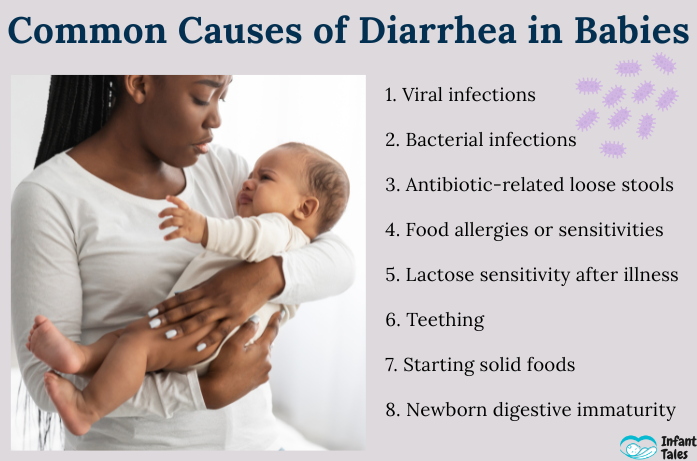
1. Viral infections (Most common): Rotavirus, norovirus, and adenovirus are leading causes, often appearing alongside other flu symptoms in babies. These infections bring watery stools, vomiting, low appetite, and sometimes fever.
2. Bacterial infections: Though less common, bacteria like Salmonella or E. coli can cause diarrhea, sometimes with mucus or fever. These cases may require medical treatment. The CDC explains that bacterial diarrhea may require medical attention, especially in young infants:
3. Antibiotic-related loose stools: Antibiotics disturb the balance of good bacteria in the gut, which may cause temporary diarrhea.
4. Food allergies or sensitivities: Some babies react to ingredients like dairy or soy, leading to loose stools, rashes, or irritability.
5. Lactose sensitivity after illness: A stomach virus can temporarily reduce lactose tolerance, causing runny stools for a short time.
6. Teething: Many parents wonder can babies get diarrhea from teething, and while teething doesn’t directly cause diarrhea, drooling and constant chewing may loosen stools slightly. This is why some parents still ask does teething cause diarrhea in babies, even though the connection is mild.
7. Starting solid foods: Introducing new foods, especially those high in fiber like pears or prunes, can change stool consistency.
8. Newborn digestive immaturity: In very young infants, even small changes can cause temporary loose stools. This is often mistaken for newborn baby diarrhea, but true diarrhea involves unusually watery, very frequent stools with a different smell or color. Health Direct Australia explains that true diarrhea involves stools that are much more watery, frequent, and different from normal newborn poop:
What to Watch For: Signs of Dehydration
Dehydration develops quickly in babies. Recognizing early signs helps prevent complications.
Important Signs to Monitor
- Fewer wet diapers (less than 4 in 24 hours)
- Dry lips or mouth
- No tears when crying
- Sunken soft spot
- Dark yellow urine
- Tiredness or weakness
Severe Signs That Need Immediate Care
- Very little or no urine
- Rapid breathing
- Extreme sleepiness
- Cold hands or feet
- Sunken eyes
If these appear, seek medical help immediately.
What to Do When Your Baby Has Diarrhea
Many parents search for what to do if baby has diarrhea, and the steps are simple but essential:
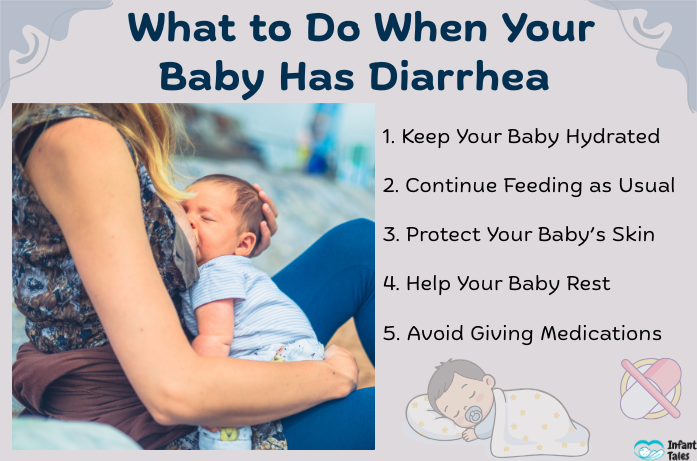
1. Keep Your Baby Hydrated
Hydration is essential when a baby has diarrhea. Continue breastfeeding or formula feeding frequently, offering small, regular amounts, while also understanding how breastfeeding foods may affect digestion in some babies. This helps replace lost fluids safely. Avoid giving plain water in large amounts, as it isn’t suitable for young infants.
2. Continue Feeding as Usual
Do not stop feeding during diarrhea, as babies recover better with steady nutrition. If your baby eats solids, offer gentle foods like mashed banana, applesauce, rice cereal, or mashed potatoes. These help soothe the stomach and firm up stools naturally.
3. Protect Your Baby’s Skin
Frequent loose stools can irritate the diaper area quickly. Change diapers often, apply a thick diaper cream to protect the skin, and allow short air-dry breaks. These steps help prevent painful rashes and keep the skin comfortable during recovery.
4. Help Your Baby Rest
Diarrhea can leave babies tired and uncomfortable, so extra rest is important. Follow your baby’s cues and allow additional naps. A calm environment with gentle cuddles supports healing and helps your little one feel secure while recovering.
5. Avoid Giving Medications
Avoid over-the-counter diarrhea medicines unless your pediatrician specifically advises them. Babies’ digestive systems are sensitive, and unnecessary medication may cause complications. Focus on hydration, gentle feeding, and comfort while the body naturally works to recover.
The American Academy of Pediatrics recommends supportive care rather than medication for diarrhea in children:
More Important Information: What Helps Babies Recover Faster
These supportive steps can make a big difference in helping your baby’s digestive system settle and recover more comfortably:
1. Watch Feeding Patterns Closely
Offer smaller, more frequent feedings so your baby’s stomach isn’t overwhelmed. Avoid pushing large amounts at once, as this can worsen diarrhea or cause discomfort. Allow your baby to pause during feeding, breaks help prevent overfeeding and give their tummy time to handle each portion.
2. Maintain Good Hygiene
Keeping everything clean reduces exposure to germs that can prolong or worsen diarrhea. Wash your hands before and after diaper changes or feeding. Clean bottles, spoons, and feeding utensils thoroughly after each use. Disinfect pacifiers, toys, and surfaces your baby touches often, as these can carry bacteria and viruses.
3. Introduce Foods Slowly
If your baby has recently started solids, introduce new foods one at a time. This helps you easily spot any ingredient that may irritate their stomach or trigger loose stools. Simple, single-ingredient foods are best during recovery to avoid overwhelming their digestive system.
4. Keep Track of Wet Diapers
Monitoring how many wet diapers your baby has each day is the fastest way to detect dehydration early. A noticeable drop in urine output can signal that your baby needs more fluids or medical attention. Keeping a mental or written note of diaper changes can be very helpful.
When to Call Your Pediatrician
Short episodes of diarrhea usually aren’t serious, but seek medical advice if your baby:
- Has diarrhea for more than 24 hours (under 6 months)
- Shows signs of dehydration
- Has blood or mucus in stool
- Has frequent vomiting
- Has a high fever
- Refuses to drink
- Has dark, black, or white stools
- Seems unusually sleepy or weak
Trust your instincts; parents often sense when something isn’t right.
How to Prevent Diarrhea in the Future
Prevention isn’t always possible, but simple habits help protect your baby:
- Wash hands before feeding
- Sterilize bottles and nipples regularly
- Clean toys often
- Introduce foods slowly
- Avoid juice for infants
- Keep sick people away from your baby
Good hygiene is especially important in preventing viral infections.
Final Thoughts for Parents
Seeing your baby uncomfortable or sick is never easy, but diarrhea is something almost every infant experiences at some point. Most cases improve quickly with hydration, gentle feeding, and plenty of rest. Always keep an eye on wet diapers, energy levels, and stool patterns. And remember, if you ever feel uncertain, your pediatrician is just a call away.
You’re doing a wonderful job, and your baby will get through this with your love and care.
FAQs
For more helpful baby health guides, parenting tips, and newborn care advice, explore our latest articles on Infant Tales and stay prepared for every milestone.
Medical Disclaimer
This article is for informational purposes only and does not replace professional medical advice. Always consult your pediatrician for diagnosis or treatment specific to your child.