
Becoming a parent teaches you quickly that babies don’t always cry for obvious reasons. Sometimes there’s no fever, no spit-up, no visible sign of illness, yet your baby seems uncomfortable, restless, or unhappy. One commonly missed cause is infant silent acid reflux symptoms, a condition that doesn’t look dramatic on the outside but can deeply affect a baby’s comfort, sleep, and feeding.
Unlike regular reflux, silent reflux happens quietly. The stomach acid travels upward, causes irritation, and then slips back down without the classic mess. This makes it harder for parents to recognize and often delays help. This article is written to gently guide new parents and caregivers, helping you understand the signs, possible causes, comfort strategies, and when medical advice is necessary.
Our goal at Infant Pamper is not to scare you, but to help you feel informed, supported, and confident in caring for your little one.
Understanding Infant Silent Acid Reflux Symptoms
Infant silent acid reflux symptoms occur when stomach contents move back up into the esophagus and throat but are swallowed instead of coming out. Because babies have immature digestive systems, this backflow happens more easily, especially in the first few months of life.
What makes silent reflux tricky is that it often looks like everyday baby behavior, leaving many parents wondering why their baby so fussy even when there are no obvious signs of illness. Fussiness, poor sleep, feeding struggles, these can all be brushed off as “normal.” But when they persist or intensify, reflux may be the underlying reason.
According to pediatric guidance from sources like the American Academy of Pediatrics and MedlinePlus, reflux is common in infancy, but ongoing discomfort deserves attention.
Why Silent Reflux Looks Different in Babies
Babies spend a lot of time lying flat, their diets are entirely liquid, and the valve that keeps stomach acid down is still developing. All of this makes reflux easier and more frequent. The Mayo Clinic also notes that infant reflux is often tied to a developing digestive system and typically improves as babies grow and spend more time upright:
Silent reflux differs because:
- There is little or no spit-up
- Symptoms are behavioral rather than visible
- Pain may show during feeding or sleep
This combination often leads parents to wonder if something else is wrong.
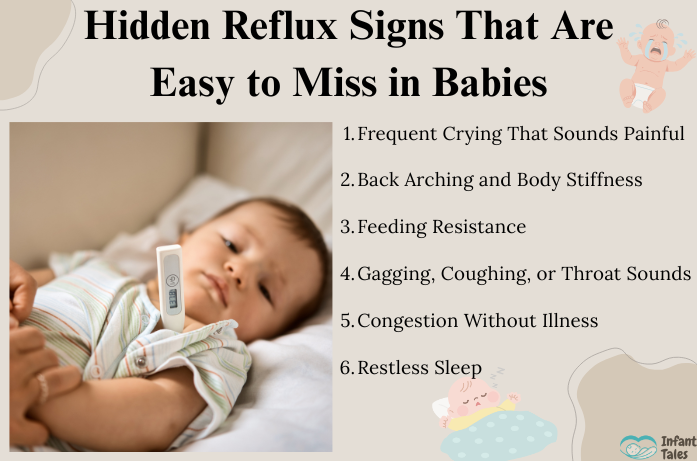
Common Signs Parents Often Miss
Silent reflux symptoms can vary from baby to baby. Some show many signs, others only a few. The key is noticing patterns rather than isolated moments.
1. Frequent Crying That Sounds Painful: Crying linked to reflux often sounds sharp, sudden, or intense. It may happen during feeds or shortly after, especially when the baby is laid down.
2. Back Arching and Body Stiffness: Some babies arch their backs, stiffen their legs, or pull away suddenly. This is often a reflex response to internal discomfort.
3. Feeding Resistance: A baby may seem hungry but then refuse to eat, cry mid-feed, or only take small amounts before stopping.
4. Gagging, Coughing, or Throat Sounds: Acid irritation in the throat can cause coughing or gagging even when there’s no cold or infection.
5. Congestion Without Illness: Persistent stuffy sounds, noisy breathing, or throat clearing can be linked to acid reaching the upper airway, although parents should also understand common flu symptoms in babies.
6. Restless Sleep: Babies with reflux may wake frequently, sleep lightly, or only sleep comfortably when held upright.
If you are nursing and wondering whether certain dietary choices may be affecting your baby, this guide to foods to avoid when breastfeeding a baby with acid reflux explains common concerns and helpful steps to discuss with your pediatrician.
Does My Infant Have Acid Reflux?
This is one of the most common questions parents quietly ask themselves. There’s no single sign that confirms reflux, but patterns matter.
You may notice:
- Symptoms worsening after feeds
- Discomfort when lying flat
- Temporary relief when baby is upright
- Feeding and sleep difficulties happening together
Pediatricians usually diagnose reflux based on symptoms, growth, and feeding history rather than tests. The Cleveland Clinic also explains that doctors often diagnose reflux in babies through symptom history and feeding patterns, especially when spit-up is minimal or symptoms are more “silent”:
Why Silent Reflux Can Affect Sleep So Much
Sleep is often where reflux shows itself most clearly. When babies lie flat, gravity no longer helps keep acid down. This can cause discomfort that wakes them repeatedly.
Infant reflux sleep challenges may look like short naps, frequent night waking, or crying soon after being placed in the crib. This can be exhausting for both baby and parents, and over time it impacts mood and feeding patterns as well.
Gentle Comfort Measures Parents Can Try
Many babies improve with small, consistent changes, especially when parents are also mindful of breastfeeding foods that may affect feeding comfort. These steps are often recommended before medication.
Helpful strategies include:
- Holding baby upright for 20–30 minutes after feeds
- Offering smaller, more frequent feeds
- Burping gently and often
- Avoiding active play immediately after feeding
These adjustments reduce pressure on the stomach and may limit acid movement.
Infant Acid Reflux Sleeping Position
Sleep safety always comes first. Babies should always be placed on their backs to sleep. However, your pediatrician may guide you on safe positioning strategies to reduce discomfort.
Some parents find that:
- Keeping baby upright before bedtime helps
- Ensuring diapers and clothing aren’t tight around the belly reduces pressure
Never use unapproved sleep devices or props. If sleep discomfort is severe, medical guidance is essential.
Natural and Home-Based Support Options
Many parents prefer to begin with gentle, non-medicated approaches before considering medical treatment. Acid reflux in infants natural treatment usually centers on simple daily adjustments that support digestion and reduce discomfort, rather than giving remedies directly to the baby. These strategies aim to minimize pressure on the stomach and help keep acid from moving upward.
When pediatricians talk about home remedies for infant reflux, they most often mean practical lifestyle changes such as modifying feeding routines, improving feeding posture, allowing adequate upright time after feeds, and ensuring proper burping. These small but consistent adjustments can significantly ease symptoms for many infants, especially in mild to moderate cases.
It’s important to remember that not all “natural” solutions are safe for babies. Herbal preparations, teas, or unverified remedies can be harmful to an infant’s developing system. Always consult your child’s doctor before trying anything new, even if it seems gentle or widely recommended, to ensure it is safe and appropriate for your baby’s age and condition.
When Symptoms Become More Concerning
Silent reflux should be monitored closely if it starts affecting growth or overall well-being.
Contact your pediatrician if you notice:
- Poor weight gain
- Feeding refusal that worsens
- Crying that seems severe or constant
- Breathing difficulties or frequent choking
Reliable guidance from organizations like the National Institutes of Health highlights that persistent symptoms deserve professional evaluation.
<iframe width=”677″ height=”391″ src=”https://www.youtube.com/embed/0bDY8h7lktY” title=”Doctor explains Reflux in Babies | Symptoms, causes, treatment” frameborder=”0″ allow=”accelerometer; autoplay; clipboard-write; encrypted-media; gyroscope; picture-in-picture; web-share” referrerpolicy=”strict-origin-when-cross-origin” allowfullscreen></iframe>
Infant Medication for Acid Reflux:
In some cases, lifestyle changes aren’t enough. A doctor may consider infant medication for acid reflux if pain is significant or feeding is compromised.
Medication decisions are based on:
- Symptom severity
- Baby’s age and growth
- Response to non-medical approaches
These treatments should always be monitored closely and used only when clearly needed.
A Note on OTC Acid Reflux Medicine for Infants
Parents should never give otc acid reflux medicine for infants without medical approval. Many medications safe for adults or older children are not appropriate for babies.
Always consult a pediatrician before giving any medicine, even if it’s labeled as gentle or natural.
Will My Baby Outgrow Silent Reflux?
The good news is that most babies do. As digestion matures, babies sit up, eat solids, and spend less time lying flat. For many families, symptoms improve significantly by the end of the first year.
Until then, patience, observation, and support make a real difference.
Emotional Support for Parents
Caring for a baby with silent reflux can feel lonely and exhausting. When there’s no visible symptom, it’s easy to doubt yourself. Please remember:
- You are not imagining the problem
- Your baby is not “difficult”
- Seeking help is a sign of good parenting
Final Thought
Infant silent acid reflux symptoms may be quiet, but their effect on a baby’s daily comfort, feeding, and sleep can be significant. When these symptoms are recognized early, parents are better able to respond with patience, appropriate care, and timely medical guidance. By learning the signs, tracking patterns over time, and working closely with your pediatrician, you create a supportive path toward relief and healthy development for your baby.
Most importantly, remember that this phase is temporary for most infants, and with the right understanding and care, calmer days and more restful nights are ahead. Your attention, advocacy, and love play a powerful role in helping your baby feel safe and comfortable and that truly makes a difference.
FAQs
1. What are infant silent acid reflux symptoms?
They include fussiness, feeding difficulty, back arching, coughing, congestion, and poor sleep without frequent spit-up.
2. How can I tell if my baby has silent reflux?
If your baby is uncomfortable during or after feeds, struggles with sleep, and feels better when held upright, silent reflux may be a cause.
3. Is silent reflux harmful to babies?
It is usually not dangerous, but ongoing discomfort can affect feeding, sleep, and weight gain if not managed properly.
4. Do babies outgrow silent acid reflux?
Yes, most babies naturally outgrow silent reflux as their digestive system matures, usually by 12 to 18 months.
5. When should I see a pediatrician for silent reflux?
If symptoms are persistent, worsen over time, or affect feeding and growth, it’s important to consult your pediatrician.
If these signs sound familiar, trust your instincts and speak with your pediatrician. For more gentle, parent-approved guidance, explore trusted resources at Infant Tales.
Medical Disclaimer: This article is for informational purposes only and does not replace professional medical advice, diagnosis, or treatment. Always consult your pediatrician or a qualified healthcare provider with questions about your infant’s health or feeding concerns.