If you’re tired of chaotic mornings filled with missing socks, cold coffee, half-packed backpacks, and kids who suddenly forget how to put on shoes, you’re not alone. For many parents, mornings feel like a whirlwind, fast, stressful, and unpredictable. That’s exactly why creating a morning routine for kids is one of the most powerful ways to bring calm, structure, and confidence to the start of your day.
A predictable morning routine doesn’t mean life becomes perfect or peaceful every single day. But it does make mornings manageable, reduces emotional outbursts, and helps children feel more secure. And here’s something many people overlook: the routine is not just for kids; parents need one too. When both sides of the family start the day grounded and organized, everything flows more smoothly.
This guide blends expert insights, child development principles, and practical mom-to-mom wisdom to help you create a morning rhythm that actually works for your child and your home.
Why a Morning Routine for Kids Matters More Than You Think
Children thrive on predictability. Knowing what’s coming next helps them stay calm, cooperate more willingly, and move through tasks with less resistance. Research from trusted educational and pediatric organizations, such as the American Academy of Pediatrics, shows that consistent routines support:
- Emotional regulation
- Stronger independence and decision-making
- Reduced anxiety during transitions
- Better school readiness and focus
A morning routine isn’t just about getting out the door; it’s about helping your child feel steady and confident before they face a busy school day and participate in other preschool learning activities.
When kids have structure in the morning, they behave better, handle stress more easily, and feel more secure. And parents feel less overwhelmed trying to manage a dozen things at once.
Begin the Morning at Night: The Ultimate Game-Changer
The secret to a smooth morning begins long before sunrise. Preparing small things the night before saves time, energy, and frustration.
One of the easiest ways to reduce morning stress is to plan clothing the night before. Allow your child to choose between two outfits; this gives them independence without overwhelming them. Pack backpacks, water bottles, snacks, and any school materials right after dinner when you’re not rushed.
A consistent bedtime routine is also essential. Kids who sleep well wake up calmer, more focused, and more cooperative. Proper rest improves mood, memory, and morning behavior, key ingredients for a successful start.
Even preparing breakfast ingredients ahead of time (like cutting fruit or prepping oatmeal) can remove unnecessary stress. When parents aren’t scrambling, kids absorb that calm energy.
Wake Up With Connection, Not Chaos
Kids don’t respond well to rushing or abrupt commands. A gentle wake-up creates a smoother foundation for the entire morning.
Try using soft lighting, a warm voice, or a favorite morning song. A hug, a snuggle, or just a few quiet seconds together can shift their mood and increase cooperation.
Children tend to mirror your emotional energy. If you start the morning tense and hurried, they feel it immediately. If you begin with warmth and predictability, they relax into the day.
Build a Simple and Predictable Morning Rhythm
A strong morning routine for kids does not need to be complicated. In fact, the simpler it is, the easier it becomes for children to follow independently.
You might structure the morning like this:
Wake up → Bathroom → Brush teeth → Get dressed → Breakfast → Shoes → Backpack → Out the door.
Simple, predictable, repeatable.
Children often benefit from a kids’ morning routine chart placed somewhere easy to see. Visual cues help them understand expectations without constant reminders. Research from Vanderbilt University has shown that visual schedules improve task completion and reduce behavioral stress in children.
These charts turn responsibilities into manageable steps and support independence, especially for children who struggle with verbal instructions.
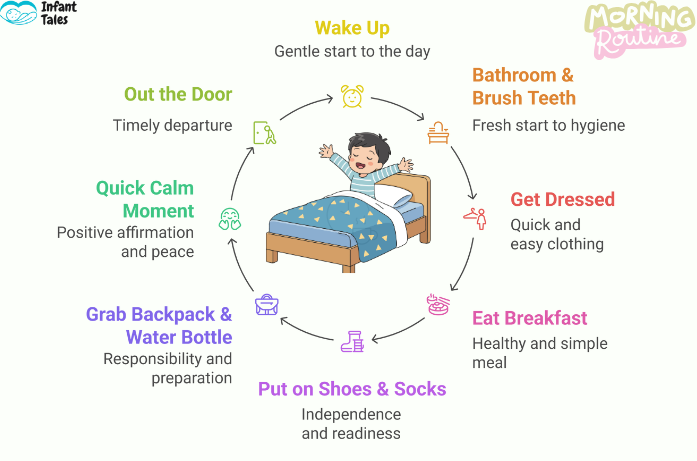
Kids Morning Routine Chart: Making Tasks Easier to Follow
Kids thrive when they know exactly what to do and when to do it. Adding time frames to your kids’ morning routine chart gives children a clear structure and helps mornings run smoothly. You can adjust these times based on your family’s schedule, but the flow works well for toddlers through early school age.
7:00 AM Wake Up
Give your child a gentle, warm wake-up. Allow a minute or two for stretching or cuddles so they don’t feel rushed.
7:05 AM Bathroom & Brush Teeth
A quick trip to the bathroom followed by brushing teeth sets the tone for starting the day fresh.
7:10 AM Get Dressed
Clothing laid out the night before makes this step faster and avoids arguments.
7:20 AM Eat Breakfast
Choose simple, healthy foods to keep mornings easy. A 1015-minute window is enough for most kids.
7:35 AM Put on Shoes & Socks
Keeping shoes near the door reduces last-minute searching. If your child is learning independence, this is a great task for them to practice.
7:40 AM Grab Backpack & Water Bottle
Let your child check this step off their morning routine checklist for kids. Visual reminders help build responsibility.
7:45 AM Quick Calm Moment
This could be a hug, a deep breath, or a short positive affirmation like “Today is going to be a great day.”
7:50 AM Out the Door
Leaving on time becomes much easier with a predictable routine that stays the same every day.
The Parent Morning Routine Chart: Because Calm Starts With You
This is the part often missing from other guides: parents need a routine too. When adults feel centered, mornings unfold with far less tension. Your energy sets the emotional tone for your child.
Here’s a realistic Parent Morning Routine Chart to help your day begin smoothly:
Wake up 15–20 minutes earlier than the kids.
This gives you a quiet, distraction-free start so you’re not instantly rushing.
Hydrate and stretch.
A quick glass of water and a gentle stretch signal your body that the day has begun.
Complete one small prep task.
Whether it’s prepping breakfast, placing shoes near the door, or packing a last-minute item, this single step makes the whole morning lighter.
Take 30–60 seconds to ground yourself.
Deep breathing, a positive affirmation, or looking out the window resets your nervous system.
Wake your child with warmth.
Connection before instruction always works better.
Guide, don’t micromanage.
Let your child follow their morning routine checklist for kids instead of doing everything for them.
Do a quick home sweep before leaving.
Keys? Phone? Water bottles? Backpacks?
Your future self will thank you.
A parent morning routine works hand-in-hand with your child’s routine, creating harmony instead of chaos.

Keep Breakfast Simple and Familiar
Breakfast doesn’t need to be fancy. Kids thrive when they know what to expect. Choose two to four easy, nutritious meals that rotate throughout the week. Familiar foods help mornings run faster and reduce picky eating battles.
If your child tends to dawdle or stall, try setting a gentle timer or playing a short breakfast playlist to help them stay on track.
Add a Buffer Window to Help Everyone Stay Calm
Even with routines in place, kids move at their own pace. The trick is creating extra time so you don’t feel rushed.
Aim to finish the entire routine 10–15 minutes before your actual leaving time. This buffer helps you handle unexpected delays, spilled juice, last-minute bathroom breaks, or sudden emotional moments, without raising your voice or panicking.
If everything gets done early, use those extra minutes for a quiet book, cuddles, or a calm pause before leaving.
Encourage Independence Little by Little
Kids love feeling capable. Independence boosts their confidence and reduces morning battles. Start small, choose one responsibility they can fully handle. A toddler may carry their water bottle. A preschooler can pick their outfit. An early school-age child can check off tasks on their morning routine chart for kids.
Avoid correcting every detail. If their shirt is a bit uneven or their hair isn’t perfect, let it go. What matters is their growing sense of ownership.
Removing Morning Distractions Makes Everything Flow
Screens, toys, and busy environments can derail the best routines. The American Academy of Pediatrics recommends avoiding screens before school because they overstimulate kids and make transitions harder.
Consider adopting a “no screens until ready” rule or skipping screens entirely in the morning. Put toys aside and keep the environment calm.
A peaceful home supports a peaceful mind.
Turn Morning Tasks Into Playful Moments
Kids cooperate better when routines feel fun. Creativity turns frustration into connection.
Try using:
- A timer game (“Can you beat the clock?”)
- A morning playlist for getting dressed and brushing teeth
- A star chart for completing tasks calmly
- A silly voice routine (“Robot brushing teeth time!”)
- When tasks feel like a game, kids move faster and resist far less.
Remember: Hard Mornings Don’t Mean You’re Failing
Even with routines, some mornings will fall apart, especially during developmental phases when children seem extra fussy or resistant to daily tasks. Maybe someone wakes up grumpy. Maybe you forgot something. Maybe everything feels rushed.
This is normal. It’s human. And it doesn’t reflect your worth as a parent.
Routines aren’t meant to be perfect; they’re meant to guide your family through the chaos. Every morning is a chance to reset, adjust, and try again with kindness.
Final Thoughts
A strong morning routine for kids is not about perfection; it’s about creating calm, confidence, and connection. When both parents and children follow predictable routines, mornings feel lighter, smoother, and far less stressful. With simple habits, visual tools, and a little patience, your family can transform mornings from chaotic to peaceful.
The goal isn’t to control the morning, it’s to guide it with love.
And every small step toward consistency builds a happier, more confident child.
Make parenting easier, one tip at a time. Subscribe to Infant Tales and get practical guides, routines, and parenting wisdom delivered straight to your inbox.
Frequently Asked Questions
1. What if my child resists every step?
Start small. Introduce one step at a time using a kids’ morning routine chart to reduce overwhelm.
2. Can routines help with school performance?
Yes! Predictable mornings support emotional regulation and improve focus, key to school success.
3. How long should a morning routine take?
Most families do well with 45–60 minutes, depending on your child’s pace.
4. How can I help multiple kids at once?
Use individual daily routine charts for kids and stagger tasks like bathroom time.
5. Is it okay to use rewards?
Small rewards can motivate early on, but over time, independence becomes the biggest reward.