By a Caring Mom at Infant Tales
If your baby suddenly becomes extremely irritable, drools excessively, or constantly insists on gnawing on everything they can grab, you might think they’re teething. Every parent has these doubts at some point in the first year. Signs of Baby Teething Symptoms aren’t always obvious, and because young children can’t tell us where the pain is, we have to learn to read their subtle cues.
When my own baby started teething, I was suspicious of his every cry and sleepless night. Was it hunger? (Or) overstimulation? (Or maybe) a growth spurt? Ultimately, a combination of several signs, gnawing, irritability, and short naps, concluded that teething was imminent. Teething is a normal part of a child’s development, but it can also be confusing and exhausting at the same time.
This tutorial will help you identify the signs of your baby’s first tooth, learn about the teething schedule, recognize symptoms in breastfeeding babies, learn how to calm them down, manage nighttime discomfort, and know when to consult a doctor. By the end of the guide, you’ll feel more confident about your baby’s teething time.
Understanding Baby Teething Symptoms
Teething begins when your baby’s first baby teeth begin to emerge through the gums. While some babies experience little to no mood changes during this process, others may experience a variety of symptoms and discomfort for a long time. The difficulty is that there is a wide variation in children and teething symptoms. One baby may drool constantly, while another may rarely cry. According to the NHS, teething symptoms can vary widely from drooling and chewing to irritability and swollen gums.
Most babies teethe between 4 and 7 months of age, but those who are the first in a family may experience teething a little earlier due to family history. In some babies, this can happen closer to 12 months. There’s no wrong schedule; your baby will follow their own unique rhythm. The important thing is that you know what to expect and how to gently and safely soothe them. Kids Health also confirms that every baby follows their own teething pattern.
Baby Teething Age: When Will the First Tooth Appear?
Teething typically begins around three months of age, although the entire process typically lasts from 4 to 12 months. The timing of teething is influenced by factors such as growth, genetic factors, and eating habits. Some children develop several teeth quickly, while others may take weeks for each new tooth to emerge. For reference, Cleveland Clinic provides a clear overview of teething timing and variations among babies:
Here’s a simple baby teething age chart to guide you:
- 4–7 months: Bottom front teeth
- 8–12 months: Top front teeth
- 9–16 months: Lateral incisors
- 13–19 months: First molars
- 16–22 months: Canines
- 23–33 months: Second molars
There is no need to be concerned if your baby doesn’t exactly follow the schedule. Teething very seldom adheres to a perfectly set timetable.
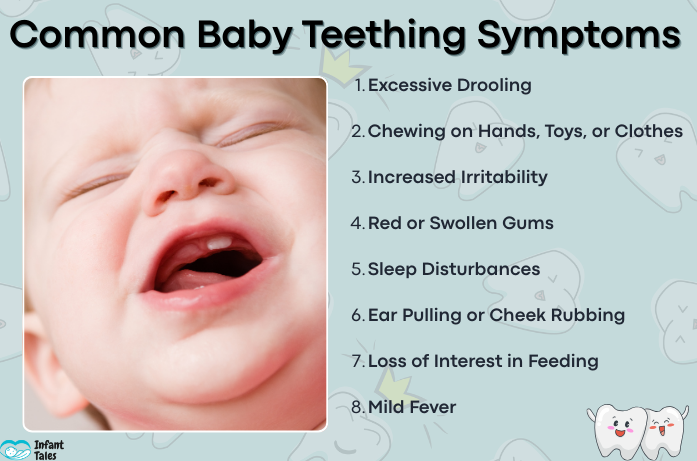
Common Baby Teething Symptoms
Many babies start manifesting the symptoms of teething well ahead of the actual tooth emergence. The following are the signs that parents notice the most frequently:
1. Excessive Drooling
Drooling is one of the earliest symptoms. A baby who is teething naturally produces more saliva to soothe irritated gums. This often results in a wet chin or mild skin irritation.
2. Chewing on Hands, Toys, or Clothes
Babies may chew on fingers, toys, burping cloths, or your shoulder to relieve pressure on their gums. This is one of the earliest and most obvious signs of teething.
3. Increased Irritability
Teething discomfort often makes babies more sensitive and demanding. Along with fatigue and discomfort, parents may sometimes notice that their children become more irritable in the evening. Learn more about baby fussiness and common causes of discomfort in infants.
4. Red or Swollen Gums
Gums may become swollen or red, and sometimes a white lump may appear at the site of the tooth eruption.
5. Sleep Disturbances
Nighttime is often the worst time for teething. Due to the increased pressure on the gums from lying down, babies may wake more often or have difficulty settling down.
6. Ear Pulling or Cheek Rubbing
Teething pain is one reason babies pull their ears and cheeks and rub their faces, which can sometimes feel quite awkward.
7. Loss of Interest in Feeding
Sometimes babies stop feeding altogether because their sucking only makes their gums more painful. This is very common with breastfed babies, who may move up and down while feeding due to the flow of breast milk.
8. Mild Fever
Teething can cause a mild fever, but if the fever is higher than this, the baby should be examined by a doctor as this is not normal.
Signs of Teething in Breastfed Babies
Teething symptoms may appear in breastfed babies because feeding requires more vigorous mouth and jaw movements. Many mothers notice these habits:
- Biting or pinching the gums
- Expressing too much milk
- Crying while breastfeeding
- Feeding too much for comfort
- Excessive and dripping saliva during feedings
Children’s Hospital Los Angeles also confirms these common behaviors during teething.
These behaviors are completely normal. They do not reflect feeding problems; they’re simply your baby coping with gum irritation. Some parents also look for additional breastfeeding tips to make nursing more comfortable during teething.
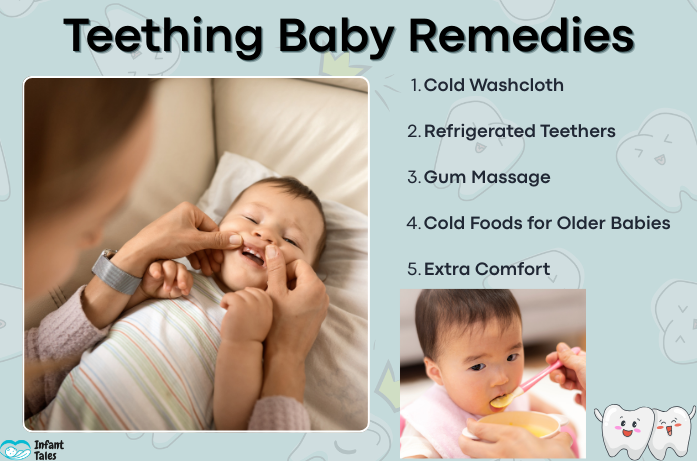
Teething Baby Remedies: Safe and Soothing Ways to Help
Watching your baby in pain is very difficult, but there are some safe and comforting ways to help. Most teething remedies are easy and can be applied during the day.
1. Cold Washcloth
A cold washcloth is very soft, soothing, and cooling to the gums, so it will help soothe inflammation.
2. Refrigerated Teethers
Always look for non-toxic, BPA-free teething toys made specifically for babies. A cold teething toy can provide instant relief by slightly numbing the gums.
3. Gum Massage
First, wash your hands and then gently rub your baby’s gums with your finger. Most times, this gentle pressure will provide instant relief.
4. Cold Foods for Older Babies
If your baby is eating solid foods, cold foods like chilled applesauce, yogurt, or fruit ice chips can help soothe swollen gums.
5. Extra Comfort
During teething, babies need more closeness. Being held, rocked, and comforted reduces stress and makes the discomfort easier to handle.
Avoid:
- Amber teething necklaces
- Frozen teethers
- Teething gels containing lidocaine or benzocaine (withdrawn)
The American Academy of Pediatric Dentistry clearly warns against unsafe remedies:
Home Remedies for Teething Baby at Night
Nighttime is when the teething baby is at his or her worst. The absence of daytime activity makes the baby feel more puckish. The methods listed below will certainly help you through this tough time of the day:
- A warm bath to relax your baby before bed
- Laying baby on side and giving a cold teether just before sleep
- Comforting through gentle rocking, patting, or feeding
- Creating an atmosphere that is calming and consistent
With these minor adjustments in routine, the struggle of teething at night can be reduced a lot for both the little ones and their parents.

Baby First Tooth Symptoms: What Happens Right Before the Tooth Breaks Through?
Signs of teething become more obvious. Babies may become more needy or irritable during this time. Parents may notice:
- A small white stripe or swelling on the gums
- Biting too hard
- Loud crying or irritability
- Some bleeding during teething.
This phase of teething is usually very brief, and after the teeth come out, children often return to their regular happy self.
Why Teething Symptoms Vary from Baby to Baby
Every child’s teething experience is different, just like other milestones, such as walking or crawling. One child may experience teething easily with little impact, while another may experience significant discomfort.
Gum thickness, genetics, and sensitivity can all play a role. Even among siblings, the timing of teething can vary significantly. This chart of teething ages gives a rough estimate; However, babies who teeth early or late are simply going through their developmental phase.
When Should You Call a Doctor?
Teething can be uncomfortable, but it doesn’t cause any serious symptoms. If your baby experiences any of these symptoms, don’t hesitate to contact your doctor:
- High fever
- Severe or persistent diarrhea
- Vomiting
- Refusal to drink for several hours
- Pus-filled swollen gums
- Extreme irritability
- A rash spreading across the body
These signs are not typical of teething and may indicate another condition.
Tips for Parents: Navigating Teething with Patience and Love
Teething can be a temporary phase in children, but if you’re sleep deprived and stressed, it can seem like forever. You should always make sure your baby isn’t acting out; the pain can be incredibly difficult for them. Provide comfort without feeling bad, be flexible with your routine, and celebrate every small success.
Your calm presence is the greatest comfort to your baby during this time. With love, patience, and the right calming techniques, teething becomes easier for the whole family.
Conclusion
Teething is an important stage that comes with many challenges, new experiences, and growth. By recognizing the symptoms of teething in children and adopting non-invasive measures, you’ll be able to support your baby through this difficult phase and feel confident about it.
No matter if your baby is drooling, chewing constantly, or waking frequently, just remember that this phase won’t last long. With consistent comfort and love, your baby will overcome teething problems, and before you know it, that first adorable tooth will emerge, marking the beginning of many new smiles.
FAQs
1. What are the first signs of teething?
The most common early signs are excessive drooling, chewing, irritability, and swollen gums.
2. When do babies typically start teething?
Most babies start teething around 4-7 months of age, although some may experience teething earlier or later.
3. How can I make my teething baby feel better?
A cool washcloth, a cool teether, gentle gum massage, and lots of love often do the trick.
4. Do teething babies sleep poorly at night?
Yes, many babies wake more often because their gums feel more sore at night.
5. Is it common for my baby to stop breastfeeding when teething?
Yes. Sucking can put extra pressure on the gums, especially for breastfed babies.
6. Should teething cause a fever?
Teething may cause slight warmth, but a high fever is not normal and should be checked by a doctor.
Want more simple, trusted parenting guides? Explore more articles on Infant Tales and make every milestone easier for you and your baby.