By a Caring Mom at Infant Tales
Flu in babies can begin with symptoms such as fever, cough, stuffy or runny nose, poor feeding, fussiness, and unusual tiredness. In newborns, flu symptoms may be harder to recognize because very young babies cannot show or describe how they feel, and even small changes in feeding, breathing, sleep, or alertness can matter.
Because newborns and young infants are more vulnerable to complications, parents should watch closely for warning signs such as breathing difficulty, dehydration, persistent fever, or extreme sleepiness. This guide explains flu symptoms in newborns, common signs in older babies, infant flu treatment, safe home care, age-specific concerns, prevention, and when to contact a pediatrician.
What Exactly Is the Flu in Babies?
Influenza is a viral respiratory infection that affects the nose, throat, and lungs. While adults may describe it as “just feeling run down,” babies can experience it more strongly because they cannot fight the virus as effectively. A big concern is that flu in babies under 6 months tends to progress faster and may lead to complications such as dehydration or breathing difficulties.
The virus spreads easily, especially within a household. Anyone coughing, sneezing, or even touching surfaces after being infected can unknowingly pass it to a baby. Since infants touch their faces frequently and rely on adults for feeding and comfort, exposure becomes almost unavoidable during flu season. What makes influenza different from a common cold is how suddenly it strikes and how intensely it impacts the whole body.
Can a Newborn Get the Flu?
Yes, a newborn can get the flu. Influenza can spread to babies through respiratory droplets and close contact with infected family members or caregivers. Because newborns are too young to receive a flu vaccine and have immature immune systems, parents should contact their healthcare provider promptly if flu-like symptoms develop.
Flu Symptoms in Newborns and Babies
Most parents know how mild colds look in infants, but the flu appears much faster and hits harder. A baby who seems fine in the morning may become warm, cranky, and extremely tired by afternoon. Many parents first notice baby fussiness before realizing it could be flu-related.
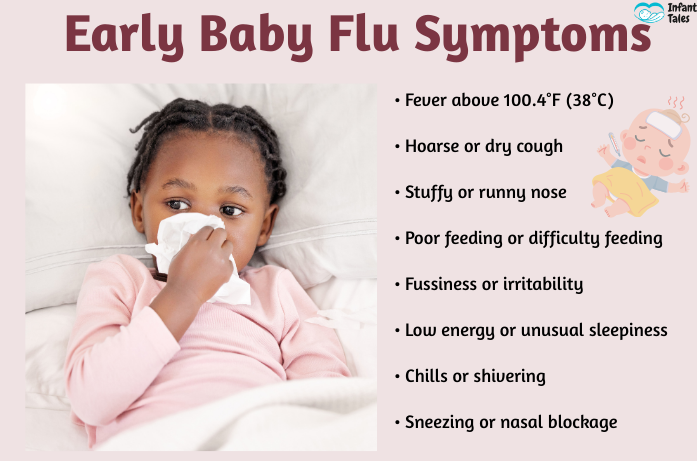
Common signs of baby flu symptoms include:
- Fever above 100.4°F (38°C)
- Hoarse or dry cough
- Stuffy or runny nose
- Poor feeding or difficulty feeding
- Fussiness or irritability
- Low energy or unusual sleepiness
- Chills or shivering
- Sneezing or nasal blockage
The American Academy of Pediatrics guide on flu symptoms helps parents understand these warning signs clearly: A key difference between cold and flu is the sudden fever and rapid discomfort.
Severe symptoms require urgent medical attention. These include breathing difficulty, bluish lips or nails, inability to wake normally, and signs of dehydration like fewer wet diapers or a dry mouth. If your instinct says something is wrong, it is always better to call the pediatrician without delay.
How Flu Symptoms Differ From a Cold
Parents sometimes confuse the two illnesses, which is understandable. But distinguishing them helps you respond appropriately.
A cold usually begins with a runny nose and mild cough. Babies often continue to eat and play even when congested. The flu, however, hits harder: fever is usually higher, appetite drops noticeably, and the baby appears more uncomfortable or sleepy. The sudden onset is one of the biggest clues.
When to Contact a Doctor Immediately
Even though many babies recover at home, certain age groups, especially newborns and infants under 3 months, require urgent evaluation for any fever. In this age range, the immune system is not strong enough to control infections easily, and complications can develop quickly.
Seek immediate medical advice if your baby:
- Has a fever in the first 12 weeks of life
- Is breathing too fast, wheezing, or pulling in at the ribs
- Is difficult to wake or unusually drowsy
- Refuses feeds repeatedly or vomits everything
- Shows signs of dehydration
- Has seizures or sudden twitching movements
How Doctors Diagnose the Flu in Babies
A medical evaluation usually begins with a general check-up. The doctor observes your baby’s breathing, temperature, hydration status, and overall appearance. A nasal swab might be taken to confirm influenza, although it isn’t always necessary. During peak flu months, many pediatricians diagnose based on symptoms alone.
The purpose of a flu test is not always to confirm the virus but to determine whether an antiviral medication might be helpful. Early diagnosis can help the medical team guide parents on what to expect and how to manage symptoms safely at home.
Infant Flu Treatment at Home: Safe and Practical Steps
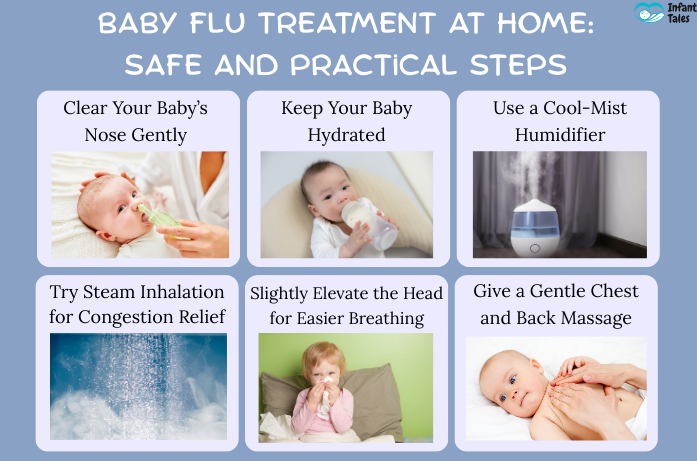
Infant flu treatment usually focuses on supportive care, hydration, congestion relief, rest, and medical monitoring. Treatment depends heavily on the baby’s age, symptoms, and overall health, so parents should follow their pediatrician’s guidance.
Most babies recover within a week, but they need gentle care at home. Since over-the-counter medicines aren’t safe for infants, parents often focus on simple, supportive baby flu treatment at home.
Hydration is the most important step. Babies may feed less due to tiredness or congestion, so offering breast milk or formula more often rather than larger amounts helps maintain fluids and supports recovery. During illness, some parents also notice digestive changes and worry about green poop in newborns.
For fever, always follow your doctor’s guidance. Acetaminophen may be allowed based on age and weight, while ibuprofen isn’t recommended before 6 months. Aspirin should never be given, and even natural remedies can be unsafe for infants.
Comfort measures also make a big difference:
- Cool-mist humidifier for easier breathing
- Saline drops for clearing nasal passages
- Extra cuddles and skin-to-skin contact
- Holding your baby upright to ease congestion
Keep your baby lightly dressed, as overheating can worsen fever. A calm environment and comfortable room temperature help them rest and heal faster.
Flu in Newborns, Babies Under 6 Months & Babies at 6 Months
Newborn Baby Flu Treatment
Newborns need quick medical care when flu symptoms appear because they cannot fight infections well. Any fever requires immediate attention, and no medicine should be given without a doctor’s approval. Watch for dehydration, newborns should have several wet diapers daily. Offer small, frequent feeds, use saline drops before feeding, and keep your baby upright to help with breathing and comfort. The PregnancyBirthBaby government website explains how quickly newborn flu can escalate:
Flu in Newborns and Babies Under 6 Months
Babies younger than 6 months are at the highest risk because they are too young for the flu vaccine. Their immunity relies on caregivers and their environment. Flu in babies under 6 months can lead to complications like pneumonia if symptoms worsen. Families should practice good hygiene, limit exposure during flu season, and monitor for breathing issues such as wheezing or grunting.
Flu in Babies at 6 Months
At 6 months, babies can finally receive their first flu vaccine, which helps reduce the severity of illness. Although they may still get fussy or congested, they usually handle flu symptoms better than younger infants. Parents often find care easier at this stage because feeding routines are more stable and babies express discomfort more clearly.
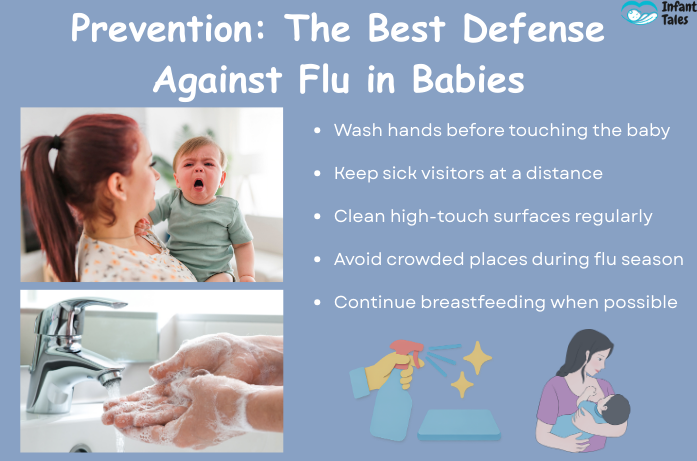
How to Prevent Flu in Babies and Newborns
Since treatment options are limited for infants, prevention becomes the most powerful tool for parents. Vaccination is key, both for caregivers and babies six months and older. Flu shots for adults also protect newborns because they reduce the chance of passing the virus to the baby.
Simple everyday habits also help:
- Wash hands before touching the baby
- Keep sick visitors at a distance
- Clean high-touch surfaces regularly
- Avoid crowded places during flu season
- Continue breastfeeding when possible. Nursing mothers may also want to be mindful of breastfeeding diet choices while supporting their baby’s recovery.
Strengthening a baby’s immunity naturally through adequate sleep, comfortable room temperatures, and clean air can also support overall health.
Complications of Untreated Flu in Babies
While most cases resolve with home care, untreated or severe flu can sometimes lead to complications such as pneumonia, dehydration, ear infections, and in rare cases, febrile seizures. Babies with pre-existing conditions or those born prematurely need even closer monitoring.
How Long Does the Flu Last in Babies?
Most babies recover in five to seven days, but the cough or congestion may linger for one to two weeks. Babies are usually contagious from one day before symptoms start until about a week after.
Keeping the environment clean and practicing frequent handwashing during this time is important to prevent spreading the virus to siblings or other family members.
Final Thoughts
Caring for a sick infant is emotionally and physically tiring, especially when dealing with something as unpredictable as the flu. But with awareness, gentle home care, and timely medical support, most babies recover quickly and fully.
Understanding the symptoms of flu in babies, knowing when to seek help, and taking steps to prevent infection empower parents to navigate flu season with confidence and calm.
Frequently Asked Questions
1. What are common flu symptoms in newborns?
Fever, coughing, congestion, poor feeding, irritability, unusual sleepiness, and breathing changes may occur.
2. Can a newborn get the flu?
Yes. Newborns can catch influenza through close contact with infected people.
3. What should I do if my 2-month-old has the flu?
Contact your pediatrician, especially if your baby has fever, feeding problems, breathing changes, or unusual sleepiness.
4. How is flu treated in infants?
Infant flu treatment usually focuses on hydration, feeding, congestion relief, monitoring, and doctor-directed care.
5. Can a 6-month-old get a flu vaccine?
Babies generally become eligible for influenza vaccination starting at 6 months.
6. When is flu in a newborn an emergency?
Seek urgent medical care for breathing difficulty, blue or gray lips, severe dehydration, seizures, unusual unresponsiveness, or other serious symptoms.
Subscribe to Infant Tales and get weekly guidance, expert insights, and comforting mom-to-mom advice straight to your inbox.
Medical Disclaimer
The information in this article is educational. It is not a substitute for medical advice. Always consult a pediatrician if your baby shows symptoms of illness, especially babies under 3 months old or those with pre-existing conditions.