Written with care by a caring mom at Infant Tales
When babies begin exploring solid foods, many parents start looking for nutritious and easy-to-digest options for their little ones. One food that often comes up is yogurt for babies. Parents commonly wonder if yogurt is safe, when babies can start eating it, and which type is best for their growing bodies. Because yogurt is soft, creamy, and packed with nutrients like calcium, protein, and probiotics, it can be a healthy addition to a baby’s diet when introduced at the right time.
For many families, yogurt becomes one of the first dairy foods babies try. It’s gentle on tiny tummies and easy to mix with fruits or cereals, making it a versatile choice for early meals. Understanding when to introduce yogurt, how much to serve, and how to choose the best yogurt for baby can help parents feel more confident as they guide their child through this important stage of learning to eat.
When Can Babies Start Eating Yogurt?
Most pediatricians recommend introducing yogurt around 6 months of age, which is usually the same time babies begin eating solid foods.
At this stage, babies are developing stronger neck control, can sit with support, and begin learning how to swallow thicker textures. Yogurt works well because its creamy texture makes it easy for babies to eat.
It’s important to note that while babies can eat yogurt before their first birthday, regular cow’s milk as a drink should still wait until around 12 months. Yogurt is different because the fermentation process makes it easier for babies to digest.
When introducing yogurt for the first time:
- Start with a very small amount
- Offer plain yogurt without sugar
- Observe your baby for any signs of allergy
Every baby is different, so go slowly and allow your baby to explore new foods comfortably. According to guidance from the Government of Newfoundland Labrador, yogurt, cheese, and other dairy foods can be introduced to babies as part of a balanced diet during the first year
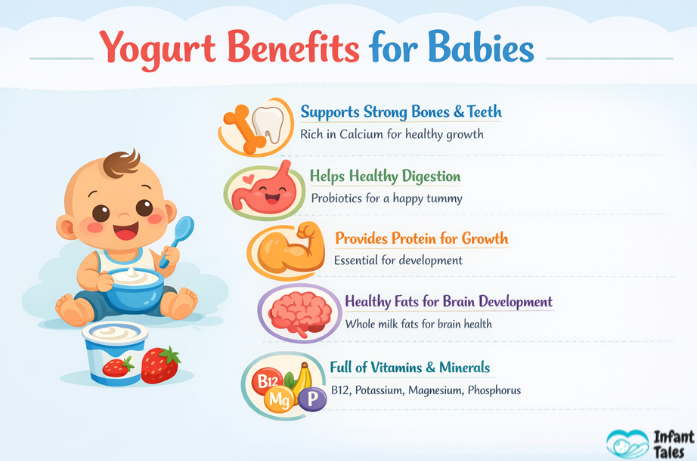
Yogurt Benefits for Babies
Yogurt isn’t just easy to eat, it also provides many important nutrients that help babies grow strong and healthy.
1. Supports Strong Bones and Teeth
Yogurt is rich in calcium, which is essential for building strong bones and teeth. Since babies grow quickly during their first year, calcium plays an important role in supporting their development.
2. Helps With Healthy Digestion
Yogurt contains probiotics, which are beneficial bacteria that support gut health.
These probiotics may help:
- Maintain healthy digestion
- Support the immune system
- Improve nutrient absorption
Many parents find that yogurt is gentle on their baby’s stomach.
3. Provides Protein for Growth
Protein is essential for building muscles and supporting overall growth. Yogurt provides a soft, easy-to-digest source of protein that helps fuel a baby’s development.
4. Contains Healthy Fats for Brain Development
Babies need healthy fats for brain growth, especially during the first two years of life. Whole milk yogurt provides these important fats.
5. Supplies Essential Vitamins and Minerals
Besides calcium and protein, yogurt also contains:
- Vitamin B12
- Potassium
- Magnesium
- Phosphorus
These nutrients help support brain development, nerve function, and overall health. Research published on PubMed, a trusted database, suggests that fermented dairy foods like yogurt may support gut health and digestion due to their probiotic content.
Best Yogurt for Baby
Choosing the best yogurt for baby doesn’t have to be complicated. The key is to keep it simple and natural.
Here’s what to look for when buying yogurt for your baby.
Choose Plain Whole Milk Yogurt
Babies need extra fat for brain development, so whole milk yogurt is the best option.
Avoid low-fat or fat-free varieties.
Avoid Added Sugar
Many flavored yogurts contain high amounts of sugar, which babies do not need.
Plain yogurt may taste slightly tangy, but babies often accept it quickly.
Look for Simple Ingredients
The best yogurts usually contain just:
- Milk
- Live active cultures
Fewer ingredients are usually better.
Consider Organic Options
Some parents choose organic brands like stonyfield yogurt baby products because they often use simple ingredients and avoid artificial additives.
Always check the ingredient list to ensure it’s suitable for babies.
How Much Yogurt Can Babies Eat?
Portion size is important when introducing any new food.
For babies between 6 and 12 months, yogurt should be offered in small amounts alongside other foods.
A typical serving may include: 2 to 4 tablespoons per meal
As your baby grows and becomes more comfortable with solid foods, the portion can gradually increase.
Remember that breast milk or formula remains the main source of nutrition during the first year.
Yogurt should simply complement the rest of your baby’s balanced diet.
What Is the Best Time of Day to Give Yogurt to Babies?
Parents often wonder when yogurt should be offered during the day.
Yogurt works well during several meals.
Morning Breakfast
Yogurt can be a nutritious start to the day when mixed with:
- Mashed banana
- Oatmeal
- Soft fruit puree
This provides energy and important nutrients for the morning.
Midday Meal
Some parents prefer offering yogurt during lunch, paired with vegetables or grains.
Afternoon Snack
As babies grow older, yogurt can become a healthy snack between meals.
Avoid offering yogurt too late in the evening if your baby is sensitive to new foods before bedtime.
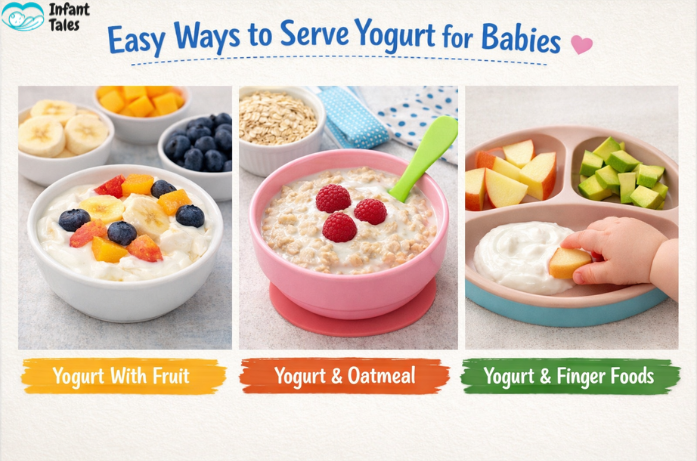
Easy Ways to Serve Yogurt for Babies
Once your baby enjoys plain yogurt, you can slowly introduce new combinations.
Here are some gentle ideas.
1. Yogurt With Fruit
Mix yogurt with mashed fruits like:
- Banana
- Peach
- Mango
- Blueberries
This naturally sweetens yogurt without adding sugar.
2. Yogurt and Oatmeal
Adding yogurt to oatmeal creates a creamy texture and boosts nutrition.
3. Yogurt With Soft Finger Foods
For babies practicing self-feeding, yogurt can be served alongside:
- Soft fruit pieces
- Steamed apple slices
- Avocado cubes
These combinations help babies explore different textures.
What Are Baby Yogurt Melts?
As babies grow into toddlers, parents may notice snacks called baby yogurt melts in the store.
These small, freeze-dried snacks are made from yogurt and fruit and are designed to dissolve easily in a baby’s mouth.
Parents often like yogurt melts baby snacks because they are:
- Easy for babies to pick up
- Less messy than regular yogurt
- Convenient for travel
However, these snacks should be considered occasional treats, not a replacement for fresh yogurt.
Fresh yogurt typically contains more probiotics and nutrients.
Are Yogurt Bites for Babies Safe?
Another snack option many parents discover is yogurt bites for babies or baby yogurt bites.
These snacks are usually made by drying yogurt into small pieces that babies can hold and chew.
They can be safe for babies who:
- Are comfortable eating finger foods
- Can sit independently
- Are able to chew soft textures
Even though they are convenient, whole foods like fresh yogurt, fruits, and vegetables should remain the main focus of your baby’s diet.
Signs Your Baby Enjoys Yogurt
Babies can be surprisingly expressive when they like a food.
You might notice your baby:
- Opening their mouth eagerly
- Smiling while eating
- Reaching for the spoon
- Finishing the bowl happily
Sometimes babies make funny faces the first time they taste yogurt because of its slightly tangy flavor.
Don’t worry, it can take several tries before babies fully accept a new food.
When Should You Avoid Yogurt for Babies?
Although yogurt is generally safe, there are some situations where extra care is needed.
Speak with your pediatrician before introducing yogurt if:
- Your baby has a milk allergy
- There is a strong family history of dairy allergies
- Your baby has severe eczema
Possible signs of a dairy allergy include:
- Skin rash or hives
- Vomiting
- Diarrhea
- Swelling of lips or face
If you notice any unusual symptoms after feeding yogurt, stop giving the food and contact your doctor.
Gentle Tips for Parents Introducing New Foods
Starting solids can feel both exciting and overwhelming.
Here are a few comforting reminders for parents.
Go slowly: Introduce one new food at a time.
Stay relaxed: Babies sense your mood, so keep feeding time calm and enjoyable.
Expect changing preferences: Babies sometimes love a food one day and refuse it the next.
Offer variety: A mix of fruits, vegetables, grains, and proteins helps babies develop healthy eating habits.
Remember that feeding is a learning process for both parents and babies.
A Warm Final Thought for Parents
Introducing yogurt for babies can be a simple and nutritious way to support your child’s growth. With its creamy texture, beneficial probiotics, and essential nutrients, yogurt can become a comforting and healthy food during your baby’s early eating journey.
Start with plain whole milk yogurt, offer small portions, and allow your baby to explore new tastes naturally. As your baby grows, snacks like baby yogurt melts, yogurt melts baby treats, and baby yogurt bites can also become occasional additions to their diet.
Every baby develops at their own pace, and there’s no perfect timeline for food exploration. What matters most is offering loving guidance, healthy choices, and patience along the way.
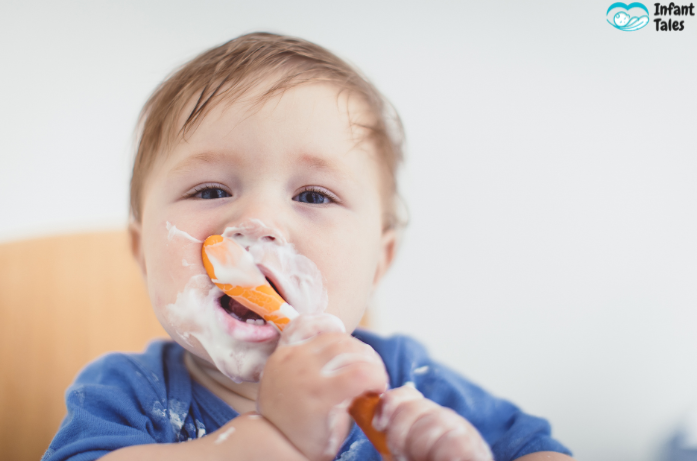
And remember those messy yogurt-covered smiles during mealtime are often some of the sweetest memories of early parenthood.
Looking for more gentle parenting tips and baby nutrition guides? Explore more helpful articles on Infant Tales to support your baby’s healthy growth and make your parenting journey a little easier.
Frequently Asked Questions
1. Can babies eat yogurt every day?
Yes, babies can eat yogurt daily in small amounts as part of a balanced diet. Plain whole milk yogurt provides calcium, protein, and probiotics that support healthy growth and digestion.
2. What type of yogurt is best for babies?
The best yogurt for baby is plain, full-fat yogurt made from whole milk with no added sugar or artificial flavors. Yogurts with simple ingredients and live active cultures are ideal.
3. Can babies eat flavored yogurt?
It’s best to avoid flavored yogurt for babies because it often contains added sugar. Instead, you can mix plain yogurt with mashed fruits like banana, mango, or berries for natural sweetness.
4. Are baby yogurt melts healthy for babies?
Baby yogurt melts or yogurt melts baby snacks can be convenient for older babies learning finger foods, but they should be offered occasionally. Fresh yogurt usually provides more nutrients and probiotics.
5. Can yogurt cause allergies in babies?
Most babies tolerate yogurt well, but dairy allergies can occur. If your baby shows signs like rash, vomiting, or swelling after eating yogurt, stop feeding it and consult your pediatrician.
Disclaimer: This article is for informational purposes only and is based on general parenting experiences and research. It should not replace professional medical advice. Always consult your pediatrician or healthcare provider before introducing new foods like yogurt to your baby, especially if your child has allergies or specific health concerns.
Banana Baby Food: Easy Homemade Banana Puree Recipe for Babies
How to Make Strawberry Puree for Baby: A Nutritious First Fruit Guide