Written with care by a mom at Infant Tales
The period of pregnancy brings both beautiful experiences and unexpected emotional changes to women. Many moms are surprised when they suddenly feel irritated, frustrated, or overwhelmed. If you’re experiencing pregnancy mood swings anger, please know that you’re not alone. The pattern of emotional swings which people experience is common and occurs because of hormonal shifts and physical discomfort and the mental process of preparing for parenthood.
As a mother I experienced pregnancy times when everything seemed to grow in size from the smallest things. A simple comment or a minor inconvenience could suddenly bring tears or anger. Many women experience these feelings during pregnancy because it creates both confusing and frightening symptoms.
The path to smoother journey begins with understanding the reasons behind the emotions and finding compassionate methods to handle them. The guide explains the reasons behind pregnancy mood swings and the factors that lead to anger while providing self-compassionate techniques for emotional management.
Understanding Pregnancy Mood Swings
Your body undergoes complete transformation because your body needs to adapt to all the changes that accompany pregnancy. The first day brings you happiness and excitement while the second day brings you feelings of stress and annoyance. Your body experiences pregnancy mood swings because it needs to handle multiple physical and emotional changes that occur simultaneously.
The primary factor behind this situation derives from hormonal fluctuations. During pregnancy, the body experiences a rapid increase in its production of estrogen and progesterone hormones. The hormones enable baby development however they also affect the brain systems that manage emotional states.
Your body experiences multiple changes which include hormonal transformations and fatigue along with nausea and body pain and altered sleeping patterns. When your body reaches its exhaustion point, your emotional state starts to intensify.
Many expecting moms also experience pregnancy emotional changes as they think about their new responsibilities. Questions about the future, parenting, finances, and childbirth can all stir up powerful feelings.
The combination of these elements forms a situation that leads to emotional fluctuations throughout the day.
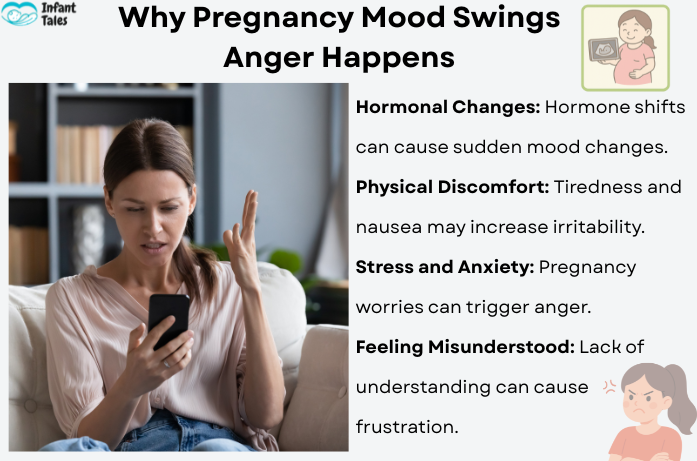
Why Pregnancy Mood Swings Anger Happens
Feeling angry during pregnancy can sometimes bring guilt. Many moms think, “I should be happy right now, why am I so irritated?” But anger during pregnancy is often a natural response to the changes your body and life are going through.
Hormonal Changes: The biggest cause of pregnancy hormones mood swings is the rapid rise of hormones. These hormones influence neurotransmitters in the brain that affect mood and emotional responses.
Research has shown that hormonal shifts during pregnancy can significantly influence emotional regulation and stress responses. You can read more about the biological effects of pregnancy hormones on mood in this medical study:
This means your reactions may feel stronger than usual. Small frustrations may feel bigger simply because your body is working overtime.
Physical Discomfort: Pregnancy can be physically exhausting. Nausea, headaches, back pain, and sleep disruptions can make anyone feel irritable.
When your body is tired or uncomfortable, patience becomes harder to maintain.
Stress and Anxiety: Pregnancy often brings new worries. You might be thinking about labor, parenting, or balancing work and family life.
This mental load can trigger anger mood swings pregnancy, especially if you’re feeling overwhelmed.
Feeling Misunderstood: Sometimes partners, friends, or family members may not fully understand what you’re experiencing. This can lead to feelings of frustration or emotional isolation.
Mood Swings in Pregnancy Third Trimester
The third trimester of pregnancy causes women to experience a second emotional peak. Women experience more extreme mood changes during their third trimester because of multiple factors.
Your body starts to gain weight and experience discomfort as your due date approaches. You encounter sleeping difficulties because your body continues to accumulate fatigue.
People who are about to give birth experience nervousness about the upcoming labor and delivery process. The unknown aspects of meeting your baby create anxiety even though you feel excited about the upcoming arrival.
Your body undergoes hormonal changes which continue until you reach your delivery stage. People experience emotional instability because multiple elements in their life create stress.
You will experience heightened emotions during this period which is a natural response.
Signs Your Mood Swings Are Normal
Most pregnancy mood swings come and go naturally. You might feel emotional one moment and perfectly fine the next.
Mood swings show normal signs through these common behaviors.
- Occasional irritability or frustration
- Feeling overwhelmed by small problems
- Crying more easily than usual
- Sudden bursts of anger followed by calmness
- Feeling sensitive to comments or situations
The emotional transitions occur because your body needs to adapt to pregnancy.
When someone experiences ongoing or strong feelings of anger or sadness, they should consult their doctor or a mental health expert.
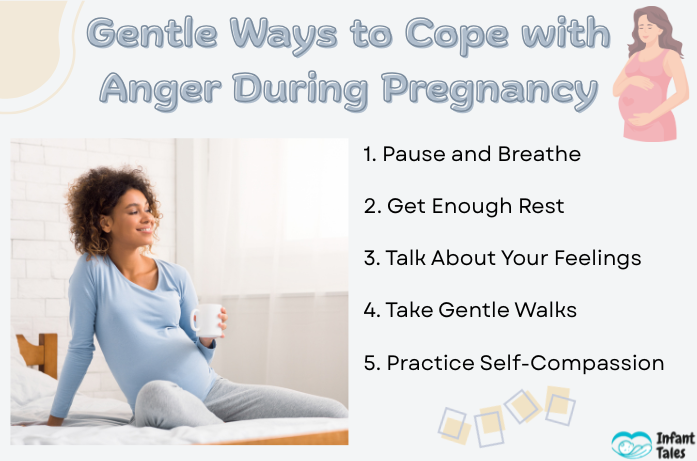
Gentle Ways to Cope with Anger During Pregnancy
Managing emotions during pregnancy doesn’t mean suppressing them. Instead, it’s about understanding your feelings and responding to them with kindness.
Here are some supportive ways to handle emotional moments.
1. Pause and Breathe
When anger rises, try pausing for a few slow breaths. Deep breathing helps calm your nervous system and allows your body to relax.
Even taking a short moment before responding can prevent emotions from escalating.
2. Get Enough Rest
Fatigue is a major trigger for irritability. Pregnancy already demands a lot of energy, so giving your body enough rest is essential.
Short naps, earlier bedtimes, or simply sitting quietly for a few minutes can make a big difference.
3. Talk About Your Feelings
Keeping emotions bottled up can make them feel heavier. Sharing your feelings with your partner, a close friend, or a family member can bring relief.
Sometimes simply saying, “I’m feeling overwhelmed today,” helps others understand what you’re going through.
4. Take Gentle Walks
Light movement can work wonders for emotional balance. A short walk outside can boost mood, reduce stress, and give your mind a peaceful break.
Fresh air and sunlight naturally help your body release feel-good chemicals.
5. Practice Self-Compassion
Pregnancy is not the time to expect perfection from yourself. Your body is doing something incredible.
Remind yourself that emotional ups and downs are part of this journey.
Supporting Your Emotional Wellbeing During Pregnancy
Taking care of your emotional health is just as important as caring for your physical health.
Here are a few ways to nurture yourself during this time.
1. Create Calm Moments in Your Day
Even small moments of relaxation can reset your mood. Listening to soft music, taking a warm shower, or journaling your thoughts can help you feel grounded.
2. Stay Connected
Spending time with supportive people can lift your mood. Talking with other moms who understand pregnancy experiences can also be comforting.
3. Nourish Your Body
Balanced meals, hydration, and prenatal vitamins help support both physical and emotional health.
Low blood sugar or dehydration can sometimes worsen irritability.
4. Set Gentle Boundaries
If certain situations or conversations increase stress, it’s okay to step back. Protecting your emotional space is important.
How Partners and Family Can Help
Pregnancy can be emotional not just for moms but for their loved ones too. Support from partners and family can make a huge difference.
Helpful ways they can support an expecting mom include:
- Listening without judgment
- Offering patience during emotional moments
- Helping with household tasks
- Encouraging rest and relaxation
- Reassuring her that her feelings are valid
Sometimes a simple hug or kind word can turn a tough moment into a manageable one.
When to Seek Extra Support
While pregnancy emotional changes are common, there are times when additional support may help.
Consider talking to a healthcare provider if you experience:
- Constant anger or sadness
- Difficulty functioning in daily life
- Persistent anxiety or panic
- Feeling disconnected from your pregnancy
Your doctor or midwife can help connect you with resources that support mental health during pregnancy.
Seeking help is a sign of strength, not weakness.
Final Thought
Pregnancy is a powerful transformation, both physically and emotionally. Feeling joy, fear, excitement, and even anger at different moments is completely normal.
If you are experiencing pregnancy mood swings anger, try to treat yourself with the same kindness you would offer a friend. Your body is growing a new life, and that process comes with many emotional shifts.
Take things one day at a time. Rest when you need to. Talk when your heart feels heavy. And remember that these emotional waves will pass.
Soon, you’ll be holding your little one in your arms, and the journey you’re walking through now will become part of your beautiful motherhood story.
For more helpful pregnancy and baby care tips, visit Infant Tales and explore our guides created with love and care for moms.
FAQs
1. Is pregnancy mood swings anger normal?
Yes, pregnancy mood swings anger is common. Hormonal changes, stress, and physical discomfort during pregnancy can cause sudden emotional reactions.
2. What causes anger mood swings during pregnancy?
Anger mood swings pregnancy are mainly caused by hormonal shifts, tiredness, sleep problems, and the emotional adjustments of becoming a parent.
3. Do mood swings get worse in the third trimester?
Yes, many women experience stronger mood swings in pregnancy third trimester due to discomfort, lack of sleep, and anxiety about labor and delivery.
Disclaimer: This article is for informational purposes only and does not replace professional medical advice. Always consult your doctor or healthcare provider for any concerns during pregnancy.