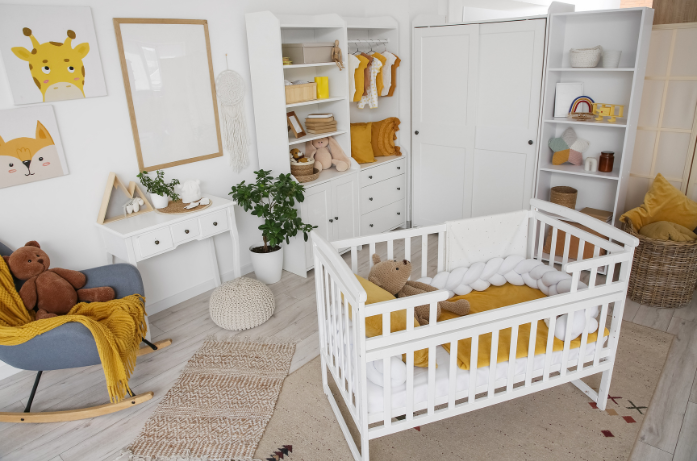
Designing a nursery is one of the most exciting parts of preparing for a new baby. While it’s easy to get swept up in picking colors, furniture, and fun nursery wall décor, safety should always come first. A well-prepared nursery not only looks inviting but also gives parents priceless peace of mind. This nursery safety checklist covers the essential steps and habits every parent should know to create a safe, comfortable, and healthy environment for their little one.
Start With the Crib: Safety First
Your baby will spend most of their early days in the crib, so it’s the best place to start when assessing nursery safety.
- Choose a sturdy, certified crib. Look for one that meets current Consumer Product Safety Commission (CPSC) standards. Avoid older or second-hand cribs that might have loose slats or drop sides, which are now banned in the U.S.
- Maintain proper mattress fit. The mattress should fit snugly, with no gaps wider than two fingers between the mattress and the crib frame.
- Keep the crib bare. Skip pillows, blankets, stuffed animals, bumpers, and extra bedding. A fitted sheet over a firm mattress is all your baby needs for safe sleep.
- Adjust mattress height as your baby grows. Lower it as soon as your baby can pull up to prevent falls.
A clean, minimal crib may not feel as cozy at first, but it dramatically reduces the risk of suffocation and Sudden Infant Death Syndrome (SIDS).
Mind the Big Furniture Pieces
Once the crib is secure, focus on the larger nursery furniture items, these can pose tipping or fall hazards if not anchored correctly.
- Anchor all heavy furniture. Dressers, bookshelves, and changing tables should be securely fastened to the wall with anti-tip straps or brackets. Babies love to climb once they start exploring.
- Keep changing tables stable. Always use the safety belt when available, and keep one hand on your baby at all times while changing diapers.
- Avoid placing furniture near windows. This helps prevent access to blinds, cords, or window screens, which are common safety hazards for infants.
Electrical and Cord Safety
Nurseries often have night lights, sound machines, and baby monitors, all of which require cords and outlets. These can be dangerous without proper management.
- Use outlet covers or tamper-resistant outlets. This simple step helps prevent curious fingers from exploring where they shouldn’t.
- Hide or secure cords. Use cord shorteners or covers to keep them out of reach and prevent pulling.
- Choose cordless window treatments. Strangulation risks make traditional blind cords one of the most overlooked hazards in nurseries. Cordless shades or curtains are a safer, modern alternative.
A good rule of thumb: if you can grab it, twist it, or pull it, so can your toddler.
Temperature, Lighting, and Air Quality
A safe nursery also maintains a comfortable environment and healthy air for your baby’s development.
- Keep the room temperature between 68°F and 72°F. Avoid overheating, which increases SIDS risk.
- Use a baby-safe humidifier. It helps relieve congestion, but be sure to clean it regularly to avoid mold buildup.
- Ensure proper ventilation. Keep cribs away from air vents or heaters, and make sure windows are properly sealed.
- Choose safe lighting. Warm, dimmable night lights help create a calming bedtime routine without disturbing sleep. Make sure cords are short, and lamps are out of reach.
These subtle environmental details make a big difference in your baby’s comfort and sleep safety.
Small Objects and Choking Hazards
From toys to decorations, even the tiniest items can pose a big risk if not checked carefully.
- Inspect all toys regularly. Look for loose parts, chipped paint, or broken pieces and remove questionable items immediately.
- Keep small objects out of reach. Coins, buttons, pacifiers, or art supplies should never be left near the crib or changing table.
- Secure wall décor. If you hang shelves, frames, or mobiles, make sure they’re well-anchored and high enough that your baby can’t reach or pull them down.
Safety doesn’t mean your nursery can’t be beautiful, just make sure décor choices consider both form and function.
Everyday Habits That Keep the Nursery Safe
Even after you’ve checked every box on your safety list, maintenance is key. Babies grow fast, and a safe setup for a newborn might need updating within months.
- Reevaluate monthly. Check that everything remains secure, especially as your baby begins crawling or standing.
- Keep cleaning supplies locked up. Never store detergents, wipes, or creams where babies can access them.
- Monitor recalls. Stay informed about product recalls for baby gear or furniture on the CPSC website.
These habits help ensure your nursery remains a safe, nurturing space as your child grows and explores.
Your baby’s nursery should feel warm, welcoming, and worry-free. By taking the time to set up and maintain a safe space, free of hazards yet full of love, you create an environment where you and your little one can both relax and thrive. You don’t need to sacrifice style for safety; thoughtful design, careful placement, and ongoing awareness are all it takes to balance both beautifully.
Whether you’re setting up your first nursery or updating an existing one, following this checklist will help you create a safer, more serene space from day one.