Written with care by a caring mom at Infant Tales
Bringing your baby home is one of the most beautiful moments in your life. You spend hours looking at their tiny fingers, soft cheeks, and little toes. But then one day you notice something that makes you stop for a moment. Your baby’s skin looks dry and flaky. In some places it may even be peeling.
Seeing newborn skin dry and peeling can make many parents worry. You may wonder if something is wrong or if your baby is uncomfortable. The good news is that this is very common. In most cases, it is simply your baby’s skin adjusting to life outside the womb.
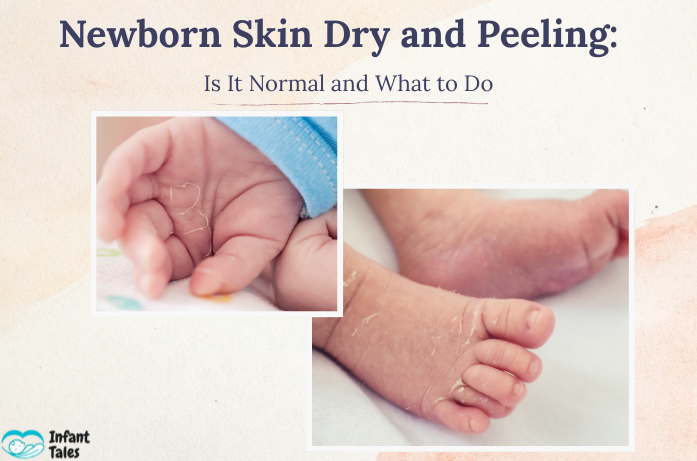
Newborn skin is very delicate and still learning how to protect itself. During the first few weeks, many babies develop newborn baby skin peeling, especially on their hands, feet, and legs. It may look surprising, but it is usually a normal and temporary stage.
Understanding Newborn Skin Dry and Peeling
A baby’s skin is very different from adult skin. While your baby was growing in the womb, their skin was covered with a soft white protective layer called vernix.
Vernix protects the baby’s skin from the amniotic fluid during pregnancy. It also acts like a natural moisturizer.
After birth, this protective layer slowly disappears. As it wears off, the outer layer of your baby’s skin may start to shed. This is why many parents notice dry peeling skin on newborns in the first days or weeks.
Think of it as your baby’s skin renewing itself and adjusting to the outside world.
Is It Normal for a Newborn’s Skin to Peel?
Yes, it is completely normal.
Many parents ask questions like:
- Is it normal for a newborn skin to peel?
- Is it normal for a newborn’s skin to peel this much?
- Is it normal for my newborn’s skin to peel on the hands and feet?
The answer is yes. Most babies experience some form of skin peeling newborn during the early weeks of life.
Some babies only have a little flaking. Others may have visible peeling in certain areas. Both situations are usually normal.
According to research published in the National Library of Medicine, newborn skin continues adjusting and maturing during the early weeks of life.
Babies who are born after their due date may experience more noticeable newborn skin peel because their protective vernix layer may have already worn away before birth.
Why Does Newborn Skin Peeling Happen?
There are several natural reasons why newborn skin peeling occurs. Understanding these reasons can help parents feel more relaxed.
1. The Skin Is Adjusting to Air
Inside the womb, your baby lived in a warm, moist environment. After birth, their skin suddenly experiences air, clothing, and different temperatures.
This big change can cause the outer layer of skin to dry and peel.
2. The Vernix Layer Is Wearing Off
That creamy coating on newborn skin slowly fades after birth. When it disappears, the outer layer of skin may begin to shed naturally.
3. The Skin Is Still Developing
Newborn skin is thinner and more sensitive than adult skin. It takes time for the skin to develop natural oils that keep it soft and protected.
4. Babies Born After Their Due Date
Post-term babies often have more newborn baby skin peeling because the vernix may already be gone when they are born.
Where Does Newborn Skin Peeling Usually Appear?
Parents often notice peeling in specific areas of the body.
The most common places include:
- Hands
- Feet
- Ankles
- Wrists
- Legs
- Around the belly
Many parents notice newborn skin peeling on hands and feet first. These areas tend to shed skin faster.
Sometimes the peeling may look like small flakes. In other cases, thin sheets of skin may come off. Even though it might look dramatic, it is usually harmless.
How Long Does Newborn Skin Peel?
One of the most common questions parents ask is:
For most babies, peeling lasts one to three weeks after birth.
Some babies may peel for a little longer, especially if they were born after their due date. But in most cases, the skin becomes soft and smooth once it finishes adjusting.
The good news is that the peeling usually improves on its own without any special treatment.
Health experts also explain that newborn skin peeling is a normal part of the transition after birth. According to the Cleveland Clinic, most newborn peeling happens as the outer layer of skin naturally sheds and renews itself.
Should You Use Lotion on Peeling Newborn Skin?
Parents often wonder if they should apply lotion right away.
The truth is that many babies do not need lotion at all.
Newborn skin often improves naturally as it begins producing its own oils.
However, if your baby’s skin looks very dry, you can use a small amount of a gentle fragrance-free baby moisturizer.
When choosing a product, look for:
- Hypoallergenic baby creams
- Fragrance-free formulas
- Products made for sensitive newborn skin
Use only a small amount and apply it gently.
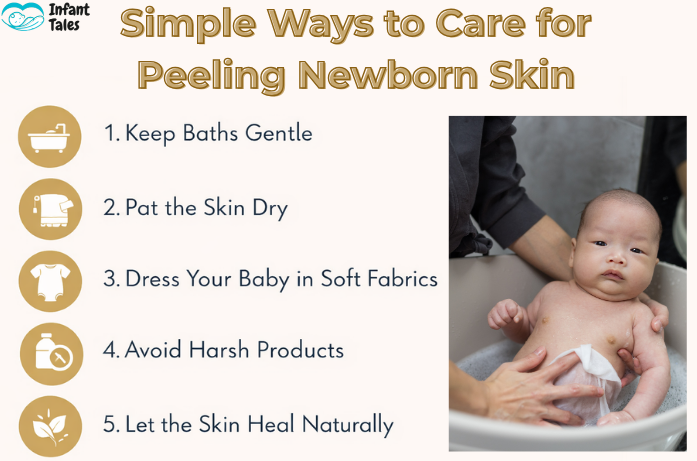
Simple Ways to Care for Peeling Newborn Skin
Caring for newborn skin does not need to be complicated. In fact, simple care is usually the best.
1. Keep Baths Gentle
Newborns do not need daily baths. Bathing two or three times a week is enough.
Too many baths can remove natural oils and make dry peeling skin on newborns worse.
Use lukewarm water and mild baby soap.
2. Pat the Skin Dry
After bathing, gently pat your baby dry with a soft towel. Avoid rubbing the skin, as this can irritate delicate areas.
3. Dress Your Baby in Soft Fabrics
Choose breathable cotton clothes. Soft fabrics help protect sensitive skin and allow air to circulate.
4. Avoid Harsh Products
Skip scented lotions, strong soaps, and powders that can irritate newborn skin.
5. Let the Skin Heal Naturally
Often the best thing you can do is allow the peeling skin to shed naturally.
What to Do About Peeling on Hands and Feet
Peeling on the hands and feet is very common.
Parents often worry when they see newborn skin peeling on hands because the skin may look like it is coming off in small pieces.
It is important not to pull or peel the skin yourself.
Let it fall off naturally. Pulling at the skin can irritate the sensitive new layer underneath.
Soon, soft healthy skin will replace it.
When Should Parents See a Doctor?
Most skin peeling newborn situations are harmless. But there are a few signs that mean you should speak with your pediatrician.
Contact your doctor if you notice:
- Deep cracks in the skin
- Redness or swelling
- Blisters
- Oozing or bleeding skin
- Signs of infection
- Peeling that continues for many weeks
These situations are rare, but it is always better to ask a doctor if you are unsure.
Common Myths About Newborn Skin Peeling
There are many myths about newborn skin peel that can make parents worry unnecessarily.
Myth: Peeling Means the Skin Is Too Dry
Peeling is usually just the skin renewing itself. It does not always mean the skin is unhealthy.
Myth: You Must Use Lotion Immediately
Many babies do perfectly well without lotion. Simple gentle care is often enough.
Myth: Peeling Means Something Is Wrong
In most cases, peeling is just part of your baby’s natural adjustment to life outside the womb.
Final Thoughts From a Caring Mom
If you are seeing newborn skin dry and peeling, please know that many parents go through this same moment of worry.
Most of the time, it is simply a normal stage of your baby’s development.
Be gentle with your baby’s skin. Keep bathing simple, use soft clothing, and avoid harsh products. Often, the best care is just giving your baby’s skin time to adjust naturally.
Before long, the peeling will disappear and your baby’s skin will become soft and smooth again.
And remember something very important, you are learning and growing as a parent every single day. The fact that you care enough to look for answers means you are already doing a wonderful job.
FAQs
1. Is it normal for a newborn’s skin to peel?
Yes, it is very normal. Many babies experience newborn baby skin peeling during the first few weeks as their skin adjusts to the outside world.
2. How long does newborn skin peel?
Peeling usually lasts 1 to 3 weeks after birth and then improves naturally.
3. Why is my newborn’s skin peeling on the hands and feet?
Newborn skin peeling on hands and feet is common because these areas shed skin faster. It is usually harmless.
4. Should I use lotion on my newborn’s peeling skin?
Most babies do not need lotion. If the skin looks very dry, you can use a small amount of gentle, fragrance-free baby moisturizer.
5. When should I see a doctor?
Talk to your pediatrician if you notice redness, swelling, blisters, deep cracks, or signs of infection.
For more helpful parenting guides, baby care tips, and real experiences from moms, visit Infant Tales and explore more articles written with love for parents like you.
Disclaimer: This article is for informational purposes only and is based on personal parenting experiences and general research. It should not replace professional medical advice. Every baby is different, so if you have concerns about your baby’s skin or health, please consult your pediatrician or a qualified healthcare professional.