Written with love and care by a caring mom at Infant Tales
Becoming a parent through the birth of a baby creates one of the most beautiful moments in life. Your baby establishes a unique way of expressing himself through every small motion that he makes which includes his ability to grasp your finger and his sleeping habits that involve short movements. Parents want to know whether their babies show these physical appearances of development because they want to understand their babies’ health. The majority of these behaviors exist as automatic physical responses that people perform without thinking.
A newborn reflexes chart can help parents understand these early movements and recognize what is completely normal during the first few months of life. The automatic reflexes which babies acquire at birth enable them to transition from their prenatal environment into their new existence. Learning about them can give parents reassurance and a deeper understanding of their baby’s early development.
What Are Newborn Reflexes?
Newborn reflexes refer to the automatic movements that babies perform without conscious control. The developing nervous system of infants produces these responses which enable them to manage vital functions throughout their first months of existence.
Unlike movements that babies learn later, reflexes happen instantly when your baby experiences certain sensations such as touch, sound, or light.
For example:
- When you touch an infant’s palm, they tightly grasp your finger.
- Upon hearing a sudden loud noise, they may extend their arms outward.
- When you stroke their cheek, they turn their head in that direction.
These reflexes depend on normal development which pediatricians observe during newborn checkups to evaluate the progress of a baby’s nervous system development. Reflexes help parents learn about their baby’s development because they produce tiny movements which babies show through their regular actions.
The Cleveland Clinic medical guide provides detailed information about these reflexes for readers who want to learn more about them.
Newborn Reflexes Chart
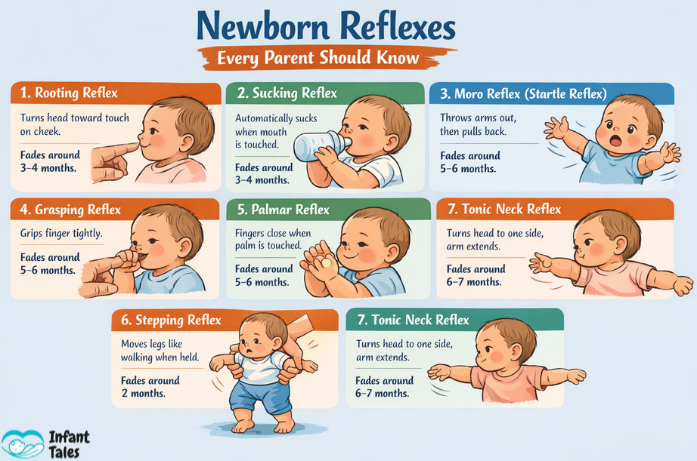
The table below shows a simple newborn reflexes chart that explains the most common reflexes parents may notice.
| Reflex | What Happens | When It Appears | When It Fades |
| Rooting Reflex | Baby turns head toward touch on cheek | Birth | 3–4 months |
| Sucking Reflex | Baby automatically sucks when mouth is touched | Birth | Around 4 months |
| Moro (Startle) Reflex | Baby throws arms outward then pulls them back | Birth | 5–6 months |
| Grasping Reflex Newborn | Baby grips finger placed in palm | Birth | 5–6 months |
| Palmar Reflex Newborn | Fingers close when palm is touched | Birth | 5–6 months |
| Stepping Reflex | Baby moves feet like walking when upright | Birth | Around 2 months |
| Tonic Neck Reflex | Baby extends one arm when head turns | Birth | 6–7 months |
Understanding these reflexes can help parents feel calmer when they notice unfamiliar movements in their baby.
1. Rooting Reflex
Newborns use their ‘rooting reflex’ to locate their mother’s milk. When you touch your baby’s cheek or the corner of their mouth, the baby responds by turning their head toward the direction of the touch and opening their mouth. This natural response helps infants find the mother’s breast or a bottle during feeding.
This reflex is present from birth and assists the infant in feeding successfully during the early stages of life. The rooting reflex gradually begins to fade between the ages of three and four months, as infants start to develop their motor skills (skills related to physical movement).
2. Sucking Reflex
The sucking reflex allows babies to automatically suck when something touches the roof of their mouth. This reflex helps newborns drink milk easily during breastfeeding or bottle feeding, even before they learn how to control their mouth movements.
This reflex appears at birth and is essential for proper feeding and nourishment. As babies grow and develop stronger coordination, the sucking reflex gradually becomes voluntary and usually fades around 3 to 4 months.
3. Moro Reflex (Startle Reflex)
The Moro reflex, also known as the startle reflex, happens when a baby hears a loud sound or feels a sudden movement. The baby may quickly throw their arms outward, spread their fingers, and then bring their arms back toward their body.
This reflex is completely normal and is part of a newborn’s natural response to sudden changes in their surroundings. The Moro reflex usually disappears as the baby’s nervous system matures, typically around 5 to 6 months of age.
4. Grasping Reflex Newborn
The grasping reflex newborn is one of the sweetest reflexes parents notice. When you place your finger in your baby’s palm, the baby will automatically close their tiny fingers around it, often with surprising strength.
This reflex helps strengthen the baby’s hand muscles and prepares them for future skills like grabbing toys and objects. The grasping reflex is present from birth and usually fades around 5 to 6 months.
5. Palmar Reflex Newborn
The palmar reflex newborn occurs when gentle pressure is applied to a baby’s palm, causing their fingers to close automatically. Doctors often check this reflex shortly after birth to make sure the baby’s nervous system is developing properly.
Parents may notice this reflex during everyday moments like holding their baby’s hand or touching their palm during playtime. This reflex is normal and typically fades around 5 to 6 months of age.
6. Stepping Reflex
The stepping reflex can be seen when you hold your baby upright with their feet touching a surface. The baby may move their legs in small stepping motions that look similar to walking.
Although it may seem like the baby is trying to walk, this is simply an automatic reflex. The stepping reflex usually disappears around 2 months, long before babies begin learning to walk later in their first year.
7. Tonic Neck Reflex
The tonic neck reflex often makes babies look like they are striking a tiny fencing pose. When a baby turns their head to one side, the arm on that side stretches outward while the opposite arm bends.
This reflex helps babies develop coordination between their brain and body. It usually fades as babies gain better control of their movements, typically around 6 to 7 months of age.
When Parents Should Talk to a Doctor
Most newborn reflexes are perfectly normal. However, parents should speak with a pediatrician if they notice:
- Reflexes appearing only on one side of the body
- Reflexes that seem very weak or absent
- Reflexes that continue long after the expected age
- A baby who seems unusually stiff or floppy
In most cases, everything is completely normal. Still, pediatricians are always happy to answer questions and reassure parents. Trusted medical resources like MedlinePlus also recommend discussing any unusual reflex patterns with a doctor to ensure a baby’s nervous system is developing properly.

Simple Ways Parents Can Support Healthy Development
While reflexes happen automatically, there are gentle ways parents can support their baby’s development.
Provide Safe Tummy Time
Short tummy time sessions help strengthen muscles that babies will later use for crawling and sitting.
Start with just a few minutes each day and gradually increase the time.
Offer Gentle Sensory Interaction
Babies learn through touch, sound, and eye contact. Talking, singing, and cuddling your baby stimulates their growing brain.
Encourage Natural Movement
Allow your baby time to stretch, kick, and move freely on a safe surface. These movements help build strength and coordination.
Keep Regular Pediatric Visits
Routine checkups help doctors monitor your baby’s development and reflexes. These visits also give parents the chance to ask questions and feel reassured. Parents can also explore pediatric advice shared by the American Academy of Pediatrics
Frequently Asked Questions About Newborn Reflexes
1. When do newborn reflexes disappear?
Most newborn reflexes gradually fade between 3 and 6 months as your baby gains more control over their muscles.
2. Is it normal for babies to startle often?
Yes. The Moro reflex is very common in newborns and usually disappears by around 5 to 6 months.
3. What is the red reflex in newborns?
The red reflex in newborns is a reddish reflection seen during eye exams. Doctors check this reflex to make sure the baby’s eyes are healthy.
A Gentle Reminder for Parents
One of the most comforting things to remember as a parent is that every baby develops at their own pace.
Charts and timelines can be helpful guides, but they are not strict rules. Some babies may lose certain reflexes slightly earlier or later than others.
What matters most is giving your baby a loving, safe environment where they can grow, explore, and develop naturally.
Final Thoughts on Newborn Reflexes
Watching your newborn discover the world is a beautiful journey filled with tiny but meaningful moments. Those little reflexes, like gripping your finger, turning toward your voice, or startling at a sound, are all part of your baby’s early development.
A newborn reflexes chart can help parents understand these natural responses and feel more confident about what they’re seeing. From the grasping reflex newborn to the palmar reflex newborn, each reflex plays an important role in neurological growth.
Even reflexes like the red reflex in newborns, checked during medical exams, help ensure your baby’s development stays on the right track.
If you ever feel unsure, remember that asking questions is part of being a loving parent. Pediatricians are always there to guide and reassure you.
Most importantly, enjoy these early days. The tiny fingers that wrap around yours today will soon be reaching, crawling, and exploring the world tomorrow, and every moment along the way will be worth remembering.
If you found this guide helpful, feel free to share it with other new parents who may have the same questions. For more gentle parenting tips, newborn care guides, and real mom experiences, explore more articles here at Infant Tales.
Disclaimer: This article is for informational and educational purposes only and is not intended to replace professional medical advice. Always consult your pediatrician or healthcare provider if you have concerns about your baby’s health or development.