Written by a caring mom at Infant Tales
Bringing a newborn home fills your days with tiny moments of wonder soft yawns, sleepy cuddles, and the joy of getting to know your baby little by little. Along with these beautiful moments, parents also learn many new routines. One of them is creating a safe and comforting newborn bath time routine.
For many new parents, bathing such a tiny baby can feel a little intimidating at first. But with a few simple steps and a calm approach, bath time can become a peaceful moment of bonding, relaxation, and gentle care for both you and your baby.
Why Newborn Bath Time Is More Than Just Cleaning
Newborns don’t actually get very dirty. They aren’t crawling around yet, and most of their day is spent sleeping, feeding, and cuddling. Because of this, bathing is not mainly about hygiene, it’s about comfort and routine.
A calm bath routine for newborns helps create a sense of predictability. Babies begin recognizing familiar patterns, which can make them feel safe and relaxed.
Bath time also offers several benefits:
- Helps soothe and relax your baby
- Strengthens the emotional bond between parent and baby
- Stimulates your baby’s senses through warm water and gentle touch
- Encourages relaxation before bedtime
- Creates a consistent daily routine
Many parents notice that a warm bath in the evening helps their baby settle more easily for sleep. Over time, bath time becomes a comforting signal that the day is winding down.
When Should You Start Bathing Your Newborn?
One of the most common questions parents ask is when they should begin bathing their baby.
During the first week or two, pediatricians recommend sponge baths instead of tub baths. This is because your baby’s umbilical cord stump needs time to dry and fall off naturally.
Until the stump heals, you can gently clean your baby using a warm damp cloth. Health experts also recommend this gentle approach for the first days after birth, as explained in this helpful guide on bathing your newborn.
Once the cord stump falls off and the area has healed completely, you can start a gentle newborn bath routine using a baby bathtub or a sink.
It’s important to remember that newborns do not need daily baths. In fact, bathing them too often can dry out their delicate skin.
Most newborns only need 2–3 baths per week.
Between baths, you can keep your baby fresh by cleaning:
- Face
- Neck folds
- Hands
- Diaper area
These small daily clean-ups are usually enough.
Preparing for a Calm and Safe Bath Time
Before starting your bath time routine for newborn, preparation is key. Once your baby is in the water, you should never leave them unattended, even for a second.
So it’s important to gather everything you need beforehand.
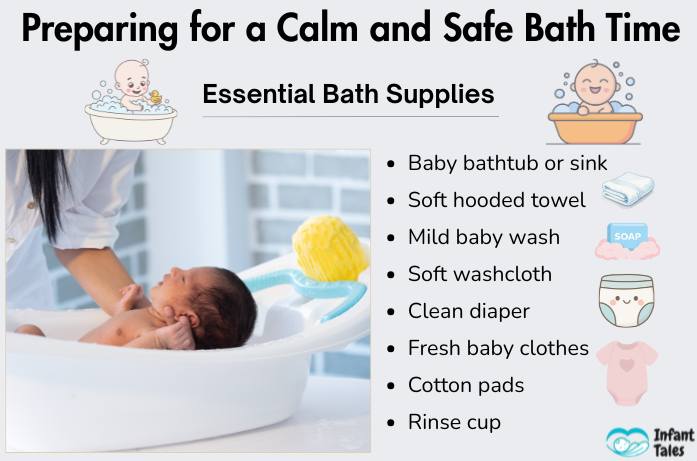
Essential Bath Supplies
Here are a few basic items that make bath time easier:
- Baby bathtub or a clean sink
- Soft hooded baby towel
- Gentle baby wash or soap (optional)
- Soft washcloth
- Clean diaper
- Fresh baby clothes
- Cotton pads for face cleaning
- Small cup for rinsing
Place all these items within reach.
This way, you can keep one hand on your baby at all times while still being able to grab what you need.
Creating a Comfortable Bath Environment
Newborns are very sensitive to temperature changes. If the room is too cold, they may become uncomfortable and start crying.
Before beginning the bath, make sure the room is warm, around 75°F (24°C) is usually comfortable for babies.
You can also close windows or turn off fans to avoid cool drafts.
Water Temperature Matters
The bathwater should feel warm but not hot.
The ideal water temperature is around 98–100°F (37–38°C), which is close to body temperature.
A simple trick many parents use is the wrist test. Dip your wrist or elbow into the water to check. It should feel pleasantly warm.
If it feels hot to you, it’s definitely too hot for your baby. You can read more safe bathing guidance for newborns from medical experts at MedlinePlus newborn bathing instructions.
Step-by-Step Newborn Bath Time Routine
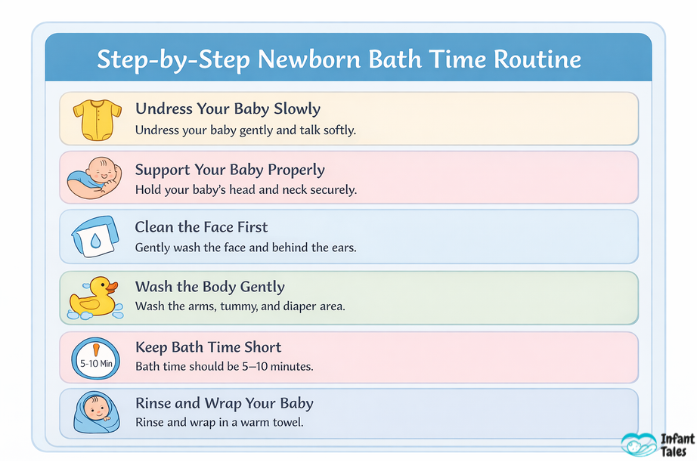
1. Undress Your Baby Slowly
Once everything is ready, begin your newborn bath time routine by gently undressing your baby. Move slowly and speak softly to keep them calm. Your baby may not understand your words yet, but hearing your voice helps them feel safe and relaxed.
2. Support Your Baby Properly
Always support your baby’s head and neck while bathing. Hold them securely with one arm while your other hand washes them. This gentle hold keeps your baby safe and helps you feel more confident during bath time.
3. Start by Cleaning the Face
Use a soft damp cloth to gently clean your baby’s face, eyes, and behind the ears. Wipe the eyes from the inner corner outward and don’t forget the neck folds. Newborn skin is delicate, so always use soft, gentle movements.
4. Wash the Body Gently
Next, wash your baby’s arms, chest, tummy, legs, and back using warm water and a small amount of baby soap if needed. Clean the diaper area last and pay attention to tiny skin folds where milk or lint can collect.
5. Keep Bath Time Short
Newborn baths should be quick and gentle. Around 5–10 minutes is enough to keep your baby clean while making sure they stay warm and comfortable.
6. Rinse and Wrap Your Baby
Gently rinse your baby with warm water and carefully lift them out of the tub. Wrap them right away in a soft towel to keep them warm and cozy after the bath.
After-Bath Care: Keeping Your Baby Comfortable
The moments after bath time are often the coziest.
Wrap your baby in a soft hooded towel and gently pat the skin dry instead of rubbing.
Pay attention to drying areas where moisture can hide, such as:
- Neck folds
- Behind ears
- Underarms
- Diaper area
If your baby’s skin seems dry, you can apply a mild baby lotion or natural oil.
However, many babies do perfectly fine without any moisturizer.
After drying, dress your baby in clean clothes and enjoy a few quiet cuddles.
Many parents include feeding, rocking, or singing a lullaby after bath time. These small steps help build a soothing bedtime routine.
Helpful Tips for a Smooth Bath Routine for Newborns
Bath time becomes easier with practice. A few simple habits can make your bath routine for newborns calm and enjoyable for both you and your baby.
1. Choose the Right Time
Bathe your baby when they are calm and not too hungry or sleepy. Many parents prefer evening baths because they help babies relax before bedtime.
2. Talk or Sing to Your Baby
Your baby finds comfort in your voice. Soft talking or gentle singing during bath time can make the experience soothing and familiar.
3. Stay Relaxed
Babies can sense your emotions. When you stay calm and confident, your baby is more likely to feel relaxed too.
4. Never Leave Baby Alone
Always stay with your baby during bath time. Even shallow water can be unsafe, so keep one hand on your baby at all times.
Common Bath Time Concerns for Parents
Almost every parent worries about something during those early baths.
Here are a few common concerns.
“My baby cries during bath time.”
Some babies need time to adjust to the sensation of water.
Try:
- Slightly warmer water
- Shorter baths
- Bathing earlier in the day
- Holding your baby securely
With time, many babies grow to enjoy bath time.
“I’m afraid of dropping my baby.”
This fear is very common.
Wet babies can feel slippery, but supporting the head and body securely makes a big difference.
Using a baby bathtub with support can also help.
“How often should I bathe my newborn?”
Most newborns only need two or three baths per week.
Too many baths can dry out sensitive skin.
Turning Bath Time into a Bonding Moment
A gentle newborn bath time routine can become a beautiful bonding experience.
Warm water, soft touch, and eye contact help strengthen the connection between you and your baby.
These quiet moments allow your baby to feel:
- Safe
- Comforted
- Loved
Sometimes I would simply smile at my baby, talk softly, or gently splash a little water over those tiny feet.
These simple interactions build trust and emotional security.
Final Thoughts
Learning how to care for a newborn takes time, patience, and a lot of love. A calm and simple newborn bath routine doesn’t need to be perfect, it only needs to be safe, gentle, and consistent.
Some days your baby may relax peacefully in the warm water. Other days they might fuss a little. Both experiences are completely normal.
With each bath, you’ll become more confident. Your baby will grow more comfortable. And soon, this small routine will become one of the sweetest parts of your day.
From one mom to another, remember this: you’re doing an amazing job. Your baby doesn’t need perfection, they just need your love, your warmth, and your gentle care.
Frequently Asked Questions
1. How often should I bathe my newborn?
Newborns usually only need a bath 2–3 times a week. Too many baths can dry out their delicate skin. In between baths, you can clean their face, neck folds, hands, and diaper area daily.
2. What is the best time of day for a newborn bath time routine?
The best time is when your baby is calm and alert. Many parents prefer evening baths because warm water can help babies relax before bedtime.
3. What water temperature is safe for a newborn bath?
The water should feel warm but not hot, around 98–100°F (37–38°C). You can test the temperature using your wrist or elbow before placing your baby in the water.
4. How long should a newborn bath last?
A newborn bath should be short and gentle, usually about 5–10 minutes. This helps keep your baby warm and prevents their skin from drying out.
5. Do I need soap for my newborn’s bath?
Soap is optional. In many cases, plain warm water is enough. If you use soap, choose a mild baby cleanser and use only a small amount.
Bath time can become one of the sweetest bonding moments with your baby. Take it slow, enjoy the cuddles, and trust your parenting instincts. For more helpful newborn care tips and simple parenting guides, explore more articles here at Infant Tales.