Written with care by a caring mom at Infant Tales
Starting your baby on solids is one of those milestones that feels both exciting and a little overwhelming. You find yourself thinking about every bite, Is this safe? Will my baby like it? Is it healthy enough? I remember standing in my kitchen, holding a ripe kiwi, wondering if it was the right choice. That’s when I first made kiwi puree, and to my surprise, it became one of those refreshing little additions to my baby’s early meals.
Kiwi may not be the first fruit that comes to mind when starting solids, but it’s full of nutrients and has a soft texture that works beautifully when prepared the right way. Yes, it has a slightly tangy taste, and yes, babies sometimes make the cutest sour faces when they try it, but with a little patience, it can become a lovely part of your baby’s food journey.
In this guide, I’ll gently walk you through everything you need to know, from when to introduce kiwi, its health benefits, how to prepare it safely, and simple ways to serve it your baby will enjoy.
When Can Babies Eat Kiwi?
Most babies can start eating kiwi between 6 to 8 months of age, once they have already begun solids and are comfortable with basic purees.
At this stage, babies are learning how to handle new textures and flavors. Kiwi works well because it’s naturally soft and easy to mash or blend into a smooth consistency.
However, since kiwi is slightly acidic, it’s best to introduce it slowly.
Gentle Tips for First Introduction
- Start with a small amount (1–2 teaspoons)
- Offer it during daytime hours
- Wait 2–3 days before introducing another new food
- Watch for any signs of sensitivity
Every baby is different, so take your time and follow your baby’s comfort level.
Why Kiwi Is a Nutritious Choice for Babies
Kiwi might be small, but it’s packed with nutrients that support your baby’s early growth and development. According to research published in PMC, kiwi contains essential vitamins, antioxidants, and digestive enzymes that support overall health and gut function in young children.
1. Rich in Vitamin C
Kiwi is one of the best natural sources of vitamin C. This vitamin plays an important role in:
- Strengthening your baby’s immune system
- Helping the body absorb iron from foods
- Supporting healthy skin and tissue growth
Including vitamin C-rich foods like kiwi can be especially helpful as your baby starts exploring a variety of foods.
2. Supports Gentle Digestion
Kiwi contains natural enzymes and dietary fiber that help support digestion.
Many parents notice that kiwi can gently help with:
- Preventing constipation
- Supporting a healthy gut
If your baby occasionally struggles with digestion, kiwi can be a helpful addition in small amounts.
3. Provides Antioxidants
Kiwi is rich in antioxidants, which help protect your baby’s cells from damage.
These nutrients support overall development and contribute to long-term health.
4. Contains Essential Vitamins and Minerals
Along with vitamin C, kiwi also offers:
- Vitamin K for bone health
- Potassium for muscle and nerve function
- Folate for brain development
These nutrients work together to support your baby’s growth in a gentle and natural way.
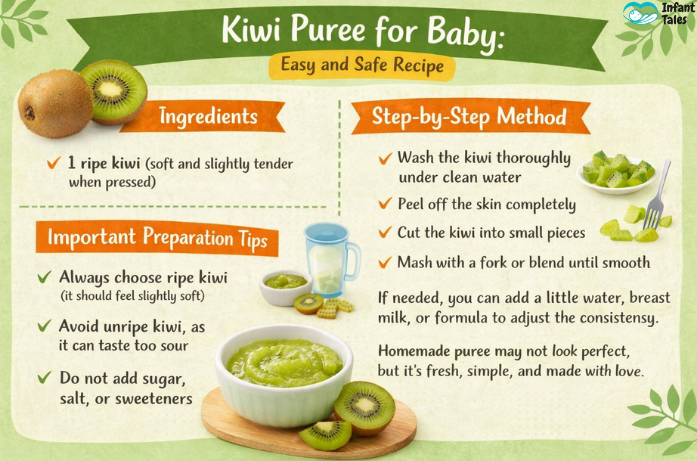
Kiwi Puree for Baby: Easy and Safe Recipe
Making kiwi puree at home is one of the easiest things you can do, and it ensures your baby is getting fresh, natural food without additives.
Ingredients
- 1 ripe kiwi (soft and slightly tender when pressed)
Step-by-Step Method
- Wash the kiwi thoroughly under clean water
- Peel off the skin completely
- Cut the kiwi into small pieces
- Mash with a fork or blend until smooth
If needed, you can add a little water, breast milk, or formula to adjust the consistency.
Important Preparation Tips
- Always choose ripe kiwi (it should feel slightly soft)
- Avoid unripe kiwi, as it can taste too sour
- Do not add sugar, salt, or sweeteners
- Serve immediately for the best nutrition
Homemade puree may not look perfect, but it’s fresh, simple, and made with love.
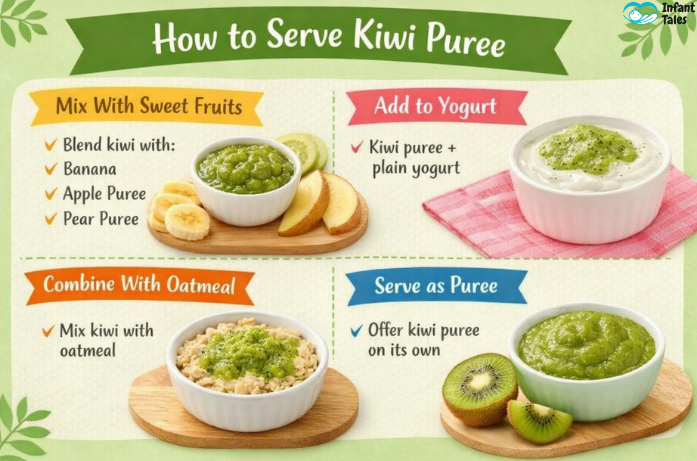
How to Serve Kiwi Puree
Once your baby gets familiar with the taste, you can slowly make kiwi more interesting and enjoyable.
1. Mix With Sweet Fruits
Because kiwi has a tangy flavor, mixing it with sweeter fruits can make it more appealing.
Try combining with:
- Banana
- Apple puree
- Pear puree
This helps balance the taste and makes it easier for babies to accept.
2. Add to Yogurt
Mixing kiwi fruit puree with plain yogurt creates a creamy, nutritious snack.
This combination adds probiotics and makes the texture smoother and more filling.
3. Combine With Oatmeal
Adding kiwi puree to oatmeal is a great way to introduce variety.
It gives a fresh flavor and boosts the overall nutritional value of your baby’s meal.
4. Serve as a Standalone Puree
Sometimes, keeping things simple is best. Offering kiwi puree on its own allows your baby to explore the natural taste.
How Much Kiwi Puree Should You Offer?
Portion size matters, especially in the early stages.
For Beginners
- Start with 1–2 teaspoons
- Gradually increase based on your baby’s comfort
As Your Baby Grows
- Offer 2–4 tablespoons as part of a meal
Remember, breast milk or formula remains the primary source of nutrition during the first year.
Kiwi should simply complement your baby’s balanced diet.
Can Kiwi Cause Allergies or Sensitivity?
Kiwi is generally safe, but like any new food, it can cause mild reactions in some babies.
Because of its natural acidity, it may sometimes lead to:
- Mild rash around the mouth
- Skin irritation
- Diaper rash
When to Be Extra Careful
Talk to your pediatrician if:
- Your baby has eczema
- There is a family history of food allergies
- Your baby has reacted to other fruits before
If you notice any unusual symptoms, stop feeding kiwi and seek medical advice.
Signs Your Baby Is Enjoying Kiwi puree
Babies have the sweetest ways of showing what they like.
You might notice:
- Eager mouth opening
- Curious expressions
- Smiling or reaching for more
And yes, sometimes a funny sour face too, that’s completely normal!
It may take a few tries before your baby fully accepts kiwi, so don’t worry if they don’t love it right away.
Common Concerns Parents Often Have
“My baby made a sour face. Should I stop?”
Not at all. Kiwi has a tangy taste, and babies need time to get used to new flavors.
“What if my baby refuses kiwi?”
That’s okay. Try again after a few days or mix it with sweeter fruits.
“Is kiwi too acidic?”
In small amounts, it’s safe. Just introduce it gradually and observe your baby.
Gentle Tips for Introducing Kiwi
Starting new foods can feel like a big responsibility, but it doesn’t have to be stressful.
Here are a few gentle tips that helped me:
Take It Slow
Introduce one new food at a time and give your baby space to adjust.
Keep It Simple
Simple recipes like purees are the best starting point.
Follow Your Baby’s Lead
Your baby will show you what they like and when they’re ready.
Stay Calm and Patient
Mealtime should feel relaxed and enjoyable, not pressured.
A Gentle Reminder for Moms
Some days your baby will happily accept new foods, and other days they might refuse everything.
And that’s completely normal.
There is no perfect schedule, no perfect portion, and no perfect way to do this.
What matters most is consistency, patience, and love.
A Warm Final Thought for Parents
Introducing kiwi puree to your baby is a small but meaningful step in their journey of discovering food. It’s not just about nutrition, it’s about exploration, learning, and creating beautiful little moments together.
Whether your baby loves kiwi right away or takes time to warm up to it, trust that you are doing your best.
These early feeding days, with messy spoons, curious expressions, and tiny reactions, are moments you’ll remember forever.
Take it one meal at a time, trust your instincts, and know that every effort you make is helping your baby grow strong, healthy, and happy.
And in all of this, you are doing an incredible job.
Subscribe to Infant Tales for more easy recipes, baby nutrition guides, and real mom-to-mom advice to support your parenting journey every day.Top of Form
Frequently Asked Questions
1. When can I give kiwi puree to my baby?
You can introduce kiwi puree to your baby around 6–8 months, once they have started solids and are comfortable with simple purees.
2. Is kiwi safe for babies?
Yes, kiwi is generally safe for babies when given in small amounts. Just introduce it slowly and watch for any signs of sensitivity.
3. Can kiwi cause a rash in babies?
Because kiwi is slightly acidic, it may cause a mild rash around the mouth in some babies. This is usually temporary.
4. How often can I give kiwi puree to my baby?
You can offer kiwi 2–3 times a week as part of a balanced diet, along with other fruits and foods.
5. What can I mix with kiwi puree?
You can mix kiwi puree with banana, apple, pear, yogurt, or oatmeal to balance its tangy taste.
More Baby Food & Feeding Guides You Will Love
How to Make Prune Puree for Baby (Great for Digestion Support)
How to Make Broccoli Puree for Baby (Iron & Fiber-Rich First Food)
Baby Food Recipes Every Parent Should Try
Healthy Finger Foods for Toddlers (Safe & Nutritious Ideas)
Baby Oatmeal: When to Start, How to Prepare & Best Recipes for Beginners