Authored by: A Caring Mom at Infant Tales
As a parent, one of the most exciting and anticipated moments in your baby’s development is when they take their first steps. Watching your baby go from crawling to standing to walking is a big milestone, and naturally, you may be wondering, “How to encourage baby to walk?” Every baby’s development is different, and while some babies take their first steps early, others may need a little more time. In this article, we will guide you through essential baby walking milestones, tips for encouraging your baby to walk, and key stages of baby walking development.
Baby Walking Milestones: What to Expect
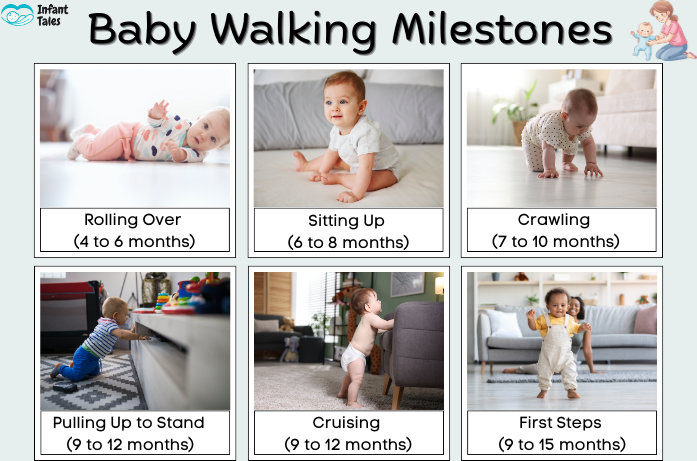
Before jumping into how you can help your baby walk, it’s important to understand the typical baby walking development stages. These stages generally begin as early as 6 to 9 months and may extend until 18 months. Understanding these milestones will help you track your baby’s progress and know when to offer encouragement. Developmental guidance from Pregnancy, Birth and Baby explains that walking timelines vary widely and are influenced by muscle strength, balance, and confidence.
1. Rolling Over (4 to 6 months)
This is the first big movement milestone that your baby will achieve. Rolling over helps your baby strengthen their muscles and is a crucial step in building coordination. At this stage, your baby begins to develop the basic motor skills they will need for crawling, standing, and eventually walking. Research published in pediatric development studies highlights rolling and early movement as foundational for later walking skills.
2. Sitting Up (6 to 8 months)
Once your baby is able to sit up independently, you will notice improvements in their core strength and balance. Sitting up also helps them develop muscle memory, which is essential for standing and walking. At this point, they may start reaching for toys and strengthening their arm and leg muscles by supporting their weight while sitting. Pediatric kids health movement experts also emphasize sitting balance as an important pre-walking skill.
3. Crawling (7 to 10 months)
Crawling is a key milestone that helps babies build strength and coordination. Your baby’s arm and leg muscles get stronger, setting the foundation for standing and walking. It’s also a time when babies become more independent in their movements and begin exploring their surroundings more actively. While some babies skip crawling, organizations like Pathways note that crawling supports whole-body strength and coordination.
4. Pulling Up to Stand (9 to 12 months)
As your baby begins pulling themselves up using furniture or your support, you will notice they are gaining strength in their legs and developing better balance. This is one of the key steps in preparing your baby for walking. Once they are able to stand with support, they will begin to rock back and forth, practicing their balance.
5. Cruising (9 to 12 months)
Cruising refers to your baby walking while holding onto furniture or objects for support. This is an exciting milestone because your baby is learning to shift their weight and take small steps. It’s also a great opportunity to encourage your baby to take a few steps with you holding their hands for support.
6. First Steps (9 to 15 months)
The moment you’ve been waiting for! Your baby will take their first unassisted steps around this time. While it may not be a perfectly steady walk at first, these initial steps mark the beginning of independent walking. Keep in mind that some babies may walk earlier, while others may take a bit longer.
How to Encourage Baby to Walk
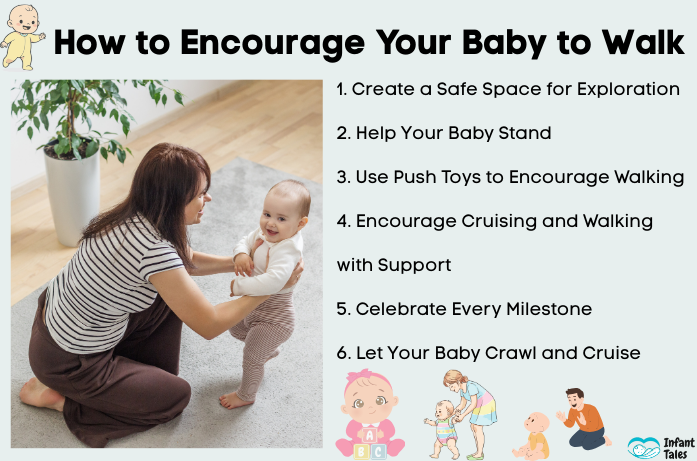
Now that you’re familiar with the baby walking milestones, let’s explore how you can help your baby take their first steps. While every baby’s timeline is different, there are several things you can do to encourage and support their walking journey.
Public health guidance from the CDC emphasizes that regular movement opportunities and active play support healthy motor development in young children.
1. Create a Safe Space for Exploration
To encourage your baby to walk, you need to create a safe, stimulating environment. Ensure the area is baby-proofed with soft carpets or padded flooring. Baby-proofing is essential for safety as your baby practices standing, cruising, and walking. Avoid placing sharp-edged furniture in their path and make sure there are no small objects they could swallow.
2. Help Your Baby Stand
The more your baby practices standing, the stronger their leg muscles will become. Hold your baby’s hands and gently pull them into a standing position. Allow them to practice balancing for short periods, and encourage them to stay upright as long as they can. Gradually, your baby will start to gain the confidence to stand on their own.
3. Use Push Toys to Encourage Walking
Push toys are a great way to help your baby walk. These toys allow your baby to use their arms and legs to move while providing support and balance. When your baby starts to walk with a push toy, they’ll learn how to shift their weight and take steps independently.
4. Encourage Cruising and Walking with Support
As your baby gets more comfortable pulling themselves up to stand, encourage them to cruise. Place furniture or sturdy objects at a distance from one another, prompting your baby to walk from one object to another while holding on. This helps your baby practice walking while maintaining their balance.
5. Celebrate Every Milestone
Celebrating your baby’s milestones, no matter how small, helps motivate them to keep progressing. Clap, cheer, and offer positive reinforcement when they stand, take steps, or try new movements. Your encouragement will make them feel proud and more eager to keep trying.
6. Let Your Baby Crawl and Cruise
While you’re eager for your baby to walk, don’t rush the process. Crawling is an essential developmental stage that strengthens their muscles and helps with coordination. Let your baby crawl and cruise as much as they need to these stages are important for building the necessary physical strength for walking.
When Can Baby Use Walker?
Many parents wonder when it’s appropriate to use a baby walker. While walkers can provide support, it’s important to note that they are not recommended for babies who are learning to walk. Research shows that walkers can delay walking milestones and potentially cause accidents or injuries if used improperly. Instead of using a walker, try other methods such as push toys or holding your baby’s hands as they practice walking.
Baby Walker Safety Tips
If you choose to use a baby walker (which should be done with caution), ensure that it is designed with safety features such as wide bases to prevent tipping. Keep the walker on flat surfaces, away from stairs, and never leave your baby unattended while using the walker.
How to Get Baby to Walk Faster
It’s tempting to want your baby to walk faster, especially as you see other babies walking earlier. However, it’s important to allow your baby to develop at their own pace. Pushing them too hard can create stress and may even delay their progress. That said, some things can encourage walking development faster:
- Provide consistent opportunities for standing and cruising.
- Offer toys that require your baby to reach or walk towards them.
- Limit time spent in baby equipment that restricts movement, like bouncers or swings.
- Engage in tummy time regularly to strengthen core muscles.
- Celebrate every step, which reinforces positive behavior.
Baby Walking Without Crawling
Some babies walk without ever crawling, often referred to as “skip-crawlers.” This happens when babies are eager to stand and walk, bypassing the crawling stage. While this is perfectly fine in many cases, it’s important to make sure that your baby is getting enough opportunities to strengthen their muscles through other means, such as tummy time or cruising.
FAQs
Q1: When do babies start walking?
Most babies start walking between 9 and 15 months, though this varies from baby to baby. Some may walk earlier or later, which is completely normal.
Q2: Is it normal for babies to skip crawling?
Yes, some babies skip crawling and go straight to walking. As long as other developmental milestones are being met, there’s no need for concern.
Q3: When can I use a baby walker?
It’s generally not recommended to use a baby walker until your baby is ready to walk independently. Instead, encourage walking through push toys or standing with support.
Q4: How can I help my baby walk faster?
Encourage cruising, provide a safe space for standing and moving, and celebrate each small step. Patience is key, as every baby develops at their own pace.
Q5: What are some baby walker safety tips?
If using a walker, ensure it’s sturdy with a wide base, always place it on flat surfaces, and never leave your baby unattended. It should not replace actual walking practice.
Conclusion
Encouraging your baby to walk is an exciting part of parenting, and understanding the baby walking milestones can help you navigate this phase with confidence. While every baby develops at their own pace, creating a safe space, offering opportunities to practice standing and cruising, and providing positive reinforcement can go a long way in helping your baby take those first steps.
Remember, it’s essential to be patient and let your baby’s development unfold naturally. Whether your baby skips crawling or takes a little longer to start walking, every milestone is a sign of progress. Celebrate the journey, and soon enough, your little one will be walking on their own.
Excited to see your baby’s first steps? Visit Infant Tales for expert tips and support on every milestone. We’re here to guide you through each step of the journey!
Disclaimer: If you have concerns about your baby’s development or walking milestones, always consult with your healthcare provider. Every baby is unique, and your pediatrician can provide personalized advice tailored to your baby’s needs.