Comparisons are one of the most frustrating parts of parenting, especially when someone constantly points out what your child is or isn’t doing yet. If you’re wondering how to deal with parents who compare children, you’re not alone. Comments about milestones, skills, or behavior can make any parent feel stressed or inadequate. The truth is that every child grows at their own pace, and comparisons rarely tell the full story.
In this guide, we’ll explore why comparisons happen and how you can respond with confidence, calmness, and clarity.
Why Do Parents Compare?
Before we can respond effectively, it helps to understand why comparisons happen.
- Human Nature: People often compare as a way of making sense of the world. It’s how we measure progress.
- Cultural Expectations: In many societies, milestones like walking, talking, or academic success are tied to family pride.
- Insecurity in Parenting: Sometimes, when a parent feels uncertain about their own role, they highlight their child’s achievements to reassure themselves.
- Lack of Awareness: Many don’t realize the negative effects of comparing children, such as discouraging self-confidence or creating sibling rivalry.
By recognizing these underlying reasons, you can take comparisons less personally. More often than not, they reflect the speaker’s own mindset, pressures, or insecurities, not your child’s worth or progress.
The Impact of Comparisons
Comparisons don’t just affect parents, they can shape how children see themselves too. Research from the American Psychological Association (APA) highlights that constant comparison among children can:
- Lower self-esteem in children.
- Create unhealthy competition among siblings.
- Increase parental stress and anxiety.
- Lead to strained family relationships.
A study by the American Psychological Association found that children who were frequently compared or criticized were more likely to experience anxiety and low self-worth. That’s why it’s important to address child comparison in a healthy, constructive way.
How to Respond When Someone Compares Your Child
1. Stay Calm and Confident
It’s perfectly normal to feel defensive when someone compares your child, but reacting with frustration can often make the situation worse. Instead, try to stay composed and remind yourself that child development is not a competition. According to the Centers for Disease Control and Prevention (CDC), milestones such as walking, talking, or social interaction fall within a wide range of “normal.” For example, some toddlers walk at 10 months, while others take their first steps closer to 18 months, and both are healthy and normal.
📍 Tip: A calm, reassuring response like, “Every child develops at their own pace, and we’re proud of ours,” not only defuses tension but also shows that you are confident in your parenting approach.
2. Redirect the Conversation
If relatives keep comparing children, instead of getting into a “who is better” discussion, gently focus on your child’s strengths. This approach acknowledges the other parent’s pride without letting the conversation become one-sided.
Example: “It’s great that your son is doing well in sports! My daughter is having a lot of fun painting these days, it’s amazing how creative she is.”
By doing this, you not only validate their enthusiasm, but also give the conversation a more balanced and positive tone, showing that every child has different talents that should be celebrated.
3. Use Humor
Humor is a powerful tool to ease awkwardness and lighten the atmosphere. A lighthearted response can prevent tension from building and shows others that you’re not shaken by comparisons.
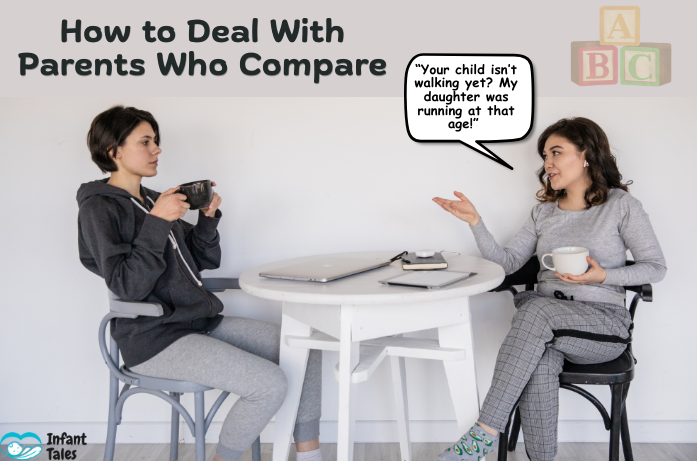
For instance, if a relative says, “Your baby isn’t walking yet?” you could laugh and reply, “We’re enjoying the crawling stage, it’s like having a built-in floor cleaner!”
This way, you deal with parents who compare milestones without stress and keep the mood light.
4. Educate When Necessary
Sometimes comparisons come from misinformation or outdated beliefs. In those moments, gently sharing accurate information can both correct the misconception and help the other person learn.
For example: “Actually, many children don’t start speaking clearly until around age 3, and that’s still considered normal according to pediatric guidelines.”
You can also refer them to trusted resources such as the CDC or the American Academy of Pediatrics, which provide clear and science-based developmental information. By educating kindly, you help shift the focus from judgment to understanding.
5. Set boundaries
When comparisons become frequent, critical, or emotionally draining, it’s important to set clear and respectful boundaries. Although it may feel uncomfortable at first, doing so protects your mental health and avoids sending harmful messages to your child.
You might say: “I appreciate your concern, but these comparisons make me uncomfortable. I’d like us to focus on celebrating each child for who they are.”
Boundaries not only protect you but also model self-respect for your child.
Encouraging Positive Parenting Instead of Comparisons
Instead of focusing on what children aren’t doing, parents and caregivers can encourage growth by:
- Celebrating small milestones unique to each child.
- Supporting their interests and passions.
- Building resilience and emotional security.
- Teaching children that uniqueness is a strength, not a weakness.
The Child Mind Institute emphasizes that when children feel accepted as they are, they develop stronger self-esteem and emotional health. Similarly, psychologists like Jean Piaget and Erik Erikson remind us that child development follows unique stages, not rigid timelines.
What to Remind Yourself as a Parent
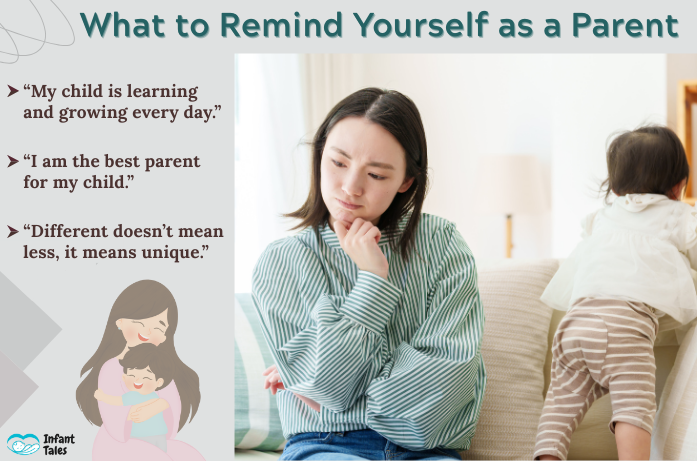
Even if others compare, you can protect your mindset with positive affirmations:
- “My child is learning and growing every day.”
- “I am the best parent for my child.”
- “Different doesn’t mean less, it means unique.”
Practicing self-compassion is one of the best parenting confidence tips to reduce stress.
When Comparisons May Signal a Real Concern
While most comparisons are unhelpful, sometimes they can raise valid questions. If you notice your child missing multiple milestones or showing signs of developmental delay, consulting a pediatrician can provide reassurance or early support.
⚠️ Disclaimer: This article is intended for general informational purposes only and should not be taken as medical advice. Always seek the guidance of a qualified healthcare professional with any questions or concerns you may have about your child’s growth and development.
FAQs
1. How do I stop comparing my child to others?
Remind yourself that every child has a unique timeline. Focus on growth, not competition.
2. What if my relatives keep comparing despite my boundaries?
Repeat your boundary kindly but firmly. If it continues, reduce such conversations or redirect the topic.
3. When should I worry about developmental delays?
If your child misses multiple milestones across different areas (speech, movement, social), check in with your pediatrician for reassurance.
4. How can I help my child handle sibling comparisons?
Highlight each child’s unique strengths. Make sure they feel equally valued and celebrated.
Final Thoughts
Comparisons are almost inevitable in parenting, but how you respond makes a difference. By staying confident, setting healthy boundaries, and focusing on your child’s unique journey, you can rise above negativity and nurture his or her growth.
Remember: parenting without comparison is healthier for both you and your child. Childhood isn’t a race, it’s a collection of memories and milestones that happen in their own time.
✨ Infant Tales is here to support parents with guidance, empathy, and real stories. Remember, no two children are alike, and that’s the beauty of parenting.