Authored by: A Caring Mom at Infant Tales
As new parents, ensuring your child’s safety during travel is one of your top priorities. Car rides may be one of the most common activities for new parents, but your baby’s safety in a car seat is a question that many new mothers and fathers ponder. The question of How Long Can a Newborn Be in a Car Seat is crucial to understanding your baby’s comfort and safety during travel.
Newborns are especially vulnerable in car seats because their bodies are still developing. Whether you are just running a quick errand or embarking on a long road trip, it’s essential to be aware of the guidelines for newborns in car seats. In this article, we’ll discuss everything from safe car seat recommendations and how to properly use a car seat for a newborn to baby car seat safety tips.
How Long Can a Newborn Be in a Car Seat Safely?
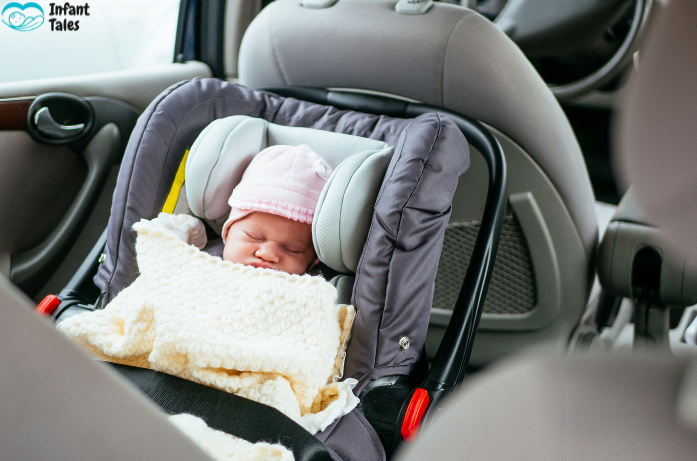
One of the first questions new parents ask is, how long can a newborn be in a car seat safely? The general recommendation from experts, including the American Academy of Pediatrics (AAP), is that a newborn should not be in a car seat for more than 2 hours at a time. This rule applies to both travel and when the car seat is used outside of the car, such as for napping or stroller use.
The main reason for this time limit is that newborns don’t have enough strength in their neck and spine to support themselves in a semi-upright position for extended periods. Sitting in a car seat for too long can cause discomfort and even positional asphyxia, a life-threatening condition where the baby’s airway is blocked due to an incorrect head position.
In addition to the two-hour rule, you should also avoid letting your newborn sleep in the car seat outside of the car. It’s fine for short naps during travel, but continuous or prolonged sleep in a car seat is not recommended. For more detailed guidelines, you can read more on Children’s Hospital of Philadelphia’s Car Seat Safety Page
Safe Car Seat for Newborns
A safe car seat for newborn is crucial for your baby’s safety and comfort. Car seats should always be rear-facing for newborns because this position helps protect their delicate neck and spine. A rear-facing car seat keeps your baby’s head, neck, and spine properly aligned in case of a sudden stop or crash. The National Highway Traffic Safety Administration (NHTSA) provides helpful guidelines on car seat recommendations.
There are two main types of car seats suitable for newborns:
- Infant-only car seats: These are smaller and specifically designed for newborns and young infants. They often come with a carry handle and are easily detachable from the base.
- Convertible car seats: These seats can be used in both rear-facing and forward-facing positions. While convertible car seats offer longer-term use, newborns should still use the rear-facing position until they meet the height and weight requirements.
When choosing a newborn car seat, make sure it meets the safety standards set by the National Highway Traffic Safety Administration (NHTSA) and that it is properly installed.
Newborn Car Seat Recommendations
When selecting a newborn car seat, safety and comfort should always be your primary concern. Look for a seat with features such as side-impact protection, a five-point harness system, and an easy installation process. These features ensure that your baby is secure and comfortable during every ride, offering peace of mind while traveling.
Some key features to look for include a secure base for easy installation, extra foam padding for added protection, and a rebound bar that prevents the seat from moving excessively in the event of a crash. Additionally, ensure the car seat offers a five-point harness for a snug and secure fit, keeping your newborn safe and comfortable throughout your journey. These features can help you select a high-quality, safe car seat that meets both your needs and your baby’s comfort.
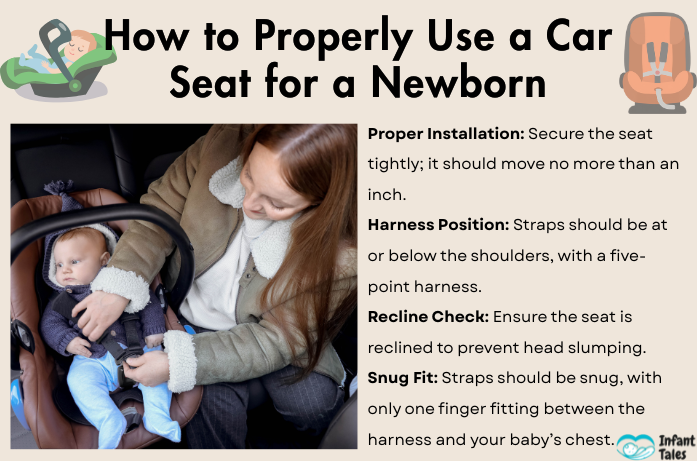
How to Properly Use a Car Seat for a Newborn
Ensuring your newborn is safe in their car seat starts with knowing how to properly use a car seat for a newborn. Here are some essential steps to follow:
1. Ensure Proper Installation: Make sure the car seat is tightly secured in the vehicle. The base should not move more than an inch when tested at the belt path. Refer to the manual for installation instructions or have a certified car seat technician check it.
2. Correct Harness Position: For newborns, the harness straps should be at or just below their shoulders to ensure the best fit. Always use the five-point harness, which includes straps over the shoulders, hips, and between the legs.
3. Check the Recline: Newborns should be in a reclined position to prevent their heads from falling forward. Make sure the angle indicator on the car seat is properly aligned to ensure they’re in a safe position.
4. Snug Fit: The straps should be snug, with no more than one finger able to fit between the harness and your baby’s chest.
Baby Car Seat Safety Tips
When it comes to baby car seat safety tips, the following are essential for a secure and comfortable ride:
Never place a car seat in the front seat: The back seat is always the safest place for a car seat, away from airbags that could pose a danger to your baby.
Use the car seat on a flat surface: Never leave the car seat on high surfaces, like tables or countertops, even when your baby is not in it.
Never use secondhand car seats: Used car seats may be damaged or expired. Always buy a new car seat or ensure a secondhand one is not more than 6 years old and has never been in an accident.
Keep your baby’s head supported: If your baby’s head is slumping forward while in the car seat, it could cause breathing issues. Make sure the car seat provides adequate neck support for newborns.
How Often to Adjust Newborn Car Seat
As your baby grows, you’ll need to adjust newborn car seat settings. Here’s how to know when it’s time to make adjustments:
Re-adjust the harness: As your baby grows, make sure to adjust the harness straps to keep them snug and at the correct height.
Check the angle: As your baby matures, you may need to adjust the recline of the car seat to maintain a safe, comfortable position.
Change the seat as they grow: Once your baby exceeds the height or weight limit for their infant car seat, it’s time to transition to a convertible car seat.

Newborn Car Seat Position
A newborn baby’s car seat should always be positioned facing backward. This is the safest position for your baby during travel, as it helps protect their neck and spine in the event of a crash. The seat should be at a 30 to 45-degree angle to prevent your baby’s head from slumping forward.
Newborn Car Seat Guidelines
Here are some key newborn car seat guidelines to follow:
- Use a rear-facing seat: Newborns should remain rear-facing until they are at least 2 years old or until they reach the weight and height limits set by the car seat manufacturer.
- Proper fit: Make sure the car seat is the right size for your baby. A car seat that is too big or too small will not provide optimal safety. For additional insights, the Kids Health website offers a comprehensive overview of car seat safety
- Seat expiration: Car seats have expiration dates, so check the label to ensure the seat is still safe to use.
Conclusion
Ensuring your newborn’s safety in the car seat is one of the most important responsibilities as a parent. By understanding the guidelines and baby car seat safety tips, you can ensure your baby is secure and comfortable during travel. It’s crucial to remember that newborns should not remain in the car seat for extended periods. Always take breaks during long trips, allowing your baby to stretch and move around. This helps avoid discomfort and health concerns like positional asphyxia, which can happen if a baby’s head slumps forward for too long.
As your baby grows, it’s essential to adjust the car seat to fit their needs. Always ensure the harness is snug and the car seat is properly reclined, with the straps positioned at or just below their shoulders. Following baby car seat guidelines and keeping your baby in the rear-facing position until they meet the weight and height requirements will ensure their safety. Proper car seat use, combined with regular checks and adjustments, can make travel much safer and more comfortable for both you and your little one.
Frequently Asked Questions (FAQs)
1. How long can a newborn be in a car seat during travel?
As mentioned earlier, it is generally safe for a newborn to be in a car seat for no more than 2 hours at a time. Take breaks during long trips to allow your baby to stretch and move.
2. What are some baby car seat rules I should follow?
The main rules include always using a rear-facing car seat until your baby reaches the height and weight limits, ensuring the harness is snug, and never placing the car seat in the front seat.
3. How can I prevent my newborn’s head from slumping in the car seat?
To prevent head slumping, make sure the car seat is properly reclined, and use additional head support if necessary. Some car seats come with infant inserts to provide extra neck and head support.
4. What are the newborn car seat guidelines for transitioning to a convertible seat?
Once your baby exceeds the height or weight limit for their infant car seat, you can transition to a convertible seat, which can accommodate your baby as they grow.
5. How often should I adjust newborn car seat harnesses?
As your baby grows, you should adjust the harness straps regularly to ensure a snug fit. Check the straps every time you place your baby in the car seat to ensure proper safety.
Want more baby care tips and helpful advice? Follow us for more! And for everything you need to know, visit Infant Tales your go-to resource for new parents! Safe journeys ahead!
Disclaimer: The information provided in this article is for informational purposes only and is not a substitute for professional medical advice. Always consult with your pediatrician or a certified professional regarding any concerns about your baby’s safety and well-being.