Authored by: A Caring Mom at infant tales
As your toddler grows, ensuring they get the right nutrients to support their development becomes more important than ever. One of the key elements for their digestive health is fiber. High fiber toddler foods are essential in promoting good digestion, preventing constipation, and ensuring your little one feels satisfied throughout the day.
In this article, we will explore a variety of high fiber toddler foods that can help boost your child’s digestive health and overall well-being. Whether you’re looking for toddler food ideas or healthy toddler food options, we’ve got you covered with easy and nutritious recipes your toddler will love!
Why is Fiber Important for Toddlers?
Fiber is a type of carbohydrate that the body cannot digest. It plays a crucial role in maintaining a healthy digestive system, and for young children, it’s essential for promoting regular bowel movements and preventing constipation. A fiber-rich diet supports proper growth, reduces bloating, and helps the body absorb essential nutrients. Including high-fiber foods in a child’s diet can also help prevent future health problems, such as obesity and digestive issues.
For toddlers, the American Academy of Pediatrics recommends around 19 grams of fiber daily for children aged 1 to 3. Incorporating fiber-rich foods into your toddler’s meals can go a long way in supporting their gut health, providing them with sustained energy, and keeping them feeling satisfied throughout the day.
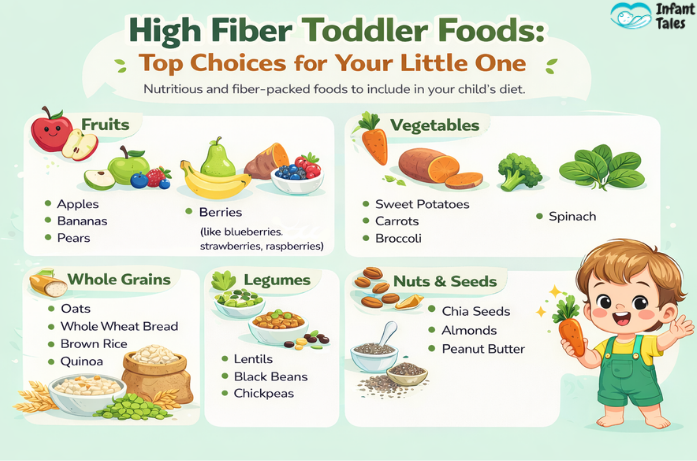
High Fiber Toddler Foods: Top Choices for Your Little One
Including high fiber toddler foods in your child’s diet doesn’t need to be difficult or time-consuming. You can start by adding these nutritious options into their meals. These foods are packed with fiber and other nutrients essential for their growth and development.
1. Fruits: Sweet and Fiber-Packed
Fruits are naturally rich in fiber, and most toddlers love the sweet taste they offer. They are an excellent addition to any meal or snack.
Apples: One medium apple with the skin contains about 4 grams of fiber. Apples are easy to serve, either sliced, diced, or pureed, and they’re perfect for snacking.
Bananas: Bananas provide a good amount of fiber (around 3 grams per medium banana) and can help regulate bowel movements. They are also easy for toddlers to eat, making them a great option for quick toddler food ideas.
Pears: Pears are rich in fiber, with around 5-6 grams per medium-sized pear. They can be served fresh, blended into a smoothie, or even cooked into a warm dessert.
Berries: Blueberries, strawberries, raspberries, and blackberries are fiber-rich and full of antioxidants. A half-cup of raspberries offers around 4 grams of fiber.
2. Vegetables: Colorful and Full of Fiber
Vegetables are packed with fiber, and you can sneak them into your toddler’s meals in various ways. Start with these fiber-rich veggies:
Sweet Potatoes: A delicious and nutritious choice, sweet potatoes provide about 4 grams of fiber per medium-sized potato. These can be mashed, baked, or even made into fries.
Carrots: A medium carrot has about 2 grams of fiber and can be served raw, steamed, or roasted. Carrots are perfect for toddlers who love to dip them in hummus or yogurt.
Broccoli: Packed with fiber and vitamins, a cup of steamed broccoli contains around 5 grams of fiber. It’s easy to cook and serve with a little cheese for added flavor.
Spinach: Spinach offers about 4 grams of fiber per cooked cup. It can be added to smoothies, scrambled eggs, or pasta dishes for extra nutrients.
3. Whole Grains: Building Blocks for Strong Bodies
Whole grains are an essential part of any toddler’s diet. They provide fiber, B vitamins, and other important nutrients. Here are some excellent high-fiber whole grain options:
Oats: A perfect breakfast option, oats provide about 4 grams of fiber per cup. They can be served as oatmeal, baked into muffins, or added to smoothies for extra fiber.
Whole Wheat Bread: A slice of whole wheat bread contains approximately 2 grams of fiber. Whole grain bread can be used to make sandwiches, served with soups, or toasted for a snack.
Brown Rice: Brown rice contains around 2 grams of fiber per half-cup cooked serving. Serve it with stir-fries, casseroles, or as a side dish.
Quinoa: This ancient grain is packed with fiber and protein, offering about 5 grams of fiber per cup when cooked. It can be served as a base for salads or mixed with vegetables.
4. Legumes: Protein-Packed Fiber
Legumes, such as beans and lentils, are an excellent source of fiber and protein. They’re also very versatile, making them great for easy toddler food recipes.
Lentils: Lentils are high in fiber, with one cup of cooked lentils containing about 15 grams of fiber. They can be added to soups, stews, or mashed for a spread.
Black Beans: Black beans provide 8 grams of fiber per half-cup serving. They can be mixed with rice, served in burritos, or added to soups.
Chickpeas: Chickpeas are another great choice, offering 6 grams of fiber per half-cup serving. You can blend them into hummus or add them to salads and stews.
5. Nuts and Seeds: Tiny Powerhouses of Fiber
Nuts and seeds are high in fiber and healthy fats. They make an excellent addition to any toddler meal or snack. Here are some great options:
Chia Seeds: With 5 grams of fiber per tablespoon, chia seeds are a great way to boost fiber intake. They can be added to smoothies, yogurt, or made into chia pudding.
Almonds: Almonds contain around 3.5 grams of fiber per ounce. Be sure to chop or grind them finely for younger toddlers to prevent choking.
Peanut Butter: Peanut butter is a great source of healthy fats and fiber. Serve it spread on whole grain toast or as a dip for fruits and vegetables.
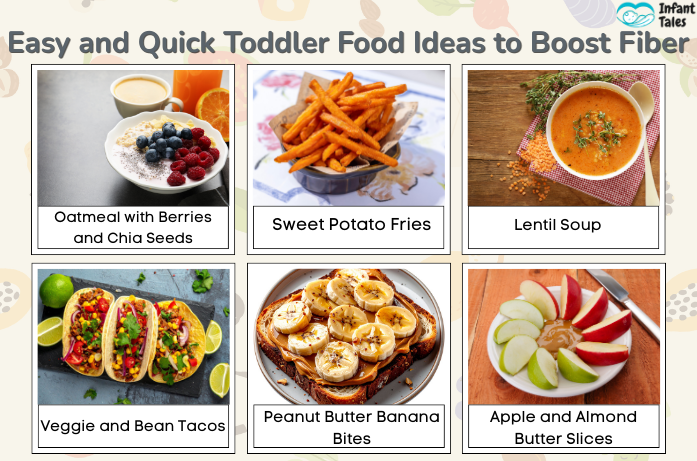
Easy and Quick Toddler Food Ideas to Boost Fiber
Now that you have some great high-fiber toddler food options, here are a few easy toddler food recipes to make mealtimes more enjoyable and nutritious: For more information on healthy eating tips for toddlers, check out the CDC’s healthy eating guidelines.
1. Oatmeal with Berries and Chia Seeds: Combine rolled oats, almond milk, and a sprinkle of chia seeds for a fiber-rich breakfast. Top with fresh berries for added sweetness.
2. Sweet Potato Fries: Cut sweet potatoes into fries, toss with olive oil, and bake until crispy. These make a great side dish or snack.
3. Lentil Soup: Cook lentils with diced vegetables like carrots, tomatoes, and spinach. This hearty and fiber-rich soup will keep your toddler full and satisfied.
4. Veggie and Bean Tacos: Fill whole wheat tortillas with mashed black beans, sautéed spinach, and diced tomatoes. These are great for quick toddler food ideas.
5. Peanut Butter Banana Bites: Spread peanut butter on banana slices, then top with a sprinkle of chia seeds for a delicious, fiber-packed snack.
6. Apple and Almond Butter Slices: Slice an apple into rounds and spread almond butter on top. For an added fiber boost, sprinkle with a few chia seeds or granola. This simple and quick snack provides a great mix of fiber, healthy fats, and protein.
Tips for Picky Eaters
If your toddler is a picky eater, getting them to eat high fiber foods might be challenging. Here are a few tips to encourage them to eat more fiber:
1. Blend into Smoothies: If your toddler is hesitant about eating fruits or vegetables, blend them into a smoothie with yogurt and milk for a tasty and nutritious treat.
2. Make it Fun: Serve fruits and veggies in fun shapes or pair them with a favorite dip to make them more exciting.
3. Add Fiber Gradually: Introduce fiber-rich foods slowly to avoid upsetting your toddler’s stomach. Let them get used to the new flavors and textures.
4. Offer Small Portions: Serve smaller portions of fiber-rich foods alongside familiar ones. This will make them feel less overwhelmed and more willing to try new foods.
Conclusion
High fiber toddler foods are an essential part of a healthy diet for your little one. By incorporating a variety of fiber-rich fruits, vegetables, grains, legumes, and nuts into their meals, you’ll be supporting their digestive health and overall growth.
Whether you’re looking for easy toddler food recipes or nutritious toddler meal ideas, these options will keep your toddler feeling satisfied and energized throughout the day. For more on how fiber benefits your child’s health, check out the detailed guide on PMC about dietary fiber and health benefits for kids.
As always, remember to introduce fiber-rich foods gradually, stay patient with picky eaters, and make mealtimes fun and enjoyable. By doing so, you’ll help your toddler establish healthy eating habits that will last a lifetime.
For more helpful tips on raising a healthy toddler, visit Infant Tales for more expert advice and delicious toddler food ideas.
FAQs
1. What are the best high-fiber foods for toddlers?
The best high-fiber foods for toddlers include fruits like apples, pears, and berries, vegetables like sweet potatoes and broccoli, whole grains like oats and brown rice, and legumes such as lentils and beans.
2. How much fiber does my toddler need each day?
Toddlers aged 1-3 years need around 19 grams of fiber per day to support healthy digestion and growth.
3. Can high-fiber foods help with constipation in toddlers?
Yes, high-fiber foods can help prevent and relieve constipation in toddlers by promoting regular bowel movements and supporting digestive health.
4. How can I get my picky eater to eat more fiber?
Try blending fruits and vegetables into smoothies, offering fiber-rich foods with fun dips, or introducing fiber gradually alongside familiar foods to make the transition easier.
5. Are there any snacks that are both fiber-rich and toddler-friendly?
Yes! Snacks like apple slices with almond butter, peanut butter banana bites, or veggie sticks with hummus are tasty, fiber-packed options for toddlers.
Disclaimer: This article is for general informational purposes and should not replace professional medical advice. Consult your pediatrician before making any dietary changes for your toddler. Always monitor your child’s food intake to ensure they are getting a balanced diet.