Authored by a Caring Mom at Infant Tales
Breastfeeding is an intimate and essential part of bonding with your baby, but for moms with babies who suffer from acid reflux, it can also come with its challenges. Acid reflux in babies, also known as gastroesophageal reflux (GER), occurs when stomach contents flow back into the esophagus, leading to discomfort, irritability, and frequent spit-ups. If your baby suffers from acid reflux, one of the best ways you can help alleviate symptoms is by adjusting your own diet.
In this article, we will explore foods to avoid when breastfeeding a baby with acid reflux, how your diet can impact your baby’s reflux, and how making mindful dietary choices can ease your baby’s discomfort. From understanding the signs and symptoms of acid reflux to learning which foods to eliminate from your diet, this guide will provide you with essential information to help manage your baby’s reflux.
Understanding Acid Reflux in Breastfed Babies
Before diving into the specific foods that can worsen acid reflux, it’s important to understand how reflux in breastfed babies works. When a baby has acid reflux, it means that stomach acids flow back into the esophagus, causing irritation.
This can happen more frequently when the lower esophageal sphincter (LES), the valve that keeps food in the stomach, relaxes and fails to close properly. This is common in infants due to an immature digestive system. For more information on acid reflux in infants, the NIDDK provides a comprehensive resource on GERD and diet management for infants.
Some of the typical baby reflux signs include:
- Excessive spitting up after feeding
- Crying and fussiness, especially after feedings
- Frequent coughing or choking during feedings
- Arching their back or neck in discomfort
- Difficulty sleeping or staying asleep
Acid reflux in babies typically worsens around 4 months of age and begins to improve as their digestive system matures, usually by 12 months. While it generally resolves on its own, it can be challenging for both babies and parents during this time. As a breastfeeding mother, paying attention to your diet can help reduce reflux symptoms and make your baby more comfortable.
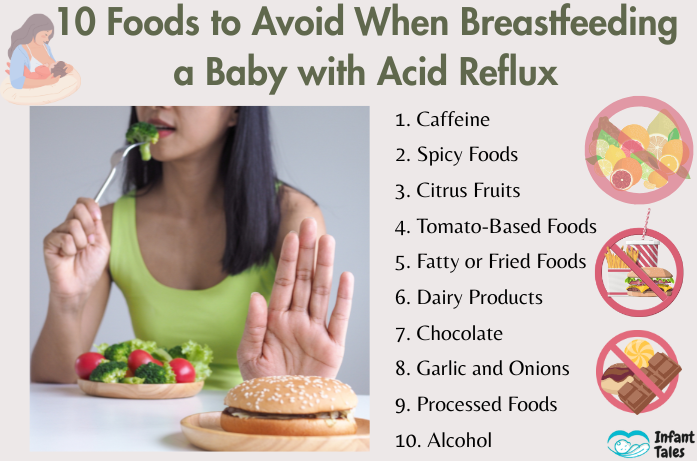
10 Foods to Avoid When Breastfeeding a Baby with Acid Reflux
Certain foods you consume can transfer through breast milk and exacerbate your baby’s acid reflux symptoms. It’s important to recognize the foods that can relax the LES or increase stomach acid production, causing reflux to worsen.
1. Caffeine
Caffeine, found in coffee, tea, and chocolate, is known to relax the LES, leading to an increased likelihood of acid reflux. Caffeine can also stimulate your baby, affecting their sleep patterns and increasing irritability.
Opt for caffeine-free herbal teas like chamomile or peppermint, which can be more soothing for both you and your baby. For more advice on breastfeeding diets, refer to the Cleveland Clinic.
2. Spicy Foods
Spicy foods, including those containing chili peppers and hot sauces, can irritate the digestive tract and trigger acid reflux. These foods can also cause an increase in stomach acid, which may affect your baby.
Use milder spices like turmeric or ginger, which can still add flavor without irritating your stomach.
3. Citrus Fruits
Citrus fruits like oranges, lemons, and grapefruits are highly acidic and can worsen acid reflux by increasing stomach acid production. The acidity from these fruits can pass through your breast milk and cause discomfort for your baby.
Consider non-citrus fruits such as bananas, pears, or apples, which are less acidic and gentler on the stomach.
4. Tomato-Based Foods
Tomato-based foods, such as sauces, soups, and ketchup, are very acidic and can relax the LES. This increases the risk of acid reflux and makes symptoms more likely to appear.
If you crave tomato-based dishes, try substituting with mashed pumpkin or squash to mimic the texture and flavor without the acidity.
5. Fatty or Fried Foods
Fatty foods, especially fried foods, can delay digestion and contribute to reflux. These foods tend to relax the LES and increase the chance of reflux symptoms.
Choose lean meats, such as chicken or turkey, and opt for baking, grilling, or steaming instead of frying.
6. Dairy Products
Some breastfeeding mothers find that dairy products, such as milk, cheese, and yogurt, can trigger their baby’s acid reflux symptoms. Dairy can cause increased mucus production, which can exacerbate reflux issues.
Consider lactose-free dairy options or plant-based milk like almond or oat milk.
7. Chocolate
Chocolate contains caffeine and theobromine, both of which can relax the LES and increase the likelihood of reflux. It’s also a known irritant for many people with reflux.
If you’re craving something sweet, try fruit-based treats or non-chocolate desserts.
8. Garlic and Onions
Garlic and onions are common triggers for reflux. These foods can irritate the stomach lining and increase acid production, leading to more frequent reflux symptoms in your baby.
Try using milder herbs like basil or parsley to add flavor to your meals without the reflux-inducing effects of garlic and onions.
9. Processed Foods
Processed foods often contain preservatives, artificial additives, and unhealthy fats, which can contribute to reflux. These foods can also increase stomach acid production and relax the LES.
Stick to fresh, whole foods like vegetables, fruits, and whole grains, which are less likely to trigger reflux.
10. Alcohol
Alcohol is a known reflux trigger because it relaxes the LES and increases stomach acid production. It’s also unsafe for breastfeeding mothers, as alcohol can pass through breast milk to your baby.
Opt for non-alcoholic beverages like sparkling water or herbal teas.
Additional Considerations for Managing Reflux in Babies
In addition to adjusting your diet, there are other tips to help manage reflux in breastfed babies:
- Keep your baby upright: After feeding, hold your baby in an upright position for 20 to 30 minutes. This can help reduce reflux symptoms and improve digestion.
- Smaller, more frequent feedings: Larger meals can increase the chances of reflux, so try feeding your baby smaller amounts more frequently throughout the day.
- Avoid tight clothing: Tight diapers or clothing around the abdomen can put pressure on the stomach and increase reflux.
- Elevate the crib mattress: Slightly elevating your baby’s crib mattress (by about 30 degrees) can help prevent stomach contents from flowing back into the esophagus while sleeping.
When Do Babies Outgrow Reflux?
When do babies outgrow reflux is a common question from parents dealing with acid reflux in their little ones. In most cases, reflux tends to peak around 4 months of age and naturally resolves by the time a baby reaches 12 to 18 months. As their digestive system matures, the LES strengthens, and reflux episodes decrease. For more insights into how babies develop and when reflux typically resolves, check out Healthy Children page on GERD.
However, it’s important to note that some babies may experience reflux longer than others, and some might even develop gastroesophageal reflux disease (GERD), which is a more serious and persistent form of reflux. If your baby continues to experience significant discomfort or has trouble feeding, consult a pediatrician for advice on reflux treatment for babies.
Natural Remedies to Soothe Baby’s Acid Reflux
In addition to dietary adjustments, there are some natural remedies that may help soothe your baby’s acid reflux. One simple approach is tummy time. This activity not only helps strengthen your baby’s muscles but also promotes better digestion. Aim to give your baby tummy time while they are awake and under supervision.
Another helpful remedy is gentle rocking or swaddling. Calming your baby through these techniques can help reduce stress and discomfort, which may minimize reflux episodes.
It’s also important to feed your baby in an upright position, as this can prevent reflux. Regular burping during and after feedings can help release any trapped air in the stomach, which may contribute to reflux symptoms.
Before trying any new remedies, it’s always a good idea to consult with your pediatrician to ensure they are safe for your baby.
Conclusion
Breastfeeding a baby with acid reflux can be challenging, but paying attention to your diet can provide significant relief for your little one. By avoiding certain foods like caffeine, spicy foods, and citrus fruits, you can reduce the amount of acid that passes into your breast milk, thereby minimizing your baby’s discomfort. Additionally, making small adjustments such as feeding smaller amounts more frequently and keeping your baby upright after feedings can make a big difference.
However, if your baby’s reflux symptoms persist or worsen, it’s essential to consult a pediatrician for further evaluation. A healthcare professional can provide personalized advice and treatment, including medication or further lifestyle modifications, to ensure your baby’s comfort and well-being.
FAQs
1. What foods should I avoid for my baby’s reflux?
Avoid caffeine, spicy foods, citrus fruits, tomatoes, fatty foods, dairy, chocolate, garlic, processed foods, and alcohol.
2. How can I tell if my baby has reflux?
Look for signs like spitting up, crying after feedings, coughing, arching their back, or trouble sleeping.
3. Does my diet affect my baby’s reflux?
Yes, certain foods you eat can worsen your baby’s reflux symptoms through breast milk.
4. When do babies outgrow reflux?
Most babies outgrow reflux by 12 to 18 months as their digestive system matures.
5. Can feeding habits help with reflux?
Yes, smaller, more frequent feedings and keeping your baby upright after feedings can help.
Disclaimer: The information provided in this article is for informational purposes only and should not replace professional medical advice. Always consult with a healthcare provider for personalized guidance.
For more helpful tips on baby care and managing common challenges like acid reflux, make sure to subscribe to the Infant Tales newsletter! Stay updated with expert advice and support to ensure the best for you and your little one.