
Authored by: A Caring Mom at Infant Tales
As a parent, one of the most gratifying milestones is watching your baby grow and develop. Weight gain is a key indicator of your baby’s health and progress, and for many mothers, breastfeeding is the natural choice to provide essential nourishment. It’s a special bonding time, but when your baby isn’t gaining weight as expected, it can raise concerns.
If you notice that your breastfed baby isn’t gaining weight, you might feel anxious. It’s important to remember that several factors could be contributing to this, and not all of them are alarming. In this article, we’ll discuss the common causes of slow weight gain in breastfed babies and offer practical steps you can take to support your baby’s growth and ensure they get the nutrition they need.
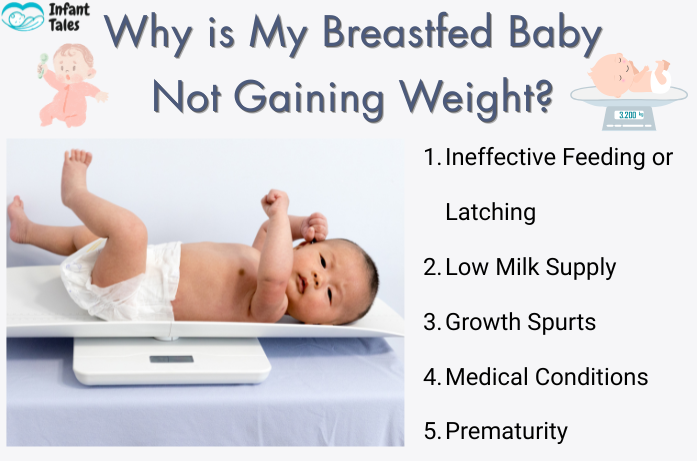
Why is My Breastfed Baby Not Gaining Weight?
A baby’s weight gain is an essential factor in their health, but not all babies follow the same growth patterns. While some babies grow rapidly, others may have a slower weight gain trajectory. If you’re concerned about your baby’s weight gain.
If your baby is not gaining weight on breast milk, it can be a source of stress. Understanding the reasons behind this and addressing any concerns early can make all the difference. Here are some common reasons why your breastfed baby might not be gaining weight as expected.
1. Ineffective Feeding or Latching
One of the most common causes for a breastfed baby not gaining weight is ineffective feeding. If your baby’s latch isn’t correct, they may not be able to extract enough milk. This can result in a baby not getting the calories needed for healthy growth. If you’re unsure about the latch or need additional support, consider reaching out to a lactation consultant, who can guide you on improving latch techniques.
- Check the latch: Ensure that your baby’s mouth is wide open and covering most of the areola. Their lips should be flanged outward, and they should have a deep latch.
- Assess feeding duration: Babies need to feed for a longer period to get the hindmilk, which contains higher fat content and provides essential calories. Aim for at least 15-20 minutes per side.
- Get help from a lactation consultant: If you’re unsure about the latch or feeding technique, a lactation consultant can help.
2. Low Milk Supply
If your milk supply is insufficient, your baby may not be getting enough to eat, which could result in slow weight gain. Many factors can affect your milk supply, such as stress, hormonal imbalances, or even how often you’re nursing your baby. The CDC offers insights into using growth charts for monitoring your baby’s growth, especially for breastfed babies.
- Nurse frequently: Aim to breastfeed at least 8-12 times a day, including during the night, to help establish and maintain a healthy milk supply.
- Consider pumping: To boost milk production, try pumping after feedings or between sessions to increase milk supply.
- Hydrate and eat well: A balanced diet and proper hydration can play a significant role in maintaining a healthy milk supply.
- Talk to a lactation consultant: A consultant can help assess your milk production and give you strategies for increasing it.
3. Growth Spurts
Your baby may not gain weight at a consistent pace because they are going through a growth spurt. During these periods, babies may feed more often but not necessarily gain weight rapidly. This is a natural process that can occur at various stages, typically around 2-3 weeks, 6 weeks, 3 months, and 6 months of age.
- Feed more frequently: During growth spurts, your baby might nurse more often, and this is perfectly normal. Try to follow your baby’s cues and offer the breast whenever they seem hungry.
- Be patient: Growth spurts are temporary, and your baby’s weight gain should resume a more consistent pattern once they’ve passed through this stage.
4. Medical Conditions
In some cases, a baby may not be gaining weight due to an underlying health issue. Conditions like gastroesophageal reflux (GERD), allergies, or even metabolic disorders can affect your baby’s ability to absorb milk effectively or lead to excessive calorie burning.
- Consult your pediatrician: If you suspect your baby has a medical condition, it’s important to visit your pediatrician. They may perform tests to rule out underlying issues such as reflux or an infection.
- Monitor symptoms: Keep track of any unusual symptoms such as vomiting, excessive gassiness, or a refusal to feed, as these could indicate a health concern.
5. Prematurity
Babies born prematurely often have different growth patterns than full-term babies. Premature babies may not have the same energy reserves or feeding efficiency as full-term infants, which can lead to slow weight gain in the early months.
- Work with your pediatrician: Premature babies often require more frequent monitoring. Your healthcare provider may recommend additional support such as formula supplementation or extra pumping to help ensure your baby’s growth.
- Be patient: Premature babies will catch up in their own time, though it may take a little longer.
Signs Baby Is Not Gaining Weight While Breastfeeding
While slow weight gain can sometimes be hard to identify immediately, there are several signs to look out for that may indicate your baby is not getting enough milk or growing as expected. Monitoring your baby’s growth and weight gain is essential, and the Pregnancy, Birth, and Baby site offers information about slow weight gain and how to handle it.
These include:
- Fewer wet diapers: If your baby is not having at least 6-8 wet diapers per day, they may not be getting enough milk.
- Constant hunger cues: If your baby is consistently acting hungry even after feedings, this could be a sign they’re not receiving enough nourishment.
- Low energy or lethargy: Babies who aren’t gaining weight may appear sluggish or lack energy.
- Failure to thrive: If your baby is not gaining weight at a normal rate (150-200 grams per week), this is a clear indication that something is wrong.
- Signs of dehydration: A dry mouth, sunken fontanel (the soft spot on your baby’s head), and dark urine are signs of dehydration.
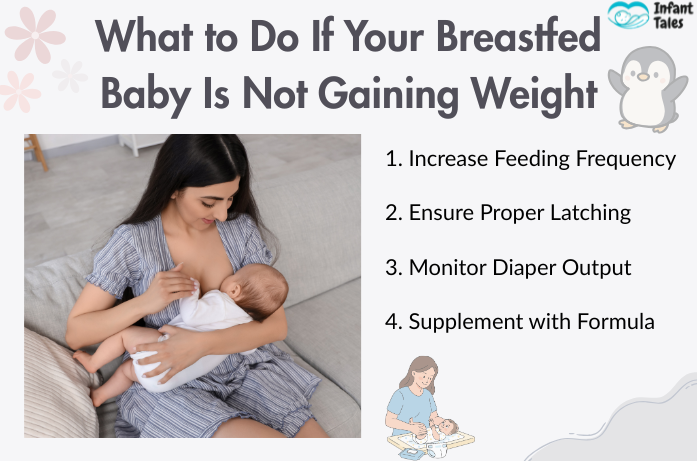
What to Do If Your Breastfed Baby Is Not Gaining Weight
If your breastfed baby is not gaining weight or is gaining weight slowly, don’t panic. There are several steps you can take to help improve the situation and ensure your baby is getting enough nourishment. If you need more guidance on boosting milk supply, PubMed has articles that explore research related to breastfeeding and growth.
1. Increase Feeding Frequency
One of the most effective solutions for slow weight gain in breastfeeding is to nurse more frequently. Newborns should be fed at least 8-12 times per day, including overnight. Offering the breast every 2-3 hours, even if your baby doesn’t seem hungry, helps ensure they’re getting enough milk.
Night feedings are crucial for establishing your milk supply, so don’t skip them. Offering the breast before your baby becomes overly hungry can also help prevent latch issues that sometimes arise when babies are too famished.
2. Ensure Proper Latching
A poor latch can prevent your baby from getting enough milk, which is essential for healthy weight gain. It’s important to make sure your baby is latching correctly to ensure proper milk intake. If you’re unsure, consider seeking help from a lactation consultant.
A consultant can assess your latch and guide you through improving it. Sometimes, switching breastfeeding positions can help, as well as using breast compression to encourage milk flow if your baby isn’t suckling effectively.
3. Monitor Diaper Output
Tracking your baby’s diaper output is a simple way to ensure they’re feeding well. A healthy baby should have at least 6-8 wet diapers and 3-4 bowel movements per day in the early weeks. If you notice a decrease in diaper output, it could be a sign that they’re not getting enough milk.
Keep a daily log of your baby’s wet and dirty diapers and share it with your pediatrician if you’re concerned. Additionally, look for signs of dehydration like dry skin, a dry mouth, or fewer diapers, as these could indicate insufficient milk intake.
4. Supplement with Formula (If Advised)
In some cases, if your milk supply is insufficient, your baby may need additional support in the form of formula. This should only be done under the guidance of your pediatrician. If your doctor recommends supplementing with formula, a lactation consultant can help ensure you do so properly without disrupting breastfeeding.
A supplemental nursing system (SNS) can provide formula while your baby is nursing at the breast, allowing them to continue breastfeeding while ensuring they receive the necessary nourishment.
When to Seek Help from a Healthcare Professional
If you’ve tried the above steps and your baby is still not gaining weight, it may be time to seek professional help. A pediatrician or lactation consultant can help identify any underlying issues and provide guidance tailored to your baby’s needs.
You should seek help if:
- Your baby is consistently losing weight or not gaining weight over a period of time.
- Your baby is not feeding well, despite frequent attempts and proper techniques.
- You notice signs of illness, dehydration, or failure to thrive.
- Your baby’s weight gain is significantly below expected growth patterns for their age.
Conclusion
A breastfed baby not gaining weight can be worrying, but it’s important to remember that many factors can influence your baby’s growth, and most issues can be resolved with the right approach. Whether it’s ensuring a proper latch, boosting your milk supply, or supplementing with formula, there are ways to support your baby’s healthy development.
Keep track of your baby’s weight and diaper output, and don’t hesitate to reach out to a professional if you’re concerned. Early intervention is key to ensuring your baby’s health and happiness.
For more tips on baby care, breastfeeding, and parenting, be sure to follow us in infant tales for expert advice and support on your parenting journey.
FAQs
1. How can I tell if my baby is getting enough milk?
Check for at least 6-8 wet diapers and 3-4 bowel movements daily. A satisfied baby after feedings is also a good sign.
2. Should I wake my baby to feed at night?
Yes, especially in the early weeks. Night feedings help establish your milk supply and ensure proper nourishment.
3. Can a poor latch affect weight gain?
Yes, a poor latch can prevent effective milk transfer, leading to slower weight gain. A lactation consultant can help improve the latch.
4. How often should I breastfeed my baby?
Breastfeed at least 8-12 times a day, including at night, to ensure your baby is getting enough milk.
5. When should I supplement with formula?
If your baby isn’t gaining weight despite frequent feedings, consult your pediatrician about supplementing with formula.
Disclaimer: This article is for informational purposes only and is not intended to replace professional medical advice. Always consult your pediatrician for personalized guidance on your baby’s health and nutrition.