Authored by a Caring Mom at Infant Tales
If you are reading this at 3 a.m. with heavy eyelids and a baby who just won’t settle, please know this first, you’re not alone, and you are not doing anything wrong. Baby sleep regression is one of the most common (and emotionally draining) phases parents go through during infancy. One week your baby seems to sleep longer stretches, and the next week nights feel endless, naps are unpredictable, and bedtime turns into a daily challenge.
This sudden change can be frustrating and even discouraging, especially for new parents who feel they were finally starting to understand their baby’s sleep patterns. The truth is, baby sleep regression is a normal and healthy part of development. It often shows up during periods of rapid growth, brain development, and emotional awareness.
In this in-depth guide from Infant Tales, we’ll gently walk you through what sleep regression really is, why it happens, how long it lasts, and how to handle it without panic or guilt. The goal isn’t perfect sleep, it’s understanding, reassurance, and confidence during a tough stage.
What Is Baby Sleep Regression?
Baby sleep regression refers to a temporary disruption in a baby’s sleep patterns after a period of more predictable rest. A baby who was once sleeping longer stretches may suddenly wake frequently at night, resist bedtime, or take very short naps during the day.
Although it can feel alarming, sleep regression is not a sign that something is wrong. It happens because your baby’s brain and body are developing at an incredible pace. New skills, awareness, and physical growth can all interfere with sleep. Health experts, including those at the Cleveland Clinic, explain that changes in brain development directly affect how babies move between sleep cycles, especially around major milestones.
One important thing for parents to remember is that sleep regression is developmental, not behavioral. Your baby isn’t trying to create bad habits or test boundaries. They are simply adjusting to changes happening inside their growing body and mind.
Understanding Baby Sleep Regression Ages
One of the first questions parents ask is when sleep regression happens. While every baby is different, certain stages are more likely to bring sleep disruptions. These stages are commonly referred to as baby sleep regression ages and often align with major developmental milestones.
Sleep regressions are frequently noticed during:
- Early infancy
- The middle of the first year
- Late infancy and early toddlerhood
Some babies experience several regressions, while others may go through only one noticeable phase. For example, sleep experts note that changes can also occur around one year of age as babies develop mobility, memory, and emotional awareness, which is discussed in detail by the Sleep Foundation’s overview of the 12-month sleep regression.
Although these phases can feel unpredictable, many parents notice a similar pattern: sleep disruption appears suddenly, lasts for a few weeks, and then gradually improves as the baby adjusts.
Sleep Regression Baby: What Parents Commonly Notice
During a regression, parents across the world describe very similar experiences. A sleep regression baby may begin waking more often at night, need extra help falling asleep, or wake much earlier than usual in the morning.
You might also notice:
- Increased fussiness or crying before bedtime
- Difficulty settling back to sleep after waking
- More frequent feeding requests overnight
- Shorter, inconsistent, or skipped naps
What makes sleep regression especially stressful is that these changes often happen suddenly, even when routines remain the same. One night everything feels manageable, and the next night feels chaotic.
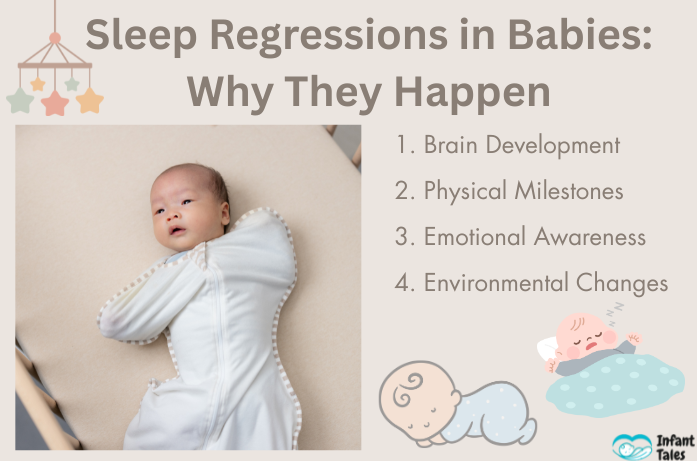
Sleep Regressions in Babies: Why They Happen
There are several reasons behind sleep regressions in babies, and they are almost always connected to healthy growth and development. Understanding these causes can help parents respond with patience instead of worry.
1. Brain Development
As babies grow, their sleep cycles mature. They begin spending more time in lighter stages of sleep, which makes it easier for them to wake between cycles.
2. Physical Milestones
Rolling over, sitting, crawling, or pulling to stand are exciting achievements, but babies don’t stop practicing these skills just because it’s nighttime.
3. Emotional Awareness
As babies become more aware of their surroundings, they may struggle with separation from parents, especially during sleep.
4. Environmental Changes
Illness, teething, travel, or changes in routine can also disrupt sleep temporarily. General sleep health guidance from the Centers for Disease Control and Prevention (CDC) emphasizes how environmental factors and routine changes influence sleep quality across all ages, including infants.
All of these factors help explain why babies experience sleep regression, even when parents are consistent and attentive.
Baby 4 Month Sleep Regression: What to Expect
The baby 4 month sleep regression is one of the most talked-about sleep changes, and for good reason. Around this age, a baby’s sleep structure shifts permanently from newborn sleep patterns to more adult-like sleep cycles, which include lighter stages of sleep.
This developmental change means babies wake more easily between sleep cycles and may need extra help settling back to sleep, even if they previously slept well.
During this stage, parents may notice more frequent night wakings, difficulty falling asleep without feeding or rocking, increased fussiness around naps and bedtime, and shorter naps that end after just one sleep cycle. These signs can feel concerning, but they are a normal part of healthy brain development.
Not all babies experience the 4-month sleep regression in the same way. Some go through noticeable sleep disruption, while others have only mild changes or barely any at all. If your baby didn’t struggle at this stage, it doesn’t mean future regressions won’t happen—it simply means your baby adjusted differently.
How Long Does Sleep Regression Last in Babies?
Most sleep regressions last between two and six weeks. Some babies adjust sooner, especially when parents maintain consistent routines and respond calmly to night wakings.
If disrupted sleep continues well beyond this timeframe, or if it’s accompanied by feeding difficulties, weight concerns, or ongoing discomfort, it may be helpful to consult a pediatrician.
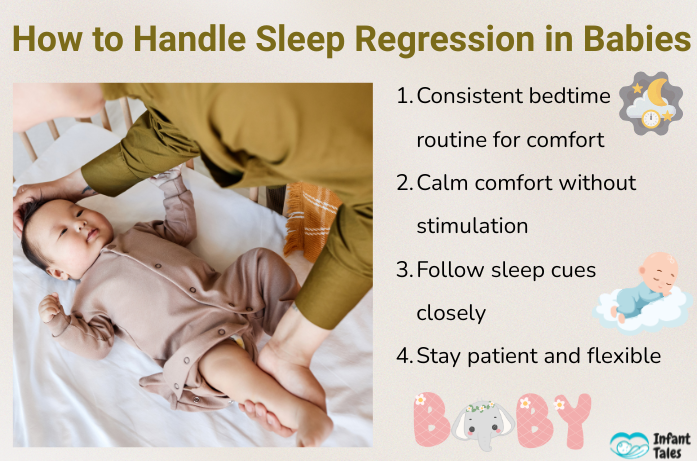
How to Handle Sleep Regression in Babies
Understanding how to handle sleep regression in babies can make this challenging phase feel more manageable and less stressful. While there’s no quick fix that works overnight, staying calm, responsive, and consistent can help your baby feel secure as they work through this stage. Sleep regression is temporary, and the way you support your baby during this time can make a real difference.
1. Maintain a Calming Routine
A familiar bedtime routine helps signal to your baby that it’s time to sleep, even when rest feels disrupted. Simple, soothing activities done in the same order each night can provide comfort and predictability.
2. Offer Comfort Without Overstimulation
It’s okay to comfort your baby when they wake at night. Keep the environment quiet and dim, and avoid too much interaction so your baby can settle back to sleep more easily.
3. Prevent Overtiredness
An overtired baby often struggles more with sleep. Pay close attention to your baby’s sleep cues and adjust nap times or bedtime slightly if needed to avoid pushing them too far.
4. Stay Flexible and Patient
Sleep regression rarely improves all at once. Some nights will be better than others, and that’s normal. With patience and gentle consistency, your baby’s sleep will gradually become more settled again.
FAQs
1. Is sleep regression a sign of bad sleep habits?
No. Sleep regression is a normal developmental phase and can happen even when your baby has healthy sleep routines.
2. Can teething cause sleep regression?
Yes, teething can temporarily disrupt sleep, and it often overlaps with developmental sleep regressions.
3. Should I change my baby’s schedule during sleep regression?
Small, gentle adjustments can help, but big or sudden changes may confuse your baby.
4. Will my baby’s sleep return to normal after regression?
Yes. With time, patience, and consistency, most babies return to more predictable sleep patterns.
5. How can I support my baby during sleep regression?
Maintain a calming bedtime routine, respond with comfort, and remember that this phase is temporary.
Final Thoughts from Infant Tales
Baby sleep regression can feel incredibly exhausting, both physically and emotionally, especially when you’re running on very little sleep and carrying big worries. The sudden changes in your baby’s sleep can leave you feeling overwhelmed and unsure, even when you’re doing everything you can.
But it’s important to remember that this phase is not a setback. It’s actually a sign of healthy growth. Your baby’s brain, body, and emotional awareness are developing rapidly, and temporary sleep disruptions are often a natural part of that important progress.
At Infant Tales, we believe informed parents feel stronger and more confident. Trust your instincts, lean into gentle routines, and remind yourself that this phase will pass.
You are not just surviving sleep regression you’re guiding your baby through an important stage of growth.
Medical Disclaimer: This article is for informational purposes only and is not a substitute for professional medical advice. Always consult your pediatrician with concerns about your baby’s sleep, health, or development.