Authored by: A Caring Mom at Infant Tales
As parents, one of the greatest joys is watching your child grow and develop, especially during their toddler years. This stage is crucial as toddlers are incredibly curious, eager to explore their surroundings, and are rapidly developing essential cognitive, emotional, and motor skills. One of the best ways to support their growth is through engaging Baby learning activities.
These activities help nurture your toddler’s creativity, stimulate their senses, and promote developmental milestones. Whether it’s building towers with blocks, coloring pictures, or playing pretend, the right activities can help toddlers learn in fun and exciting ways.
Why Baby Learning Activities Are Essential
Toddlerhood is an exciting time filled with rapid physical and cognitive growth. By engaging toddlers in a variety of learning activities, parents and caregivers can lay the foundation for future academic and social success. Learning through play is a natural part of a child’s development, and when toddlers explore their world, they build skills that benefit them throughout their lives.
At this age, toddlers develop problem-solving abilities, fine and gross motor skills, and social-emotional intelligence. Providing an environment that encourages exploration, creativity, and learning is essential.
Toddler learning activities don’t need to be complex or expensive; everyday items like blocks, crayons, or even simple household objects can support development. The key is to make these activities interactive and engaging, ensuring your toddler stays curious and motivated to learn.
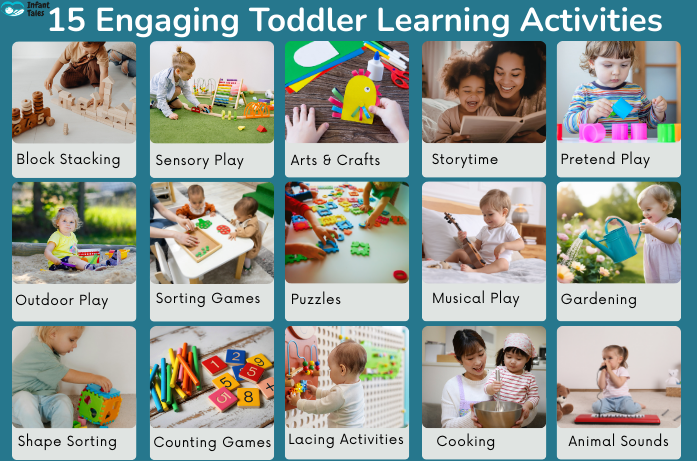
15 Engaging Baby Learning Activities
1. Building Blocks and Stacking Games
Building blocks are timeless toys that encourage critical developmental skills like hand-eye coordination and spatial awareness. As toddlers stack and arrange blocks, they learn basic concepts such as color, shape, and size. This activity helps toddlers understand cause and effect and fosters creativity as they experiment with different ways to build structures. For more information on how play-based learning helps toddlers, visit IES Ed.
As your toddler grows, you can introduce challenges like sorting blocks by color or creating patterns to further enhance their understanding of categorization and organization. This simple yet powerful activity keeps toddlers entertained for hours while helping them develop both cognitive and motor skills.
2. Sensory Play and Exploration
Sensory play helps toddlers understand the world through their senses—sight, sound, touch, taste, and smell. Activities like water play, sand exploration, and playing with playdough or rice stimulate toddlers’ tactile senses while improving fine motor skills. For example, setting up a sensory bin filled with rice or dried beans encourages toddlers to practice scooping, pouring, and sorting. For more ways to incorporate learning through play, check out this government resource on play-based learning.
Water play is another popular sensory activity that allows toddlers to explore how water moves, what it holds, and how objects interact with it. This activity supports cognitive development and fosters imaginative play. Sensory play also benefits cognitive growth by helping toddlers develop object permanence, the understanding that objects exist even when they are out of sight.
3. Creative Arts and Crafts
Introducing toddlers to art activities nurtures their creativity and promotes fine motor development. Simple tasks like coloring, drawing, or finger painting help toddlers explore different colors, shapes, and textures. As they experiment with crayons, markers, or paints, toddlers refine their grip and hand-eye coordination, skills essential for early writing.
For more advanced art projects, try collages using paper, fabric, and other materials. Activities like cutting, gluing, and arranging materials help toddlers develop dexterity and coordination. These creative projects also encourage problem-solving as toddlers decide how to arrange materials and balance their compositions.
4. Reading and Interactive Storytime
Storytime is one of the best activities to engage toddlers and build language skills. Interactive books with textures, flaps, or buttons keep toddlers engaged while developing their vocabulary, comprehension, and listening skills. Repetition is key, reading the same story multiple times helps reinforce vocabulary and familiarize toddlers with the rhythm and flow of language.
Encouraging literacy from a young age is an important aspect of early development. For more tips on physical activity and its impact on toddlers’ health, see the CDC guidelines.
5. Pretend Play and Role-Playing
Pretend play is a vital part of toddlerhood. It encourages creativity and helps toddlers understand the world around them. Activities like playing house, pretending to be animals, or using dolls and action figures help toddlers explore social roles and relationships. As they mimic real-life situations, toddlers develop empathy and learn to view the world from different perspectives.
Role-playing also offers valuable opportunities for language development. Through conversations with their toys or mimicking household chores, toddlers practice using language in context, refining their verbal skills. Pretend play boosts toddlers’ confidence and creativity, allowing them to create their own stories while practicing problem-solving skills.
6. Outdoor and Physical Play
Outdoor activities are essential for developing gross motor skills. Activities like running, jumping, and climbing help toddlers build strength, balance, and coordination. Outdoor play also promotes social skills as toddlers learn to interact with other children, share, and take turns.
In addition to playground activities, nature walks offer opportunities for observation and learning about the environment. Whether collecting leaves in the fall or watching birds in the summer, toddlers develop an appreciation for nature and foster their curiosity about plants and animals. Outdoor play provides a sensory-rich environment for exploration, stimulating all five senses.
7. Sorting and Matching Games
Sorting and matching games are great for toddlers to develop cognitive and organizational skills. Whether it’s matching socks or sorting colored blocks, these activities teach concepts like classification, organization, and pattern recognition. Sorting with different textures like smooth pebbles and rough stones, engages toddlers in a sensory experience.
These activities help toddlers recognize patterns and categorize objects based on shared characteristics, which lays the foundation for future learning in math and reading. Sorting and matching can be done with everyday objects, making them easy to set up and execute.
8. Puzzle Play
Puzzles are excellent tools for toddlers to develop problem-solving and spatial reasoning skills. Simple puzzles with large, easy-to-handle pieces help toddlers practice fitting pieces together and understand how shapes fit. As they work to complete the puzzle, toddlers learn how to approach challenges and solve problems.
Puzzle play improves fine motor skills as toddlers manipulate pieces and place them in the correct slots. You can introduce more complex puzzles with additional pieces or varying shapes as their cognitive abilities expand.
9. Musical Exploration
Music is a great way to engage toddlers’ auditory senses and promote language development and motor coordination. Simple instruments like tambourines, xylophones, or maracas allow toddlers to explore sounds and rhythms. Music encourages toddlers to move to the beat, helping develop coordination and an early sense of rhythm.
Singing songs and clapping along also strengthens memory and language skills. As toddlers repeat lyrics and songs, they improve vocabulary and memory retention. Music activities also foster social interaction, allowing toddlers to engage with others in a group setting.
10. Gardening and Nature Exploration
Gardening with toddlers is a rewarding activity that introduces them to the natural world. Planting seeds, watering plants, and observing growth help toddlers understand concepts like growth, change, and care. Gardening also allows toddlers to practice fine motor skills when digging, planting, and watering.
Nature walks offer an opportunity for toddlers to observe plants, insects, and animals in their environment. These outings help toddlers develop curiosity about the natural world and encourage them to explore their surroundings in a hands-on way.
11. Shape Sorting
Shape sorting games help toddlers recognize and categorize objects based on their shapes. Using toys that involve sorting shapes into matching holes helps toddlers understand geometry and spatial relationships. This activity strengthens problem-solving and hand-eye coordination.
When toddlers match shapes to everyday objects, they reinforce their understanding of shapes and patterns. This activity can also be an introduction to more advanced concepts such as symmetry and proportions as toddlers grow.
12. Counting and Number Games
Teaching toddlers about numbers and counting is a great way to introduce early math concepts. Use everyday items like toys or blocks to help toddlers grasp quantities. Counting objects aloud helps them associate numbers with physical items, which builds number recognition.
Counting songs and number flashcards can reinforce number skills and make learning fun. These activities help toddlers develop early numeracy skills, which will be useful as they move into more complex math concepts.
13. Threading and Lacing Activities
Threading and lacing activities are excellent for improving toddlers’ fine motor skills. Toys like lace boards or stringing beads help toddlers develop their grip and dexterity, which are essential for tasks like writing and drawing.
Lacing activities also introduce toddlers to patterns and sequence. Creating bead patterns or following a threading sequence helps toddlers practice problem-solving and patience as they complete the task.
14. Cooking Together
Cooking with toddlers is a fun and practical way to teach measuring, sequencing, and following instructions. Involve your toddler in simple tasks like stirring, pouring, or arranging ingredients. Cooking is a sensory experience that engages sight, smell, touch, and taste.
This activity also promotes language development as toddlers learn the names of foods, utensils, and ingredients. It’s a wonderful opportunity for toddlers to practice new words while working together to create something enjoyable.
15. Animal Recognition and Sounds
Teaching toddlers to recognize animals and their sounds is a fun and educational activity. Use books or toys that feature animals and encourage toddlers to mimic the sounds. This helps with language development and memory.
As toddlers learn the sounds of animals, they also begin to associate these sounds with the animals themselves. This activity fosters curiosity about the natural world and encourages toddlers to explore animal behavior and habitats.
Conclusion: The Importance of Toddler Learning Activities
Engaging toddlers in learning activities encourages their development and prepares them for future academic and social success. By offering a variety of activities, whether sensory play, art projects, or outdoor adventures, you can provide your toddler with endless opportunities for growth.
Keep activities simple, enjoyable, and interactive, allowing your toddler to explore at their own pace. For additional resources and ideas on early learning, consider this helpful Tiny Tot Preschool resource.
FAQs
1. What are good learning activities for toddlers?
Building blocks, sensory play, reading, and pretend play are great for developing motor skills and creativity.
2. Why is pretend play important?
It boosts imagination, social skills, and language development.
3. How does outdoor play help toddlers?
It improves coordination, balance, and encourages social interaction.
For more toddler learning tips and activities, visit us at Infant Tales.