Authored by: A Caring Mom at Infant Tales
Pregnancy tests are often one of the first steps in confirming pregnancy when you suspect something is happening in your body. Gone are the days when women had to wait for a visit to the doctor’s office to get confirmation. Thanks to advances in technology, at-home pregnancy tests have made the process more convenient.
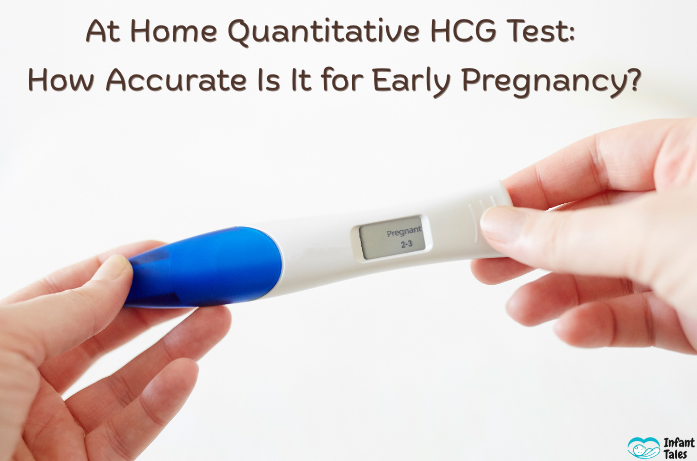
One such test is the at-home quantitative HCG test, which provides a detailed measurement of HCG (Human Chorionic Gonadotropin) levels in your urine. But how accurate are these tests when it comes to confirming pregnancy, especially in the early stages? Let’s dive into the workings of this test and its accuracy.
What is an At Home Quantitative HCG Test?
The quantitative HCG test at home is a type of pregnancy test that measures the actual level of HCG in your urine. Unlike traditional tests, which provide a “yes” or “no” answer, a quantitative test gives you an exact number of HCG in your body. HCG is a hormone that is produced by the placenta after a fertilized egg attaches to the uterine lining. Its levels increase rapidly in early pregnancy and can be measured in both blood and urine. MedlinePlus provides a thorough explanation of how HCG levels can be used in pregnancy tests to detect early pregnancy.
The hCG level at home test works by detecting the concentration of HCG in a urine sample. While these tests are not as common as standard pregnancy tests, they offer more precise data. They are particularly helpful if you are interested in knowing not just if you are pregnant, but also how much HCG is in your system at the time of testing.
How Does the Quantitative HCG Test Work at Home?
At-home quantitative HCG tests are fairly easy to use. Most tests involve the following process:
- Collecting the Urine Sample: You will either collect urine in a container or dip the test strip into the urine stream.
- Reading the Results: The test strip will then process your sample and give you a reading, which you can compare to the reference range provided in the instructions. This number will reflect the concentration of HCG in your urine.
The hCG levels at home are measured in milli-international units per milliliter (mIU/mL). The higher the number, the more likely it is that you are pregnant. However, you must note that these tests are not typically as sensitive as blood tests, and there can be variances in accuracy. For a deeper understanding of HCG testing, you can refer to Better Health‘s guide on pregnancy testing.
What Do HCG Levels Look Like During Early Pregnancy?
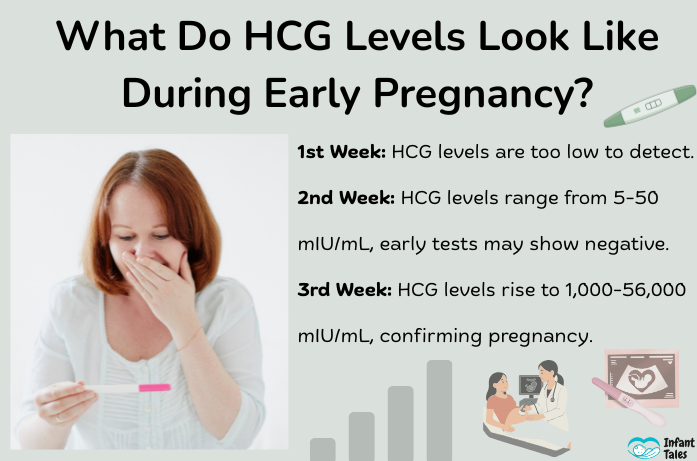
HCG levels rise exponentially during the early stages of pregnancy. Understanding how these levels fluctuate is key to interpreting the results of a pregnancy hCG test. Here’s a breakdown of what you can expect from early pregnancy HCG levels:
1st Week Pregnant HCG Levels: At just one week after conception, HCG levels are generally too low to be detected accurately by at-home tests. Most tests would not be able to confirm pregnancy at this stage.
2nd Week Pregnant HCG Levels: By two weeks pregnant, your body may produce detectable levels of HCG, but they are still relatively low. In most cases, the levels might range between 5 and 50 mIU/mL. Early detection tests may still show negative results at this stage, so it’s important to wait a little longer before testing. NCBI provides valuable insights into early pregnancy hormone levels and their fluctuations during the first few weeks.
3rd Average HCG Levels During Pregnancy:
From the third week onward, HCG levels begin to increase more significantly, typically doubling every 48 hours. By the time you reach the fourth to sixth week of pregnancy, HCG levels can range from 1,000 to 56,000 mIU/mL. This rapid increase is what makes hCG levels during pregnancy such a reliable marker for confirming a healthy pregnancy.
How Accurate Are At-Home Quantitative HCG Tests?
While at-home quantitative HCG tests provide an exact number of HCG levels, their accuracy can be influenced by several factors:
1. Timing of the Test: Timing is crucial when it comes to pregnancy testing. If you test too early, HCG levels may be too low for the test to detect accurately. Many experts recommend waiting until after you miss your period for the best results.
2. Test Sensitivity: Not all tests are created equal. Some tests are more sensitive than others, meaning they can detect lower levels of HCG. If you’re eager to test early, it’s essential to choose a highly sensitive test.
3. Improper Usage: A hCG level at home test must be used precisely as directed. Failure to follow the instructions can lead to false readings. It’s important to read the results within the recommended time frame, as waiting too long may give inaccurate results.
4. Health Conditions: Certain health conditions, such as molar pregnancies or ectopic pregnancies, may affect HCG levels, causing the results to be misleading. If you suspect something is off with your pregnancy, it’s best to consult a doctor. For more on the accuracy of pregnancy tests, refer to MedlinePlus.
5. Expired Tests: Like any medical product, pregnancy tests have an expiration date. Using an expired test increases the risk of receiving inaccurate results, as the chemicals used in the test may lose their effectiveness over time.
When Should You Take the Test?
To get the most accurate results, it’s essential to take the test at the right time. While some quantitative HCG tests at home claim to work a few days before your expected period, the most reliable results are usually obtained after a missed period. This allows your body enough time to produce higher levels of HCG, making detection easier.
If you’re unsure about when to take the test, here’s a general guideline:
- Test too early: HCG levels may be too low, and you might receive a false negative.
- Test too late: HCG levels might be so high that they could be out of the test’s range, which could result in false readings.
What to Do if Your Test Results Are Unclear?
If your quantitative HCG test at home shows uncertain results or if you’re unsure about the accuracy of the test, don’t hesitate to reach out to your healthcare provider. They can conduct more accurate tests, including blood tests, and offer professional guidance. It’s important not to rely entirely on at-home tests, especially if you experience any unusual symptoms like heavy bleeding, severe pain, or dizziness, which may indicate a more serious condition such as an ectopic pregnancy.
Conclusion
In conclusion, while at-home quantitative HCG tests offer a quick and accessible way to gain insights into your pregnancy, they should not be solely relied upon for making critical decisions about your health. The results can be informative, but they come with limitations that can be influenced by timing, the quality of the test, and even underlying health conditions. It’s crucial to use these tests correctly, following all instructions, and ensuring that the test is taken at the right time for the most accurate results.
Ultimately, for a definitive answer and reassurance regarding your pregnancy, consulting a healthcare provider is always the best course of action. A doctor can provide a comprehensive analysis of your HCG levels during pregnancy, perform ultrasounds, and offer the professional care that an at-home test simply cannot match. Keep in mind that while home tests can be a helpful first step, they should be part of a broader approach to prenatal care to ensure the health and well-being of both you and your baby.
FAQ
1. Can I trust an at-home quantitative HCG test?
Yes, at-home HCG levels during pregnancy tests can be trusted, but only when used properly and at the right time. Be sure to follow all instructions carefully and test after your missed period for the most accurate results.
2. What is the average HCG level at 1-2 weeks pregnant?
At 1 week pregnant, HCG levels are generally very low and may not be detectable with at-home tests. By 2 weeks pregnant, you may start to see a small increase, but HCG levels are still low and could range between 5 and 50 mIU/mL.
3. How do I interpret my pregnancy HCG test results?
To interpret your pregnancy hCG test results, compare the number on your test strip to the reference ranges provided in the instructions. If your levels fall within the expected range for your gestational age, it’s likely you’re pregnant. However, if the levels seem abnormally high or low, it’s a good idea to follow up with a doctor.
4. When will my HCG levels become detectable in urine?
Most at-home tests detect HCG levels as early as 12-14 days after conception, which is typically around the time of a missed period. Early testing before this period may lead to false negatives due to insufficient HCG levels.
5. Can a low HCG level indicate a problem with my pregnancy?
Not necessarily. While low HCG levels can sometimes indicate a miscarriage or ectopic pregnancy, they may also be due to testing too early or inaccuracies in the test. If you’re concerned about your results, it’s best to consult your doctor.
Disclaimer: The content provided in this article is for informational purposes only and should not be taken as medical advice. Always consult with your healthcare provider to confirm pregnancy or interpret test results accurately.
If you suspect you’re pregnant and want to learn more about early pregnancy signs and HCG levels, stay informed with expert tips and guidance. Visit Infant Tales for more helpful resources and advice on your pregnancy journey.