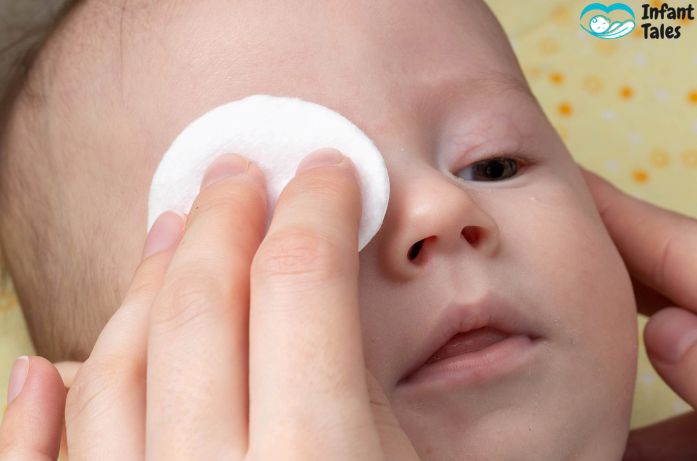
Authored by: A Caring Mom at Infant Tales
Noticing sticky discharge or yellowish crust around your newborn’s tiny eyes can be worrying, especially when you’re not sure what’s causing it. You may gently clean your baby’s eyelashes, only to find the mucus returning after another nap. The good news is that eye mucus in newborn babies is quite common and often happens because of a blocked tear duct, which prevents tears from draining properly. However, eye discharge can sometimes be a sign of an infection, particularly if your baby’s eyes look red or swollen.
Understanding the difference can help you care for your little one with more confidence. In this guide, we’ll explore the common causes of newborn eye mucus, safe ways to clean those delicate eyes, and important warning signs that mean it’s time to call your baby’s doctor.
Is Eye Mucus in Newborn Babies Normal?
Yes, a small amount of eye mucus in newborn babies is common, especially after sleeping. It often happens because of a blocked tear duct, which causes tears and mucus to collect around the eyelashes.
According to the American Academy of Pediatrics, around 10% of newborns have blocked tear ducts.
If your baby’s eyes are watery but not red or swollen, a blocked tear duct may be the reason. However, redness, swollen eyelids, or thick discharge can indicate an infection and need prompt medical attention. Discuss any new or persistent discharge with your pediatrician.
What Causes Eye Mucus in Newborns?
There are several reasons for eye mucus in newborns, including blocked tear ducts, infections, and irritation. Understanding these causes can help you identify when your baby needs medical attention.
1. Blocked Tear Ducts
A blocked tear duct is one of the most common causes of sticky eyes in newborns. It happens when the tear drainage passage hasn’t fully opened, causing tears and mucus to collect around the eyes.
Common signs include:
- Watery eyes without crying
- White or yellowish sticky discharge
- Crusty eyelashes after sleeping
- Little or no eye redness
Most blocked tear ducts open naturally within the first year.
2. Newborn Conjunctivitis (Pink Eye)
Conjunctivitis is an inflammation of the eye’s protective membrane, often caused by bacteria or viruses. Some infections can pass to babies during childbirth.
Common signs include:
- Red or swollen eyes
- Thick yellow or green discharge
- Eyelashes sticking together
- Eye discomfort
According to the CDC, newborn eye infections can become serious without treatment. Seek medical care immediately if your baby shows these symptoms.
3. Irritation From Eye Ointment After Birth
Some newborns experience temporary eye irritation from antibiotic ointment applied after delivery to prevent infections.
This may cause mild redness, watering, or puffiness, usually improving within 24–36 hours. However, newborn eye redness or discharge should be checked promptly to rule out infection.
4. Environmental Irritants
Dust, cigarette smoke, strong perfumes, or shampoo can irritate your newborn’s sensitive eyes.
You may notice watery eyes, frequent blinking, or mild redness. Keeping your baby’s surroundings clean and smoke-free can help.
If redness, swelling, or discharge continues, contact your pediatrician.
Blocked Tear Duct vs. Eye Infection: How Can You Tell?
This is one of the most important things for parents to understand.
A blocked tear duct and an eye infection can both make your baby’s eyelashes sticky, but some symptoms are more concerning than others.
| What you notice | Blocked tear duct | Possible eye infection |
| Watery eyes | Very common | Can occur |
| White or yellow mucus | Common | Possible |
| Redness in the white of the eye | Usually absent | Often present |
| Swollen eyelids | Usually absent | May be present |
| Thick pus-like discharge | May occur with secondary infection | More concerning |
| Baby appears uncomfortable | Usually not | May occur |
This comparison is only a guide, not a way to diagnose your baby at home.
Some newborn infections begin with subtle symptoms. If you’re unsure, contact your pediatrician.
What Does the Color of Newborn Eye Mucus Mean?
It’s easy to become concerned when you notice mucus in eye of newborn babies changing from clear to yellow.
But mucus color alone cannot tell you whether an infection is present.
Clear or watery discharge: This may occur with normal tears, irritation, or a blocked tear duct.
White or cream-colored mucus: This may be dried tears and mucus collecting around the eyelashes.
Yellow, sticky discharge: A blocked tear duct can cause this, but an infection is also possible.
Thick yellow or green discharge: This is more concerning, especially when accompanied by redness or swollen eyelids.
If you notice thick pus-like discharge or significant swelling, seek medical care promptly.
How to Clean Eye Mucus in Newborn Babies Safely
Cleaning your baby’s eyes doesn’t need to be complicated.
The goal is simply to remove the discharge without irritating the delicate skin or spreading germs.
If your pediatrician has advised gentle cleaning, follow these steps.
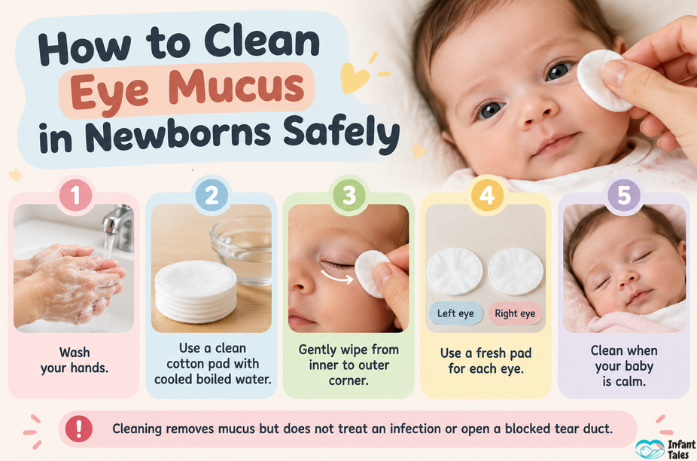
Step 1: Wash Your Hands
Start by washing your hands with soap and water.
Dry them with a clean towel before touching your baby’s face.
Step 2: Prepare a Clean Cotton Pad
Take a fresh cotton pad or clean, soft gauze and moisten it with cooled boiled water.
Make sure the water is comfortably lukewarm, never hot.
Step 3: Gently Wipe the Eye
Carefully wipe from the inner corner of the eye, near the nose, toward the outer corner.
Use one gentle movement rather than rubbing back and forth.
If dried mucus is stuck to the eyelashes, soften it with the damp pad before wiping.
Step 4: Use a Fresh Pad Each Time
Never reuse a dirty cotton pad.
Use a separate pad for each eye, even if only one looks sticky.
Step 5: Let Your Baby Relax
Try cleaning your baby’s eyes when they’re calm, perhaps after feeding or during a quiet diaper change.
There’s no need to scrub until every tiny trace disappears.
Important: Cleaning removes mucus but doesn’t treat an infection or open a blocked tear duct.
Why Does My Newborn’s Eye Mucus Keep Coming Back?
If you clean your baby’s eyes and notice sticky discharge returning a few hours later, a blocked tear duct may be the reason.
When the tear drainage passage is blocked, tears and mucus continue to collect around the eyes. Cleaning removes the discharge temporarily but doesn’t clear the blockage. That’s why your baby’s eyelashes may become sticky again, especially after sleeping.
Most blocked tear ducts open naturally as babies grow. Your pediatrician may recommend gentle cleaning or tear duct massage to help manage the symptoms.
However, if the mucus becomes thicker or your baby’s eyes appear red or swollen, seek medical attention promptly to rule out an infection.
Can Tear Duct Massage Help Newborn Eye Mucus?
Sometimes, your pediatrician may suggest tear duct massage for a confirmed blockage.
The technique involves gentle pressure near the tear drainage area beside the nose.
It may help encourage drainage in certain babies, although many blocked ducts open without massage.
Because newborn eyes are so delicate, ask your baby’s doctor to demonstrate the correct method before trying it yourself.
Never press directly on the eyeball or massage an area that is red, painful, or swollen.
What Not to Put in Your Newborn’s Eyes
When parents notice mucus in eyes newborn babies develop, family members sometimes suggest traditional home remedies.
While these suggestions may come from a place of love, it’s important to be careful.
Avoid putting breast milk, honey, herbal preparations, homemade saltwater, or leftover eye drops directly into your baby’s eyes without medical advice.
Breast milk has been studied for infant eye discharge, but it is not an established substitute for treating newborn eye infections.
Honey and homemade preparations may introduce contamination or cause irritation.
And antibiotic eye drops should only be used when prescribed for your baby.
When Should You Call a Doctor?
Because newborn eye infections can progress quickly, contact your healthcare provider about new or persistent discharge.
Seek urgent medical attention if your baby has:
- Redness in the white part of the eye
- Puffy, red, or swollen eyelids
- Thick yellow or green pus
- A painful or swollen area beside the nose
- Cloudiness over the eye’s clear surface
- Difficulty opening the eye due to swelling
- Unusual sensitivity to light
- Poor feeding or unusual sleepiness
A temperature of 38°C (100.4°F) or higher in a baby under three months requires immediate medical evaluation.
The National Eye Institute also recommends contacting a doctor immediately when newborns have symptoms of pink eye.
What Happens When You Take Your Newborn to the Doctor?
If your newborn has persistent eye mucus, your pediatrician will examine the eyes for redness, swelling, discharge, and signs of a blocked tear duct. They may also ask when the symptoms started and whether one or both eyes are affected.
If an infection is suspected, the doctor may take a sample of the discharge for testing. Treatment depends on the cause: blocked tear ducts often need gentle cleaning and monitoring, while infections may require prescription antibiotics or other medical treatment.
How Long Does Eye Mucus Last in Newborns?
How long eye mucus in newborns lasts depends on its cause. If your baby has a blocked tear duct, sticky discharge may come and go for several months. Most uncomplicated blocked tear ducts open naturally within the first year.
If the blockage continues, an eye specialist may recommend a procedure called tear duct probing. However, eye infections need prompt medical care, and recovery depends on the type of infection and treatment.
Can You Prevent Sticky Eyes in Newborns?
Blocked tear ducts cannot always be prevented because they are related to your baby’s developing tear drainage system. However, good hygiene can help reduce irritation and the spread of germs.
Here are a few simple tips:
- Wash your hands before touching or cleaning your baby’s eyes.
- Use clean cotton pads and separate towels for your baby.
- Keep cigarette smoke, dust, and strong perfumes away.
- Prevent shampoo and soap from entering your baby’s eyes during baths.
- Avoid close contact with anyone who has a contagious eye infection.
These simple habits can help protect your newborn’s delicate eyes, although they cannot prevent every cause of eye discharge.
Frequently Asked Questions
1. Why does my newborn wake up with sticky eyes?
Tears and mucus can collect while your baby sleeps, particularly if a tear duct is blocked. If the discharge keeps returning, speak with your pediatrician.
2. Is yellow eye mucus normal in a newborn?
Yellow mucus may occur with a blocked tear duct, but it can also indicate infection. Newborns with yellow discharge should be assessed by a healthcare provider.
3. Can a newborn have eye mucus without an infection?
Yes. Blocked tear ducts can cause watery eyes and sticky discharge without an infection. A doctor can help confirm the cause.
4. Can breast milk cure sticky eyes in newborns?
Breast milk is not a reliable treatment for newborn eye infections. Avoid using it as an eye remedy without your baby’s doctor’s guidance.
5. Can blocked tear ducts affect my baby’s vision?
An uncomplicated blocked tear duct usually doesn’t damage vision. However, infections and other eye conditions can affect eye health and require timely treatment.
Final Thoughts
Noticing eye mucus in newborn babies can be worrying, but it’s often caused by a blocked tear duct that improves naturally as your baby grows. Gentle cleaning and good eye hygiene can help keep your little one comfortable. However, redness, swollen eyelids, or thick discharge may indicate an infection that needs prompt medical attention.
As a parent, paying attention to small changes in your baby’s eyes is important. If the discharge keeps returning or something doesn’t seem right, consult your pediatrician. With proper care and timely medical guidance, you can help keep your newborn’s delicate eyes healthy and protected.
At Infant Tales, we are here to make those early parenting days feel a little less confusing, with practical information and gentle support for every new mom.
Medical Disclaimer
This article is for educational purposes only and is not a substitute for professional medical advice, diagnosis, or treatment. Always consult your baby’s pediatrician about newborn eye discharge or concerning symptoms.