Written with care and real-life understanding by a caring mom at Infant Tales
The first time I noticed a slight change in my baby temperature, I panicked more than I’d like to admit. I kept touching his forehead, checking his hands, and wondering, “Is this normal? Should I be worried?” If you are here, chances are you’ve felt that same wave of concern.
As moms, we notice every tiny change. And when it comes to our baby’s health, even a small rise or drop in temperature can feel overwhelming. The truth is, understanding your baby’s temperature doesn’t have to be confusing or scary. With the right knowledge and a little reassurance, you can handle it calmly and confidently.
Let me gently guide you through what I’ve learned, both from experience and from understanding how our babies’ bodies work.
Understanding Baby Temperature: What’s Considered Normal?
One of the first things I learned as a mom is that a baby’s body works very differently from ours. Their temperature can change more quickly, and that doesn’t always mean something is wrong.
What Is a Normal Temperature for a Baby?
A normal baby temperature usually falls between 36.5°C to 37.5°C (97.7°F to 99.5°F). But here’s something many new moms don’t realize—this range can vary slightly depending on how you measure it.
Normal Readings Based on Method
For example, the normal rectal temperature for baby is usually between 36.6°C to 38°C, while underarm readings tend to be a little lower. Forehead thermometers can also show small variations depending on the surrounding temperature.
In my early days, I used to worry if the number wasn’t exactly “perfect.” But over time, I understood that these small differences are completely normal and nothing to stress about.
Why Baby Temperature Changes So Easily
Babies are still learning how to adjust to the world outside the womb. Their bodies are delicate and sensitive, which means their temperature can change quite quickly and that’s completely normal.
This was something I didn’t understand at first, but once I did, it made a huge difference in how I responded. Newborns are not able to regulate their body temperature well. As they grow, usually around 3 to 6 months, their bodies slowly start improving, and over the first year, they become better at maintaining a stable temperature.
So if your baby feels warm one moment and slightly cool the next, it doesn’t always mean something is wrong it’s simply their body adjusting.
There are also many everyday factors that can affect your baby’s temperature. Room temperature plays a big role, and even small changes can make your baby feel warmer or cooler. Overdressing or underdressing, feeding, and even crying or physical activity can cause their body temperature to shift.
Once I understood these little things, I stopped overthinking every small change and felt much more calm and confident as a mom.
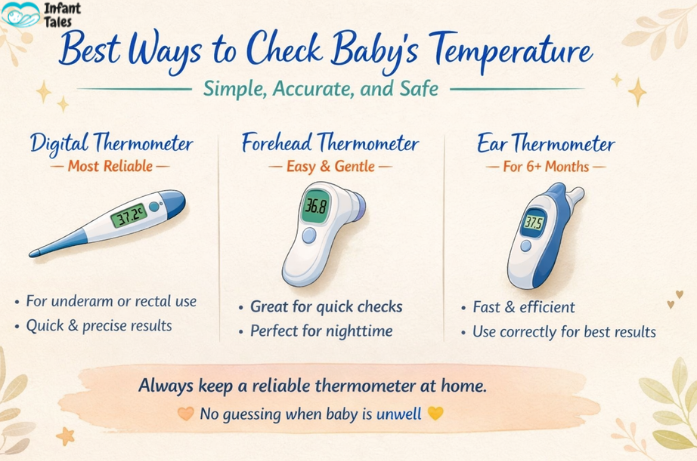
Best ways to check temperature
Knowing how to check baby’s temperature properly is one of the most important skills every parent should feel confident about.
I used to rely on touching my baby’s forehead, but honestly, that’s not always accurate. According to experts from Kids Health, using a proper thermometer gives the most reliable results.
1. Digital thermometer (most reliable)
A digital thermometer is the most dependable option for checking your baby’s temperature.
It can be used under the arm or rectally and gives quick, accurate results, which is especially helpful when you’re feeling anxious and need clarity fast.
2. Forehead thermometer
A forehead thermometer is very easy and gentle to use. It works well for quick checks, especially at night when you don’t want to disturb your baby too much. It’s a convenient option for regular monitoring.
3. Ear thermometer
An ear thermometer is suitable for babies older than 6 months. It provides fast readings, but it needs to be used correctly to ensure accuracy.
Always keep one reliable thermometer at home. When your baby feels unwell, you don’t want to be guessing.
Understanding Fever in Babies
Fever is one of the biggest concerns for parents. I still remember the first time I saw the thermometer cross 38°C, I immediately imagined the worst and felt a rush of panic. It’s a very natural reaction, especially when you’re caring for your little one.
A temperature of 38°C (100.4°F) or higher is considered a fever in babies. But what I slowly learned is that fever itself is not always something to fear. In many cases, it’s actually your baby’s body working hard to fight off an infection.
Fever can happen for several common reasons. Sometimes it’s due to a viral infection like a cold or baby flu. Other times, it may come after vaccinations or even minor illnesses. In some situations, overheating, like being overdressed or in a warm room, can also cause a rise in temperature.
The most important thing to remember is this: not every fever needs panic, but it does need your attention and gentle care. According to guidance from American Academy of Pediatrics, fever is often a natural response and not always dangerous when monitored properly.
Baby Red Cheeks but No Temperature – What Does It Mean?
This is something I remember searching for many times, especially during late nights, baby red cheeks no temperature. It can feel confusing because red cheeks often look like a sign of fever, but that’s not always the case.
In many situations, red cheeks are completely harmless. It can happen during teething, in warm weather, after your baby has been active, or simply because of sensitive skin. Babies’ skin reacts quickly, and sometimes even small changes can show up on their cheeks.
If your baby is playful, feeding well, and their temperature is normal, there’s usually no need to worry. These little changes often settle on their own.
However, there are times when you may want to observe a bit more closely. If your baby fussy along with red cheeks or other symptoms, it may be worth monitoring them more carefully. If the redness starts spreading like a rash, if your baby becomes unusually fussy, or if a fever develops later, it’s better to keep an eye on things and seek advice if needed.
Most importantly, trust what you see and feel as a parent not just your worries.
Signs That Your Baby Is Comfortable (Even with Slight Temperature Changes)
Sometimes we focus too much on numbers and forget to observe our baby.
Signs your baby is okay:
- Playing or responding normally
- Feeding well
- Sleeping comfortably
- Normal breathing
Even if the baby temperature is slightly above or below average, these signs can reassure you.
When Should You Be Concerned?
As much as we want to stay calm, there are times when medical attention is important.
- Baby is under 3 months and has a fever
- Temperature is above 38°C (100.4°F)
- Fever lasts more than 48 hours
- Baby is unusually sleepy or unresponsive
- Refusing feeds
- Showing signs of dehydration
There were moments when the thermometer didn’t show anything serious, but something just didn’t feel right. And every time I trusted that instinct, I was glad I did.
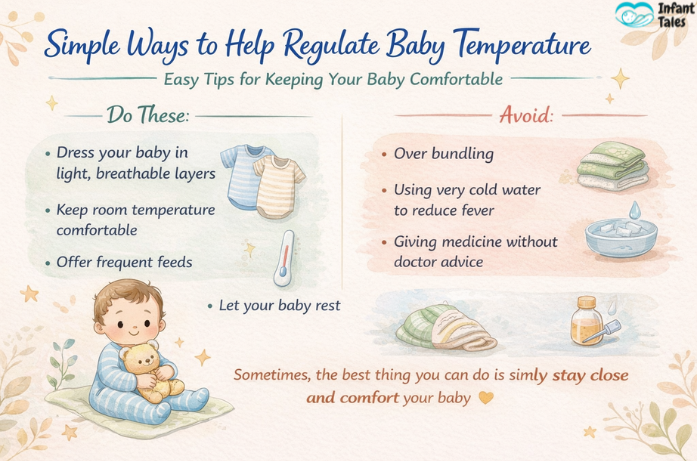
Simple Ways to Help Regulate Baby Temperature
Keeping your baby comfortable doesn’t require complicated steps.
- Dress your baby in light, breathable layers
- Keep the room temperature comfortable
- Offer frequent feeds
- Let your baby rest
What to avoid:
- Over bundling
- Using very cold water to reduce fever
- Giving medicine without doctor advice
Sometimes, the best thing you can do is simply stay close and comfort your baby.
Dressing Your Baby Right (A Small Thing That Makes a Big Difference)
This is something I truly learned the hard way, overdressing can actually make your baby too warm instead of comfortable. As new moms, we often worry they might feel cold, so we add extra layers without realizing it can cause overheating.
A simple rule that helped me a lot is this: dress your baby in one more layer than what you are wearing. It’s an easy way to keep things balanced without overthinking.
To check if your baby is comfortable, gently feel the back of their neck instead of their hands or feet. If it feels sweaty, your baby may be too warm. If it feels cool, you can add a light layer.
This small habit made a big difference for me and helped avoid so many unnecessary worries about my baby’s temperature.
How Weather Impacts Baby Temperature
Your baby’s body reacts to the environment more than you might expect.
In hot weather:
- Risk of overheating
- Baby may appear flushed or sweaty
In cold weather:
- Hands and feet may feel cold
- Baby may need extra layering
Always adjust clothing and environment based on the season, not just routine.
Emotional Side of Monitoring Baby Temperature
Let’s be honest, this isn’t just about health, it’s also about emotions.
There were nights I barely slept, waking up again and again to check if everything was okay. It’s exhausting, and sometimes overwhelming.
But here’s what I want to tell you, from one mom to another:
You don’t need to be perfect. You just need to be present.
Final Thoughts: You Know Your Baby Best
Understanding baby temperature is not about memorizing numbers, it’s about learning your baby’s patterns, trusting your instincts, and staying calm.
Most temperature changes are normal. And when something isn’t, you’ll notice the difference. Take a deep breath.
You are doing an incredible job. Your care, your attention, and your love are more powerful than any thermometer.
And your baby? They are lucky to have you
If this helped you, save it for later and share it with another mom, Explore more caring and helpful parenting guides on Infant Tales.
FAQs
1. What is a normal baby temperature?
A normal baby temperature usually ranges between 36.5°C to 37.5°C. Slight variations are normal depending on the method used to measure it.
2. When should I worry about my baby’s fever?
You should be concerned if your baby’s temperature reaches 38°C or higher, especially if they are under 3 months old or showing unusual symptoms like poor feeding or extreme sleepiness.
3. How often should I check my baby’s temperature?
Only check your baby’s temperature when they feel unwell or warm. Checking too frequently can create unnecessary anxiety.
4. Can teething cause fever in babies?
Teething may cause a slight rise in temperature, but it usually does not cause a high fever. If the temperature is high, it may be due to another reason.
5. Why does my baby feel warm but has no fever?
Babies can feel warm due to weather, activity, or overdressing. If the thermometer shows a normal reading and your baby seems comfortable, it’s usually nothing to worry about.
Disclaimer: This article is for informational purposes only and based on personal experience. It is not a substitute for professional medical advice. Always consult your doctor if you have concerns about your baby’s health.