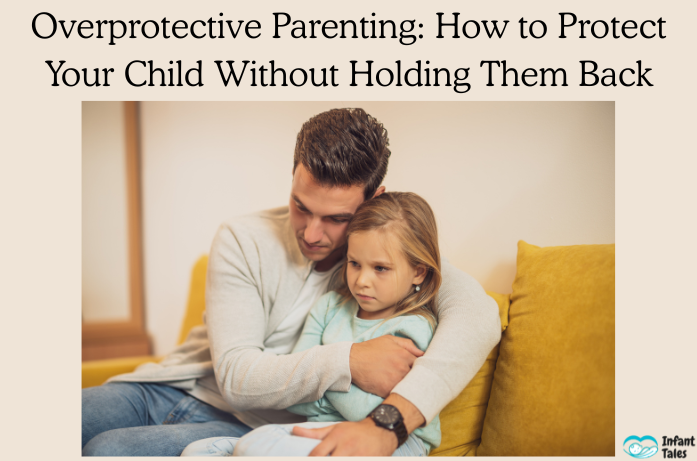
Written with love by a caring mom at Infant Tales
As parents, protecting our children feels like the most natural thing in the world. From the moment they are born, we become their safe place, their protector, their everything. But sometimes, without even realizing it, this deep love can slowly turn into overprotective parenting.
If you’ve ever found yourself constantly worrying, stepping in too quickly, or trying to prevent every little struggle your child faces, please know, you’re not alone. I’ve been there too. And the truth is, it doesn’t make you a “bad” parent. It simply means you care deeply.
But here’s something gentle and important to understand: children don’t just need protection, they also need space to grow.
In this article, we’ll talk about what overprotective parenting really is, how it affects your child, and how you can find a healthy balance, without guilt, fear, or confusion.
What Is Overprotective Parenting?
Overprotective parenting is when parents try to control, monitor, or protect their child too much, often to keep them safe from harm, failure, or disappointment.
While this comes from love, it can sometimes:
- Limit a child’s independence
- Reduce their confidence
- Make them feel unsure of their own abilities
For example, stepping in every time your child struggles, making all decisions for them, or constantly worrying about their safety, even in safe situations, can be signs of overprotection. Research also supports this. According to a study published on the overprotective parenting can affect a child’s emotional development and independence over time.
The goal is not to stop protecting your child. The goal is to protect them in a way that helps them grow stronger, not dependent, while following the principles of gentle parenting.
Why Do Parents Become Overprotective?
Understanding why this happens can help you reflect without feeling guilty.
1. Pure Love and Fear
When you love your child deeply, the idea of them getting hurt feels unbearable. So naturally, you try to prevent it.
2. Your Own Childhood Experiences
If you went through struggles, pain, or lack of support growing up, you may try extra hard to make sure your child never feels the same.
3. Fear of the Modern World
With so much information about dangers, it’s easy to feel like the world isn’t safe enough for your child.
4. Pressure to Be a “Perfect Parent”
Social media and society often make us feel like we must do everything perfectly, which leads to overcontrol.
Take a deep breath here, you are not wrong for feeling this way. Awareness is the first step toward change, especially if you’re also wondering why your baby is so fussy so often.
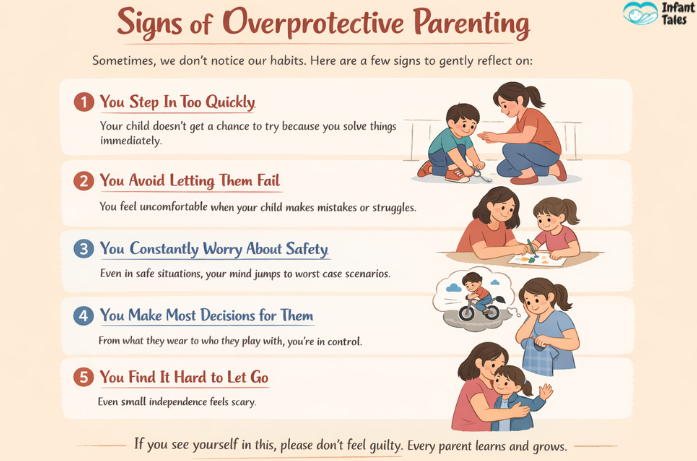
Signs of Overprotective Parenting
Sometimes, we don’t notice our habits. Here are a few signs to gently reflect on:
1. You Step In Too Quickly
Your child doesn’t get a chance to try because you solve things immediately.
2. You Avoid Letting Them Fail
You feel uncomfortable when your child makes mistakes or struggles.
3. You Constantly Worry About Safety
Even in safe situations, your mind jumps to worst-case scenarios.
4. You Make Most Decisions for Them
From what they wear to who they play with, you’re in control.
5. You Find It Hard to Let Go
Even small independence feels scary.
If you see yourself in this, please don’t feel guilty. Every parent learns and grows.
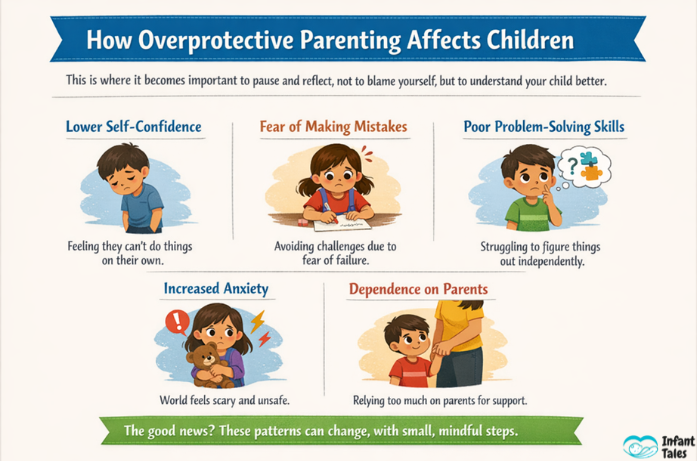
How Overprotective Parenting Affects Children
This is where it becomes important to pause and reflect, not to blame yourself, but to understand your child better.
1. Lower Self-Confidence
If children are always guided, they may feel they can’t do things on their own.
2. Fear of Making Mistakes
They may start avoiding challenges because they’re afraid to fail.
3. Poor Problem-Solving Skills
They don’t get enough chances to figure things out independently.
4. Increased Anxiety
Constant warnings can make the world feel scary to them.
5. Dependence on Parents
They may rely too much on you for decisions and support.
Healthy Protection vs Overprotection
| Healthy Protection | Overprotective Parenting |
| Teaching safety rules | Controlling every situation |
| Guiding instead of controlling | Preventing all risks |
| Allowing age-appropriate freedom | Not allowing failure |
| Supporting emotional needs | Doing everything for your child |
Balance is where confidence grows.
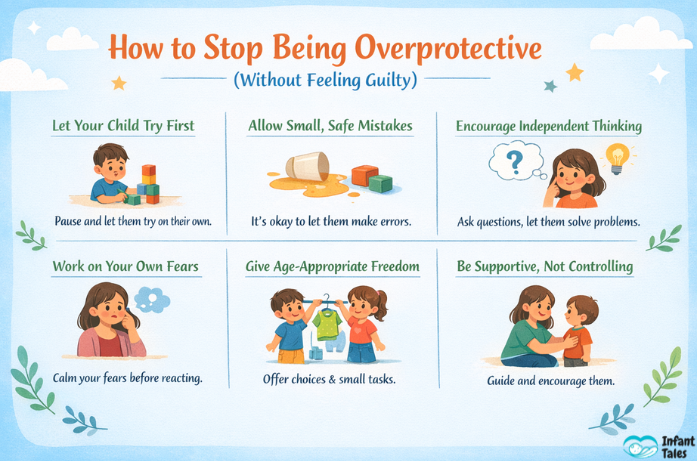
How to Stop Being Overprotective (Without Feeling Guilty)
1. Let Your Child Try First
Before stepping in, take a small pause and simply observe. Give your child the chance to try things on their own, even if it takes longer or doesn’t go perfectly.
Let them solve small problems, attempt tasks, and learn through their own efforts. Even when they struggle, they are gaining confidence and valuable life skills.
2. Allow Small, Safe Mistakes
Mistakes are a natural and important part of learning. Instead of quickly stepping in to fix everything, allow your child to experience small, safe failures.
Rather than saying “Let me do it,” gently encourage them by saying, “You can try, I’m here if you need help.” This builds trust and helps them believe in their abilities.
3. Encourage Independent Thinking
Instead of giving immediate answers, start asking simple questions that make your child think. This helps them develop problem-solving skills and confidence.
Questions like “What do you think we should do?” or “How can you fix this?” encourage them to explore solutions on their own while knowing you’re there to support them.
4. Work on Your Own Fears
Sometimes, our reactions come more from our fears than actual danger. It’s helpful to pause and reflect before responding to situations.
Ask yourself if the situation is truly risky or if it’s just your anxiety speaking. This small shift can help you respond more calmly and thoughtfully.
5. Give Age-Appropriate Freedom
As children grow, supporting milestones like reading skills helps build their confidence and independence.
Start by giving your child small choices and responsibilities that match their age. This helps them feel capable and builds independence gradually.
Simple things like choosing their clothes, helping with small tasks, or making basic decisions can go a long way in building confidence.
6. Be Supportive, Not Controlling
Your role as a parent is not to remove every obstacle your child faces. Instead, it’s to guide them through challenges and support them along the way.
Be present, offer encouragement, and let them know you’re there when needed. This kind of support helps raise strong, confident, and independent children.
Letting Go Without Feeling Like a Bad Parent
This is one of the most emotional and difficult parts of parenting, and it’s completely normal to feel this way.
Letting go does not mean:
- You care any less
- You are failing to protect your child
- You are doing something wrong
Instead, it means:
- You trust your child’s abilities
- You believe they can learn and grow
- You are giving them the chance to become strong and independent
And truly, that is one of the most powerful and loving things a parent can do.
Raising Confident and Independent Children
When you slowly move away from overprotective parenting, your child starts to:
- Believe in themselves
- Try new things
- Handle challenges better
- Become more independent
And you start to feel more peaceful too.
Final Thoughts: Love, Trust, and Let Them Grow
At the heart of overprotective parenting is love, and that is something truly beautiful. But parenting is not about controlling every step your child takes. It’s about guiding them with care, supporting them with love, and trusting them enough to grow. When you allow your child to explore, make small mistakes, and learn from them, you are helping them become strong and confident in their own way.
Always remember, mama you are their safe place, their comfort, and their biggest support. But you don’t have to be their shield all the time. Giving them space to grow is also a form of love. You are doing better than you think, and your child is learning something wonderful from you every single day.
If this article helped you, share it with another parent who might need it. Explore more simple and helpful parenting tips on Infant Tales we are here for you every step of the way.
FAQs
1. What is overprotective parenting?
Overprotective parenting is when parents try to control or protect their child too much, often limiting their independence and ability to learn from experiences.
2. Is being overprotective harmful to children?
Yes, it can affect a child’s confidence, decision-making skills, and ability to handle challenges on their own if done excessively.
3. How can I stop being an overprotective parent?
Start with small steps like allowing your child to try things independently, letting them make safe mistakes, and gradually giving them more freedom.
4. How do I know if I’m too protective?
If you often step in quickly, avoid letting your child fail, or feel constant worry even in safe situations, you might be overprotective.
5. Can I still protect my child without overdoing it?
Absolutely. You can teach safety, guide them, and support them emotionally while still allowing them to grow and become independent.
Disclaimer: This article is for general information only. For specific concerns about your child, please consult a pediatrician or expert.