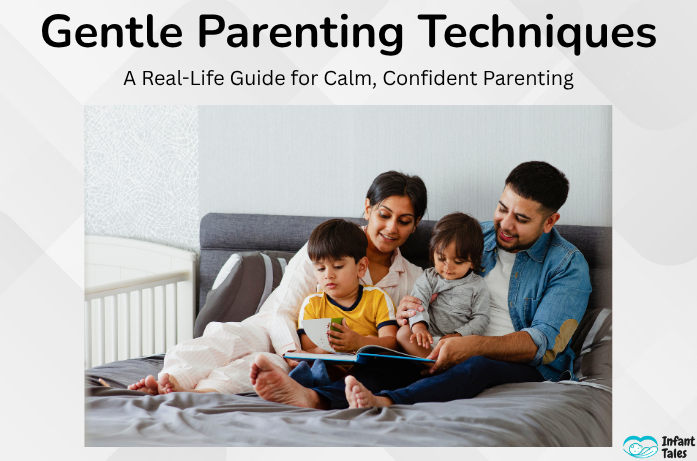
Written with love by a caring mom at Infant Tales
Parenting rarely feels simple. You try your best every day, yet some moments still feel overwhelming. There are days when you question your decisions and wonder if you are doing enough for your child. When many parents first hear about gentle parenting techniques, they often feel two emotions at the same time hope and doubt. It sounds beautiful, but also a little confusing in real life.
Some people say it completely transforms parenting, while others quickly say gentle parenting doesn’t work. Hearing such different opinions can make you unsure about what to believe. But this confusion is completely normal. Gentle parenting is often misunderstood, especially when we only hear about it without truly seeing how it works in daily life.
Understanding Gentle Parenting in Simple Terms
Gentle parenting is not about being soft or letting children do whatever they want. It is about raising your child with empathy, respect, and clear boundaries. You guide your child with calm authority instead of controlling them through fear.
At its core, gentle parenting focuses on connection first. You begin by understanding your child’s emotions rather than correcting their behavior immediately. This small shift creates a strong emotional bond.
The foundation of this approach is built on empathy, respect, and consistency. These three things work together to create a safe and supportive environment for your child to grow. You can also explore a deeper understanding of child behavior and emotional development through this helpful guide from the National Institutes of Health, which explains how children learn to regulate emotions over time.
When you understand how gentle parenting affects kids, you start to see that children feel more secure. They learn to express their emotions instead of hiding them, and slowly develop self-control in a natural way.
Why Gentle Parenting Matters
Children are not born knowing how to handle big emotions. They learn everything by watching how we respond to situations. This is why your reaction plays such an important role.
When a child screams, refuses to listen, or acts out, it usually comes from feeling overwhelmed. Understanding why your baby fussy can help you respond with more empathy. It is not about being “bad,” but about not knowing how to manage emotions yet.
If we react with anger, children learn anger. But when we respond with calmness, they begin to learn emotional control. This is one of the most powerful lessons we can teach. In fact, experts at the Cleveland Clinic also explain that gentle parenting focuses on empathy, respect, and healthy boundaries, which support a child’s emotional growth in the long run
Gentle parenting helps children understand their feelings, communicate better, and build trust. These are long-term skills that matter far more than immediate obedience.
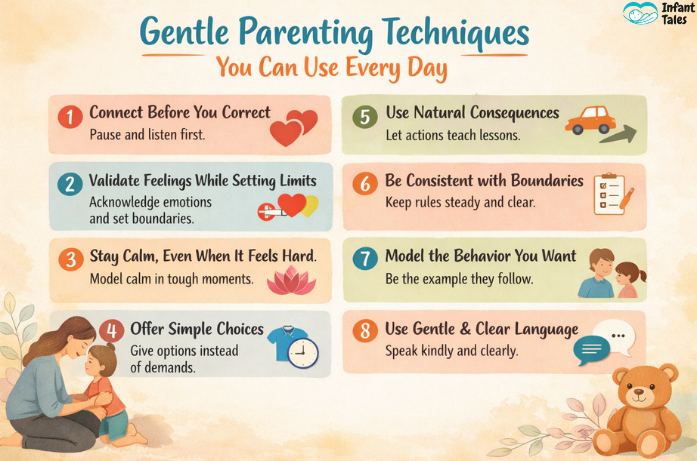
Gentle Parenting Techniques You Can Use Every Day
You do not need to change everything at once. Small, consistent changes can make a big difference. These simple gentle parenting techniques can help you handle daily challenges more calmly. You can also learn the best way to discipline toddler using gentle parenting principles.
1. Connect Before You Correct
Before correcting your child’s behavior, take a moment to connect with them emotionally. This helps them feel understood instead of judged.
You can pause and say something simple like, “I can see you’re upset.” This small step creates trust and makes your child more open to listening.
When children feel heard, their resistance naturally reduces. Connection always makes discipline more effective.
2. Validate Feelings While Setting Limits
One of the most important parts of gentle parenting discipline is allowing feelings while guiding behavior. Children need to know their emotions are safe.
For example, if your child throws something, you can say, “I know you’re angry, but we don’t throw things.” This keeps the boundary clear without dismissing their feelings.
Over time, children learn that emotions are okay, but actions still have limits. This balance builds emotional intelligence.
3. Stay Calm, Even When It Feels Hard
There will be moments when your patience feels tested. Your child may not listen, and you may feel frustrated or tired.
In those moments, staying calm becomes very important. Your calm behavior helps your child feel safe, which makes it easier for them to calm down too.
Children learn by watching you. If you stay steady during stressful moments, they slowly learn how to manage their own emotions in the same way, just as they develop through everyday preschool activities.
4. Offer Simple Choices
Children naturally want independence, and when they feel forced, they tend to resist more. Offering choices gives them a sense of control.
Instead of giving direct commands, try saying, “Do you want to wear this or that?” This simple change reduces power struggles.
It allows your child to feel involved while you still guide the situation. This makes daily routines smoother and less stressful.
5. Use Natural Consequences
Instead of punishment, allow your child to learn through natural outcomes. This helps them understand the result of their actions.
If a toy is thrown, calmly remove it and explain why. Say something like, “The toy is not safe when thrown.”
This approach teaches responsibility without fear. Children understand better when they experience consequences naturally.
6. Be Consistent with Boundaries
Children feel more secure when rules are consistent. When boundaries change often, it becomes confusing for them.
Decide your limits and follow them calmly every time. This consistency helps your child understand expectations clearly.
Over time, they begin to follow rules not because they are forced, but because they understand them.
7. Model the Behavior You Want
Children learn more from what we do than what we say. Your actions become their biggest example.
If you want your child to be calm and respectful, show those behaviors yourself. Even during stressful moments, your response matters.
The way you handle situations teaches your child how to handle theirs.
8. Use Gentle and Clear Language
The way we speak to our children has a strong impact on how they respond. Tone matters just as much as words.
Instead of shouting from a distance, move closer and speak calmly. Use simple and clear sentences that your child can understand.
When children feel respected, they are more likely to cooperate without resistance.
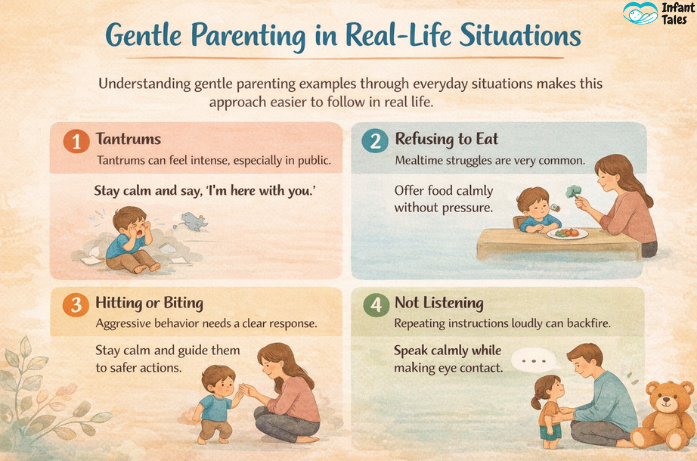
Gentle Parenting in Real-Life Situations
Understanding gentle parenting examples through everyday situations makes this approach easier to follow in real life.
1. Tantrums
Tantrums can feel intense, especially in public places. It can be tempting to react quickly, but staying calm is more helpful.
Sit near your child and say, “I’m here with you.” Your presence gives them a sense of safety.
When children feel safe, they are able to process their emotions and calm down more easily.
2. Refusing to Eat
Mealtime struggles are very common in young children. Forcing them to eat often creates more resistance.
Instead, offer food without pressure. Let your child decide how much they want to eat.
This helps build a healthier relationship with food and reduces stress during meals.
3. Hitting or Biting
Aggressive behavior needs a clear response, but it does not need anger. Staying calm is key.
Say, “I won’t let you hit,” and guide your child toward safer behavior. This teaches boundaries without fear.
These simple gentle parenting examples show how discipline and kindness can work together.
4. Not Listening
When your child is not listening, repeating instructions loudly often does not help. It can even create more resistance.
Instead, move closer, make eye contact, and speak calmly. This builds connection and improves communication.
Children respond better when they feel seen and heard.
How to Start Without Feeling Overwhelmed
If you are wondering how to gentle parent, remember that you do not need to change everything at once. Start with small steps.
Focus on one habit, like staying calm or listening more carefully. Over time, these small efforts become part of your routine.
Mistakes will happen, and that is okay. Parenting is a learning process for both you and your child.
When you lose patience, take a moment to reconnect. Apologizing teaches your child respect and emotional awareness.
When It Feels Difficult
There will be days when nothing seems to work. Your child may not listen, and you may feel completely exhausted.
In those moments, it is easy to think gentle parenting doesn’t work or feel like saying “goodbye gentle parenting.”
Even those relatable gentle parenting memes do not show the full reality. Parenting is not perfect, and it is not meant to be.
Gentle parenting focuses on long-term growth. The results may not be immediate, but they are meaningful and lasting.
Long-Term Benefits of Gentle Parenting
When practiced consistently, gentle parenting helps children grow emotionally strong. They learn to understand and express their feelings.
They also develop better communication skills and stronger relationships. These early foundations support future milestones like reading skills as they continue to grow.
Understanding how gentle parenting affects kids can help you stay motivated, even on the hardest days.
Final Thoughts
Gentle parenting techniques are not about raising perfect children. They are about raising children who feel safe, loved, and understood.
It is a journey where both you and your child are learning together. Some days will feel easy, and others will feel challenging. Stay consistent, stay patient, and keep showing up with love.
You are doing better than you think, and your efforts truly matter
If this article helped you feel a little more confident in your parenting journey, share it with another mom who might need it too And don’t forget to explore more helpful, real-life parenting tips on Infant Tales we are in this together, one gentle step at a time.
FAQs
1. What are gentle parenting techniques?
They are ways of raising children with empathy, respect, and clear boundaries instead of punishment.
2. Does gentle parenting really work?
Yes, it works over time by helping children develop emotional skills and a strong bond with parents.
3. Is gentle parenting too soft?
No, it includes discipline, but in a calm and respectful way.
4. How can I start gentle parenting?
Start small by staying calm, listening, and setting simple boundaries.
5. What if I lose patience?
It’s completely normal. You can always reconnect and try again. Parenting is about progress, not perfection.
Disclaimer: This article is written for informational purposes only and is based on personal parenting experiences. Every child is unique, so what works for one family may not work for another. Always trust your instincts as a parent and seek professional guidance if you have specific concerns about your child’s behavior or development.