Written with care by a caring mom at Infant Tales
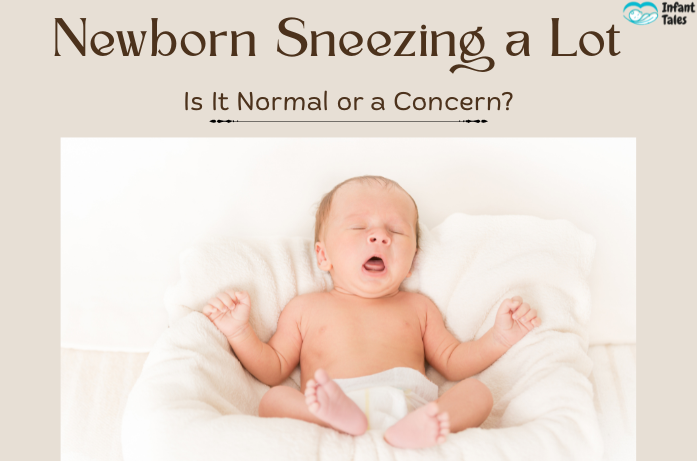
The first few days with a newborn are often spent constantly gazing at them. You begin to notice their every little movement, from the way they stretch to the tiny sounds that escape their lips while they sleep. It is a time of learning and adjustment, and naturally, even the smallest details can give you pause for thought. One thing that often surprises parents is noticing their newborn sneezing a lot.
I still remember the first time my baby sneezed several times in quick succession; I froze and began watching him intently, wondering to myself whether everything was alright or if I should be concerned.
Almost every parent notices frequent sneezing in those early days. The comforting truth is that in most cases, this is completely normal. Your baby has just entered a brand-new world filled with air, light, dust, and different temperatures. Sneezing is simply one of the ways their tiny body learns to adjust and protect itself.
Let’s gently explore what’s really happening, what’s normal, and when you might need to pay a little extra attention.
Is It Normal for Newborns to Sneeze?
Yes, it is absolutely normal. In fact, newborns tend to sneeze much more often than older babies or adults, and there is a good reason for that.
Sneezing is a natural reflex that helps protect your baby’s delicate airways. Since newborns have very small and sensitive nasal passages, even the tiniest particle, like dust, lint, or even a little milk residue, can trigger a sneeze.
This reflex helps your baby:
- Clear their nose
- Remove irritants from the air
- Keep their breathing passages open
So if you notice your baby sneezing several times a day, it usually isn’t something to worry about. It’s simply your baby’s body doing exactly what it is designed to do, keeping itself safe and comfortable. You can read more about how sneezing protects the body here on the Centers for Disease Control and Prevention (CDC) website.
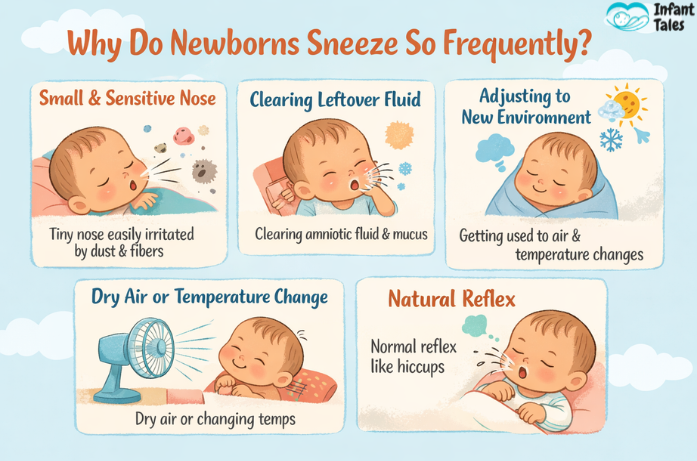
Why Do Newborns Sneeze So Frequently?
Understanding the reasons behind frequent sneezing can bring a lot of peace of mind. There are several gentle and completely normal explanations for why this happens.
1. Small and Sensitive Nasal Passages
A newborn’s nose is incredibly tiny and delicate. Because of this, even a small amount of dust, pet hair, or fabric fibers can irritate the lining and cause sneezing.
Their sensitivity is much higher than ours, which means they react more quickly to even the smallest triggers.
2. Clearing Leftover Fluid After Birth
After birth, babies may still have traces of amniotic fluid or mucus in their nasal passages. Sneezing helps clear this out naturally.
This is especially common during the first few weeks, and it gradually reduces as your baby’s body adjusts.
3. Adjusting to the Outside World
Inside the womb, your baby was in a warm, fluid-filled environment. After birth, they suddenly experience air, different temperatures, and new surroundings.
Sneezing is one of the ways their respiratory system adapts to these changes. It’s a normal and healthy part of that transition.
4. Dry Air or Temperature Changes
Air conditioning, fans, or even seasonal weather changes can sometimes dry out or irritate your baby’s nose.
You might notice more sneezing in certain rooms or at specific times of the day. This doesn’t mean something is wrong, it just means your baby’s nose is reacting to the environment.
5. Natural Reflex Behavior
Just like hiccups, stretching, or sudden movements, sneezing is a natural reflex in newborns.
Many parents notice that this happens quite often in the beginning, and over time, it becomes less frequent as the baby grows.
You can explore more about newborn respiratory responses in this research article available on PubMed Central (PMC)
Newborn Sneezing a Lot: When Is It Completely Normal?
If your baby is sneezing but otherwise seems calm, comfortable, and healthy, there is usually no reason to worry.
You can feel reassured if your baby:
- Feeds well and regularly
- Sleeps peacefully
- Has no fever
- Breathes comfortably
- Is alert and active when awake
In these situations, sneezing is simply a part of normal development. It doesn’t require any treatment or special care.
Sometimes, just observing your baby’s overall behavior can help you feel much more at ease.
When Should You Be Concerned?
While sneezing is usually harmless, there are times when it’s important to pay closer attention.
If your baby shows additional symptoms along with sneezing, it’s always better to consult your pediatrician.
Watch for Signs Like:
- Fever
- Difficulty or fast breathing
- Continuous coughing
- Refusing to feed
- Unusual sleepiness or low activity
These signs may indicate a cold, infection, or another condition that needs medical attention. Learn how to recognize the symptoms of baby flu in young infants.
Remember, it’s always okay to reach out to your doctor if something doesn’t feel right, especially if your baby fussy along with frequent sneezing.
Sneezing With Congestion
Sometimes sneezing may come along with a blocked nose or visible mucus.
Mild congestion can be normal, especially in newborns, but it’s important to observe how your baby is handling it.
If your baby is still feeding well and breathing comfortably, it’s usually not serious. But if congestion worsens or affects feeding, it’s best to seek advice.
Do Newborns Sneeze More in the First Weeks?
Yes, many parents notice that sneezing happens more frequently in the first few weeks after birth.
During this time:
- Your baby is learning to breathe air
- Their immune system is still developing
- Their reflexes are more active
This phase is all about adjustment. As your baby grows and their body becomes more familiar with the environment, the frequency of sneezing usually decreases naturally.
Sneezing During or After Feeding
It’s quite common for babies to sneeze during or after feeding, and this can feel a little concerning at first.
But in most cases, it’s completely harmless.
Sometimes:
- A tiny amount of milk may enter the nasal passage
- This can trigger a sneeze reflex
As long as your baby is feeding comfortably and not choking, gagging, or distressed, there is no need to worry.
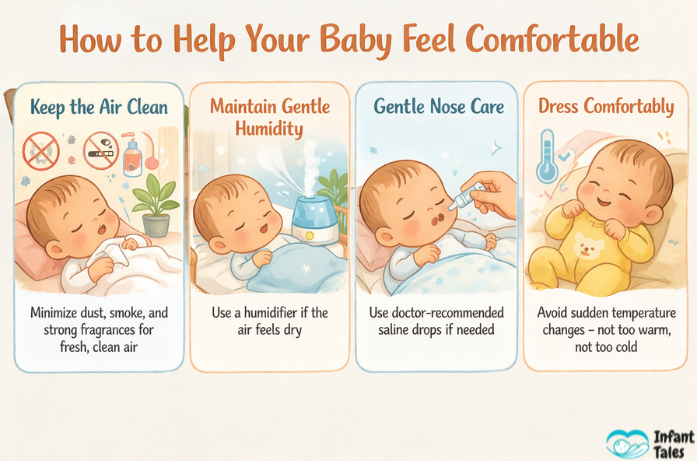
How to Help Your Baby Feel Comfortable
Even though sneezing is normal, there are a few simple ways to keep your baby comfortable and reduce irritation.
1. Keep the Air Clean
Try to minimize dust, smoke, and strong fragrances in your baby’s environment. Fresh, clean air can make a big difference.
2. Maintain Gentle Humidity
If the air in your home feels dry, using a humidifier can help soothe your baby’s nasal passages.
3. Gentle Nose Care
If your baby seems slightly congested, you can use saline drops recommended by your doctor to help keep their nose clear.
4. Dress Comfortably
Avoid sudden temperature changes. Keep your baby comfortably dressed, not too warm and not too cold.
Common Myths About Newborn Sneezing
It’s easy to feel confused with so much advice around. Let’s gently clear up a few common myths.
Myth: Sneezing Means the Baby Is Sick
Truth: Most of the time, sneezing is completely normal and not linked to illness.
Myth: Sneezing Means Baby Is Cold
Truth: Sneezing is usually caused by sensitivity in the nose, not temperature alone.
Myth: Frequent Sneezing Is Dangerous
Truth: In healthy babies, frequent sneezing is harmless.
Simple Tips for Peace of Mind
Here are a few gentle reminders that can help you feel more confident:
- Look at your baby’s overall behavior, not just one symptom
- Keep up with regular pediatric checkups
- Trust your instincts as a parent
- Try not to overthink every small change
Sometimes, stepping back and looking at the bigger picture brings more clarity and calm.
A Warm Final Thought for Parents
Noticing your newborn sneezing a lot can feel worrying at first, especially when everything is new and unfamiliar. But in most cases, sneezing is simply your baby’s natural way of adjusting to life outside the womb.
Their tiny body is learning how to breathe, react, and protect itself, and sneezing is part of that beautiful process. If your baby is feeding well and breathing comfortably, it’s usually not serious. If you’re breastfeeding and notice your baby seems unusually uncomfortable after feeds, it may also help to learn about foods to avoid when breastfeeding a baby.
And if you ever feel unsure, it’s always okay to ask for help. You are not alone in this journey. You are doing something incredibly important, loving, caring, and paying attention to your baby.
And that is exactly what your baby needs the most.
Frequently Asked Questions
1. Is it normal for newborns to sneeze a lot?
Yes, it is completely normal. Newborns sneeze often because their nasal passages are very small and sensitive, and sneezing helps clear irritants.
2. Why is my newborn sneezing so much?
Frequent sneezing can happen due to dust, dry air, or your baby adjusting to breathing outside the womb. It’s usually not a sign of illness.
3. Does sneezing mean my newborn has a cold?
Not always. Sneezing alone does not mean your baby is sick. Look for other symptoms like fever, coughing, or difficulty feeding before worrying.
4. When should I worry about my newborn sneezing?
You should consult a doctor if sneezing is accompanied by fever, breathing problems, persistent cough, or poor feeding.
5. Can feeding cause newborn sneezing?
Yes, sometimes a little milk can enter the nasal passage during feeding, which can trigger sneezing. This is usually harmless.
Looking for more gentle newborn care tips and reassurance for those early days? Explore more helpful articles on Infant Tales to support your parenting journey and care for your little one with confidence.
Disclaimer: This article is for informational purposes only and is based on general parenting experiences and research. It should not replace professional medical advice. Always consult your pediatrician or healthcare provider if you have concerns about your baby’s health or symptoms.