Written with love by a caring mom at Infant Tales
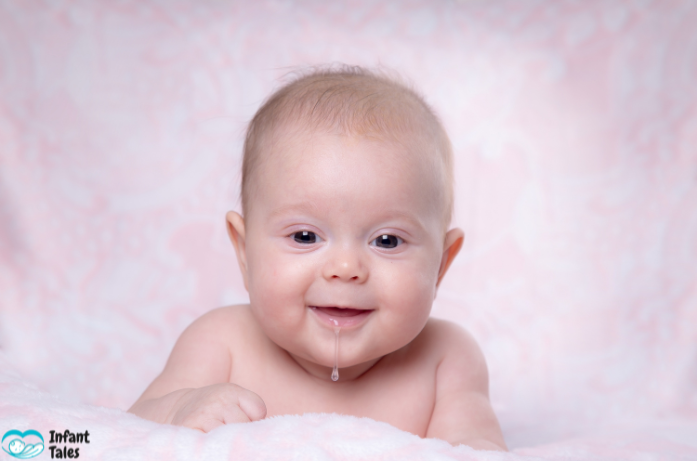
The process of watching your baby develop brings unexpected joyful moments. The baby first watches everything happening around them but then starts to drool continuously from their small mouth. Many parents start wondering why do babies drool a lot, especially when their baby’s clothes, bibs, and toys always seem damp.
The Drooling process starts at birth and continues throughout most of the time until infants reach maturity. Infants use their mouths to discover their environment while their small bodies develop the ability to manage saliva production and swallowing.
The article explains the causes of baby drooling and describes the times when drooling occurs normally and the moments when parents should contact their pediatrician. Parents can use easy techniques to help their baby feel better during this adorable yet chaotic period.
Why Do Babies Drool a Lot?
During the first year of an infant’s life, drooling is considered a normal developmental milestone. As infants reach various developmental stages, the production of saliva in their mouths increases.
Saliva is generated in their bodies because their digestive organs are still in the process of developing; additionally, their mouths are simultaneously preparing for future capabilities, including chewing, swallowing, and consuming solid foods.
Medical research explains that drooling is often linked to developmental changes in oral motor control and saliva production during infancy. You can read more about the science behind drooling in this medical research article from the National Institutes of Health:
So if you’ve been wondering why do babies drool so much, the simple explanation is that their bodies are developing exactly the way they should.
Most babies begin drooling between 3 and 6 months of age, and it may continue until they are about 18 to 24 months old.
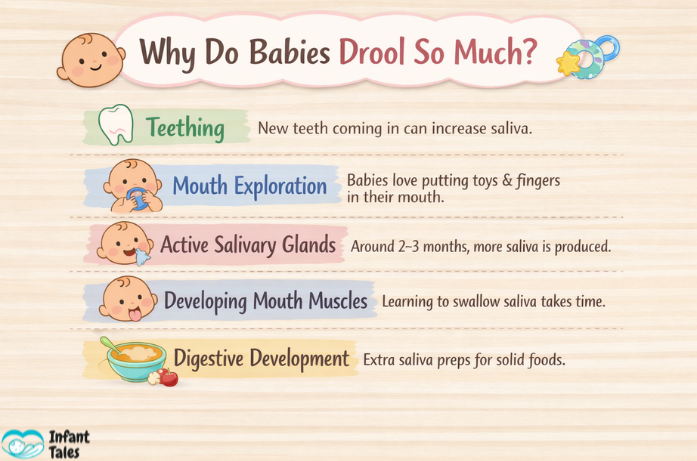
Common Reasons Babies Drool
The normal developmental process of infants leads to excessive drooling which occurs during early drooling stages. Parents usually observe this particular condition because of its frequent occurrence.
1. Teething
Teething is one of the biggest reasons babies drool a lot. When teeth begin pushing through the gums, the body naturally produces more saliva.
This extra saliva helps soothe sore gums and protects the mouth from bacteria.
If your baby is drooling a lot and also acting fussy.
- Chewing on toys or fingers
- Acting fussier than usual
- Showing swollen or sensitive gums
- Waking more often during sleep
then teething may be the cause of the extra drooling.
Many babies drool more during the first year when their first teeth begin appearing. The American Academy of Pediatrics explains that drooling during teething is common and usually harmless. You can read more about it here:
2. Exploring the World With Their Mouth
Babies learn about their surroundings by touching and tasting things. Babies use their mouths as a primary method to discover new things in their environment.
Toys and fingers and blankets and even your hair end up in the mouth. Babies produce more saliva when they suck or chew on objects.
So when parents wonder why does my baby drool so much while playing, it is often simply because the baby is busy exploring and learning.
This stage also helps babies develop important oral and sensory skills.
3. Developing Salivary Glands
Around 2 to 3 months old, babies’ salivary glands begin to work more actively.
Before this stage, babies swallow saliva easily because there isn’t much of it. But once the glands begin producing more saliva, babies haven’t yet mastered the skill of swallowing it efficiently.
The result is those familiar drool bubbles, shiny chins, and soaked bibs.
4. Learning to Control Mouth Muscles
Babies are still developing coordination between their tongue, lips, and swallowing reflex.
Adults swallow saliva automatically without thinking about it. Babies, however, are still practicing this skill.
Until these mouth muscles become stronger and more coordinated, saliva may simply spill out before they can swallow it.
5. Digestive System Development
Saliva plays an important role in digestion. It helps break down food and prepares the body for eating.
As babies approach the age when they will start trying solid foods, their bodies naturally produce more saliva in preparation. When you’re ready to introduce solids, you can start with a simple banana puree.
This is another reason drooling often increases around 4 to 6 months of age.
Signs Drooling Is Completely Normal
Most of the time, drooling is simply part of normal baby development.
Here are some signs that your baby’s drooling is perfectly healthy:
- Your baby is happy and active
- Drooling started around 3–6 months of age
- Your baby enjoys chewing on toys or fingers
- Your baby shows signs of teething
- There is no difficulty swallowing or breathing
If these signs sound familiar, your baby is likely just going through a normal developmental stage.
Yes, it can be messy, but it’s also a sign that your little one is growing.
When Should Parents Be Concerned?
Although drooling is usually harmless, there are a few situations where it’s wise to talk with your pediatrician.
You may want to contact your doctor if drooling occurs along with:
- Difficulty swallowing
- Trouble breathing
- Frequent choking
- Fever or unusual fussiness
- Very thick or foul-smelling saliva
According to medical experts, excessive drooling combined with other symptoms may sometimes indicate infections, neurological conditions, or swallowing difficulties. Cleveland Clinic explains more about when drooling could signal an underlying medical concern:
These situations are uncommon, but it’s always okay to seek medical advice if something doesn’t feel right.
Parents often notice small changes in their baby before anyone else does, so trusting your instincts is important.
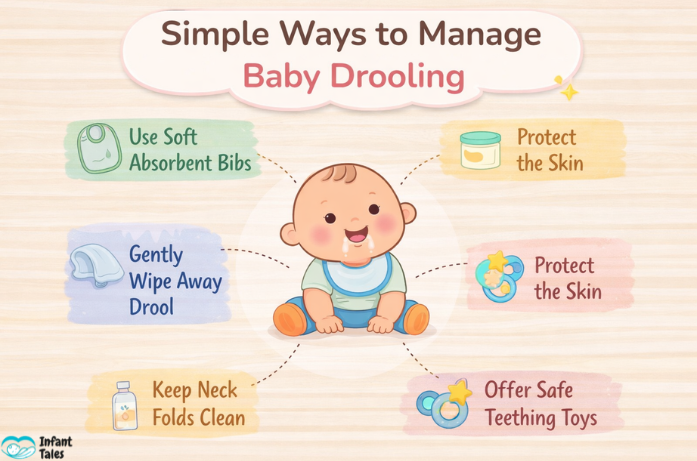
Simple Ways to Manage Baby Drooling
Even though drooling is normal, it can sometimes lead to wet clothes or mild skin irritation. Fortunately, a few simple steps can help manage it.
1. Use Soft Absorbent Bibs
Soft cotton or muslin bibs are very helpful during the drooling stage.
They absorb moisture and help keep your baby’s clothes dry. Changing bibs throughout the day prevents saliva from sitting on your baby’s skin for too long.
2. Gently Wipe Away Drool
Use a soft cloth to gently pat drool from your baby’s chin and neck.
Try to avoid rubbing the skin, as repeated friction can lead to irritation. A gentle pat is usually enough to keep the area dry.
3. Protect the Skin
Constant moisture can sometimes cause drool rash, especially around the chin and neck folds.
Applying a small amount of protective cream such as petroleum jelly or zinc oxide can help protect delicate skin from irritation.
4. Keep Neck Folds Clean
Drool often collects in the tiny folds of a baby’s neck.
During bath time or diaper changes, gently clean and dry these areas to prevent redness or irritation.
5. Offer Safe Teething Toys
If teething is causing the drooling, teething toys can help soothe sore gums.
Chilled teething rings can provide extra comfort, and many babies enjoy chewing on them during this stage.
How Long Does the Drooling Stage Last?
For most babies, drooling begins around 3 to 6 months of age and gradually decreases by 18 to 24 months.
Babies drool less after they achieve more control over their mouth muscles and their ability to swallow. Some babies drool more than others, and that’s completely normal.
A Gentle Reminder for Parents
If you are been wondering why does my baby drool so much, remember that drooling is usually a sign of healthy growth and development.
Your baby’s body is learning new skills every day, from controlling saliva to preparing for chewing and speaking, along with other milestones like holding a baby bottle.
Yes, it may mean extra bibs and more laundry, but it’s also one of those short phases of babyhood that passes sooner than you expect.
Final Thoughts
The next time you find yourself asking why do babies drool so much, remember that drooling is usually a normal and healthy part of development.
Your baby is learning, growing, exploring, and preparing for exciting milestones like teething, eating solid foods, and eventually speaking their first words.
While it can feel messy at times, it’s also a sweet reminder that your little one is growing right before your eyes.
Keep a few bibs nearby, give your baby lots of cuddles, and know that you’re doing a wonderful job.
One day, when the drooling stage has passed, you may even find yourself missing those tiny drooly smiles.
FAQs
1. Why do babies drool so much at 3 months?
Many babies start drooling more around 3 months because their salivary glands become more active. At this age, babies are still learning how to swallow saliva properly, so some of it dribbles out of their mouth.
2. Why does my baby drool so much but isn’t teething?
Not all drooling is related to teething. Babies often drool because they are exploring objects with their mouth, developing oral muscles, or producing more saliva as part of normal growth.
3. Is it normal for babies to drool a lot?
Yes, drooling is very common in babies, especially between 3 and 18 months of age. It is usually a normal part of development and happens as babies prepare for teething and eating solid foods.
4. When should I worry about my baby drooling?
You should talk to a pediatrician if drooling happens with difficulty swallowing, breathing problems, fever, or frequent choking. In most cases, however, drooling is harmless.
5. How can I stop my baby from drooling so much?
Drooling cannot be completely stopped, but you can manage it by using soft bibs, gently wiping drool, keeping the neck area dry, and offering safe teething toys to soothe your baby’s gums.
At Infant Tales, we share simple, mom-to-mom advice to help you feel confident in your parenting journey. Browse our other articles for gentle guidance on baby development, newborn care, and everyday parenting moments.