By a Caring Mom at Infant Tales
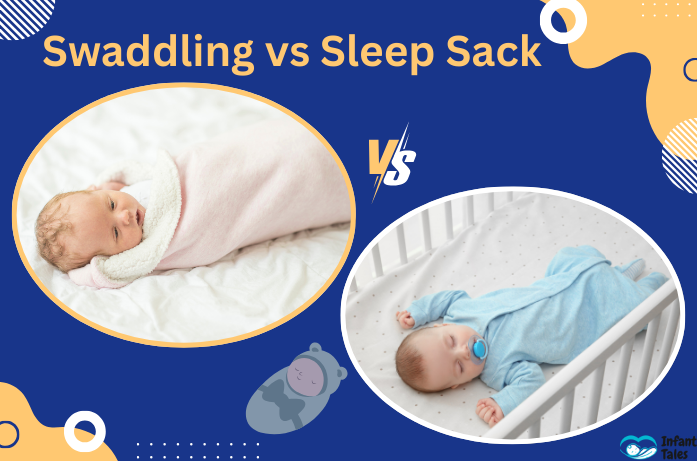
New parents often find themselves overwhelmed when it comes to newborn sleep. One of the most common questions is the difference between swaddling vs sleep sack, and more importantly, when to use which. Both help babies sleep better, but they serve different purposes depending on age, safety, and developmental milestones.
This complete guide will help you understand when swaddling works best, when a sleep sack becomes safer, and how to make the transition smooth for your baby.
Understanding Swaddling vs Sleep Sack: What Parents Should Know
What Is Swaddling?
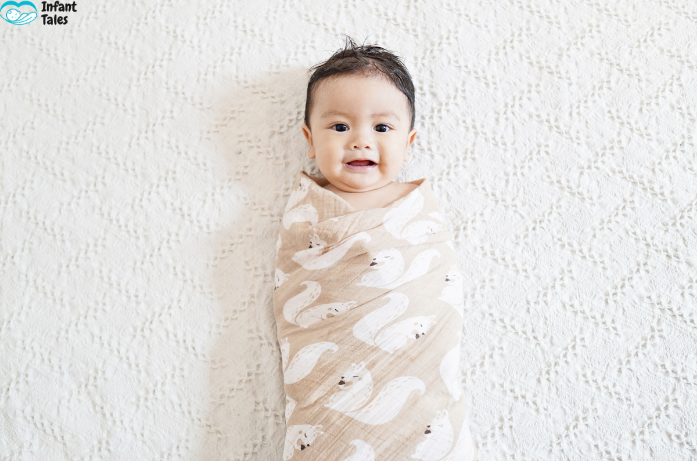
Swaddling is the practice of wrapping a newborn snugly in a blanket so their arms stay secure while their hips remain free to move. For generations, parents have used swaddling for newborn sleep because it mimics the cozy, snug feeling of the womb. When done correctly, swaddling reduces the startle reflex, helps babies settle faster, and may even support longer stretches of sleep during the early weeks, especially for babies experiencing fussiness.
Benefits of Swaddling
- Minimizes the Moro (startle) reflex
- Helps newborns feel secure
- Encourages longer naps and nighttime sleep
- Reduces fussiness during the fourth-trimester phase
- Supports calmness during colicky periods. Nursing mothers may also want to review breastfeeding foods that can affect baby comfort.
However, swaddling must be practiced safely. A swaddle should be firm around the arms but loose around the hips to avoid hip dysplasia. The American Academy of Pediatrics (AAP) also warns against overheating, which means parents must choose breathable fabrics and avoid layering.
When to Stop Swaddling
Parents frequently ask, “When do babies outgrow swaddling?”
The moment your baby begins showing signs of rolling, it’s time to stop. For most infants, this happens between 8–12 weeks. At this point, swaddling becomes unsafe because a swaddled baby who rolls to their belly cannot push themselves up.
If your baby is breaking free of the swaddle often, kicking aggressively, or trying to rotate, these are early signs it’s time to transition.
What Is a Sleep Sack?
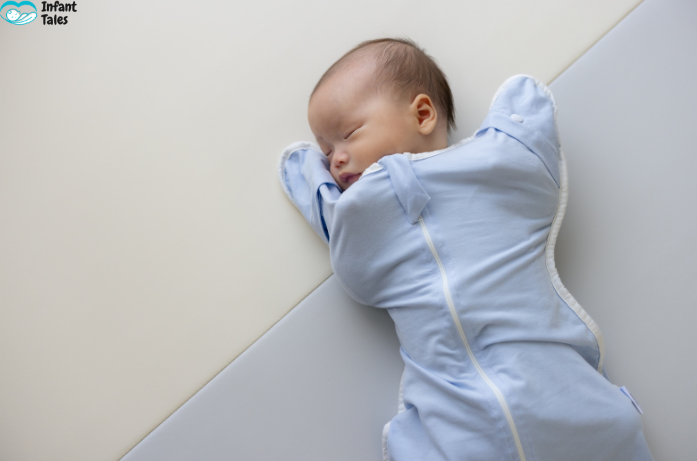
A sleep sack is a wearable blanket designed to keep a baby warm without using loose bedding. Parents often search “what is a sleep sack?” or “is a sleep sack safe for newborns?” because they are unsure how these are different from swaddles. Sleep sacks allow the baby’s arms to be free while their legs and torso stay comfortably covered.
Key Benefits of Sleep Sacks
- Eliminates the risk of loose blankets
- Allows full hip and arm movement
- Helps regulate temperature
- Works for babies from newborn to toddler stage
- Recommended for safe sleep for newborns
Because sleep sacks allow mobility, they are especially ideal for a sleep sack for rolling baby, when traditional swaddling becomes unsafe.
Swaddling vs Sleep Sack: Key Differences to Help You Choose
Many parents want a simple way to compare sleep sack vs swaddle. Here’s what truly matters:
Movement:
- Swaddling: Restricts arm movement
- Sleep Sack: Arms-free, hips free, safe mobility
Best Age
- Swaddling: 0–8 weeks (or until the baby starts rolling)
- Sleep Sack: From birth (if arms-out design) up to 18+ months
Safety
- Swaddling: Safe only for babies who cannot roll
- Sleep Sack: Safe for newborns and rolling babies
Comfort
- Swaddling: Helps calm newborns who crave womb-like snugness
- Sleep Sack: Allows freedom of movement while staying warm
Practicality
- Swaddling: May require re-wrapping
- Sleep Sack: Zippers make diaper changes easier
In short:
- Use swaddling for the earliest weeks to support comfort.
- Use sleep sacks once your baby is active, rolling, or outgrowing the swaddle.
Consumer Reports also compares the safety and practical differences between both products:
When to Use Swaddling (Signs, Ages, and Benefits)
Swaddling is best used during the newborn stage when babies have strong reflexes and need extra security. It is most effective:
Best Times to Use Swaddling
From birth to rolling (typically 0–8 weeks), During periods of fussiness, When baby startles easily, When creating a newborn sleep routine
Parents asking how to swaddle a newborn should focus on keeping the swaddle snug around the arms, avoiding tight wrapping around the hips, and always placing baby on their back to sleep.
How Long Should a Baby Be Swaddled?
During nighttime sleep and short naps, but always ensure they stay supervised during naps if they’re close to rolling. Once your baby shows early signs of rolling, swaddling must stop for safety.
When to Use a Sleep Sack (Age Guide & Practical Tips)
While many parents think sleep sacks are only for older babies, the truth is that sleep sack newborn options exist too designed with arms-out freedom for safe sleep.
When Can Babies Use a Sleep Sack?
You can use a sleep sack:
From birth (if it’s arms-out and meets newborn safety standards), From 8–12 weeks, once the swaddle is no, longer safe, From the moment baby rolls, Up to toddlerhood for warmth and comfort.
Many parents ask, “Can newborns use sleep sacks?” The answer is yes, as long as the design is safe, arms-out, and snug enough around the neckline to prevent slipping.
What Age to Start Sleep Sack?
- Newborn: Use arms-out sleep sacks
- 3 months: Ideal for post-swaddle transition
- 6–12 months: Best sleep sack for babies needing consistent safe sleep
When to Use Sleep Sack Instead of Swaddle
Use a sleep sack if:
Baby starts rolling, Baby fights the swaddle, Baby prefers movement, You want an easier diaper-change setup
How to Transition from Swaddle to Sleep Sack Smoothly
This phase is often called the swaddle to sleep sack transition, and it can be stressful for parents. The good news? Most babies adjust within 3–7 days.
Step-by-Step Transition Method
1. Start With One Arm Out (2–3 nights)
Swaddle baby as usual but leave one arm free. This helps them adjust while still feeling secure.
2. Two Arms Out (2–3 nights)
Now leave both arms out. Baby can move freely while still feeling snug around the torso.
3. Move Fully to a Sleep Sack
Switch to a sleep sack that is warm and cozy but allows full movement.
Tips for Easier Transition
- Practice during naps first
- Keep bedtime routine consistent
- Use white noise for comfort
- Ensure the room temperature stays 20–22°C (68–72°F) for safe sleep
Sleep Sack Safety Tips Every Parent Should Know
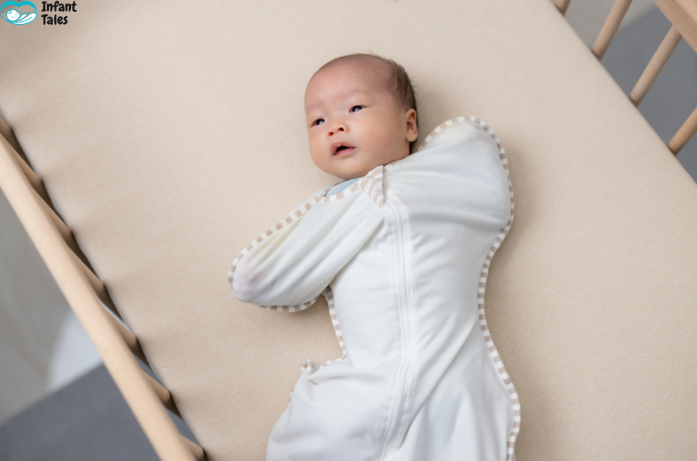
Since parents search for guidance like “when to stop swaddling for safety” or “is a sleep sack safe for newborns,” here are the essential guidelines:
Key Safety Rules
- Always put baby to sleep on their back (AAP Safe Sleep Guidelines)
- Avoid overdressing or heavy fabrics to prevent overheating
- Ensure the neckline fits snugly and baby cannot slip inside
- Choose breathable fabrics
- Avoid weighted sleep sacks for newborns
- Stop swaddling immediately once rolling begins
Swaddling vs Sleep Sack: Pros & Cons Table
| Feature | Swaddling | Sleep Sack |
| Age Range | 0–8 weeks | Newborn to toddler |
| Movement | Arms tucked | Arms free |
| Best For | Startle reflex, newborn sleep | Rolling babies, safer longer-term use |
| Safety | Unsafe after rolling | Safe even for active babies |
| Ease of Use | Requires learning | Very easy with zippers |
| Transition | Needed | No transition afterward |
Conclusion
Choosing between swaddling vs sleep sack isn’t about which one is better it’s about knowing when each option is right for your baby. Swaddling is wonderful for the earliest weeks and supports newborns who crave security. Sleep sacks offer long-term safety, comfort, and mobility, becoming essential once rolling begins.
By understanding the differences and following safe sleep guidelines, parents can help their babies sleep more peacefully and confidently through every stage.
FAQs About Swaddling and Sleep Sacks (High Search Intent)
1. Can you use a sleep sack instead of a swaddle?
Yes. Many parents skip swaddling entirely and start with an arms-out sleep sack for newborn safe sleep.
2. Do sleep sacks help babies sleep better?
Most babies sleep longer in sleep sacks because they stay warm without loose blankets, which supports uninterrupted sleep.
3. Can newborns use sleep sacks?
Absolutely as long as the design is arms-out and newborn-safe. Many hospitals now recommend them.
4. How long should a baby be swaddled?
Only during the early newborn stage and never past the first roll attempt.
5. When to switch to sleep sack?
Switch the moment your baby starts showing signs of rolling, or anytime after 6–8 weeks.
6. How to use a sleep sack correctly?
Place baby inside, zip it securely, ensure neckline is snug, and avoid overdressing underneath.
7. Is a sleep sack safe for newborns?
Yes arms-out sleep sacks are considered one of the safest alternatives to blankets for newborns.
Want more gentle, mom-tested tips for safer, calmer baby sleep? Explore more helpful guides at Infant Tales and make your parenting journey a little easier every day.
Medical Disclaimer: This article is for educational purposes only and does not replace medical advice. Always consult your pediatrician for guidance tailored to your baby’s health and development.